


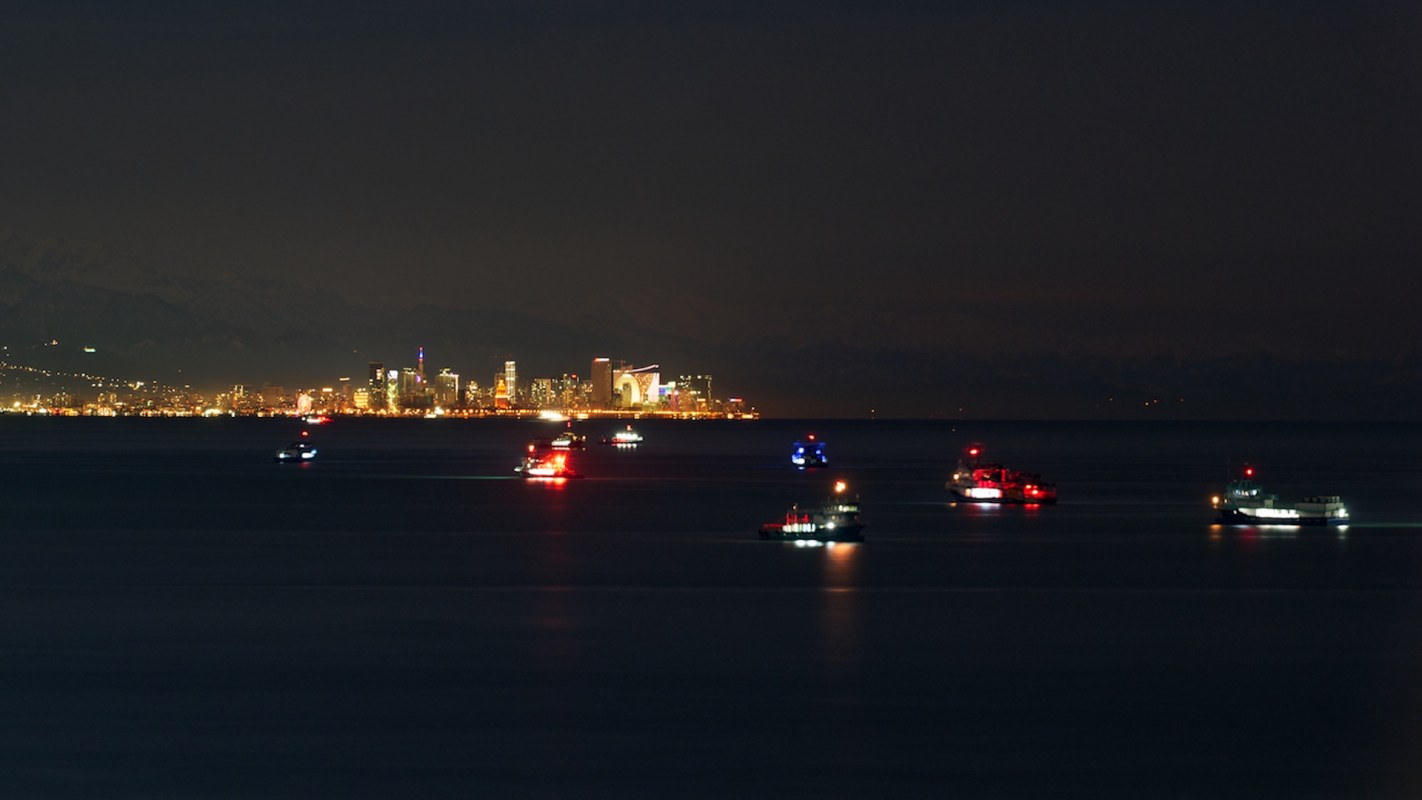
Some of the world's brightest fishing fleets are facing growing scrutiny for what happens in the dark.
According to Inside Climate News, a new investigation says industrial squid boats whose lights are visible from space have been connected to dead dolphins tied to vessel sides, a turtle kept alive as bait, and widespread labor abuse on the high seas.
What happened?
Environmental Justice Foundation, a nonprofit, drew its findings from interviews with 431 former Indonesian and Filipino crew members who had worked on squid boats in three mostly unregulated regions. Inside Climate News reported that those waters produce more than 60% of the world's squid.
Crews use intense nighttime lighting to bring squid toward the surface, then catch them with nets or barbed hooks, the report said. Former workers said the same lights also draw in other marine life, including dolphins, turtles, and commercially valuable tuna.
Workers also recounted acts of deliberate cruelty. One former crew member said a captain kept an injured turtle tangled in a net for nearly three months to use as bait.
An Indonesian fisher aboard a Chinese-flagged squid fishing boat said, "We dumped dolphins back into the ocean. Most of them were dead when released," and a Filipino worker added, "Dolphin meat is also used as a deterrent so that other dolphins will stay away."
TCD Picks » Quince Spotlight
💡These best-sellers from Quince deliver affordable, sustainable luxury for all




Why does it matter?
Investigators said the same secrecy that enables environmental destruction is also trapping workers in dangerous, exploitative conditions.
Fishers described debt bondage, abuse, unpaid labor, and being misled about working conditions across the fleet. Investigators also recorded 25 deaths on 20 boats, and all of those vessels were Chinese-flagged.
With little oversight, squid boats are also taking tuna and other species, while transshipment — which Inside Climate News described as moving catch to refrigerated cargo ships at sea — lets vessels remain offshore for long stretches, sometimes years.
That makes it much harder to monitor overfishing, labor violations, and seafood supply chains. Damage to marine food webs and abusive labor in seafood production affect coastal communities, ethical fishers, and consumers.
What are people saying?
"What we have uncovered through these investigations reveals a level of secrecy and opacity that would be completely unacceptable in any other industry," said Dominic Thomson, EJF's director of squid fisheries.
Sarah Uhlemann of the Center for Biological Diversity put it even more bluntly: "The seas are still the wild, wild west."
And Steve Trent, founder and CEO of EJF, warned that "illegal fishing, environmental destruction and human rights abuses are not exceptions; they are the norm," adding: "Without urgent action, consumers, retailers and governments risk being complicit in a system built on exploitation and secrecy."

Get TCD's free newsletters for easy tips, smart advice, and a chance to earn $5,000 toward home upgrades. To see more stories like this one, change your Google preferences here.






