


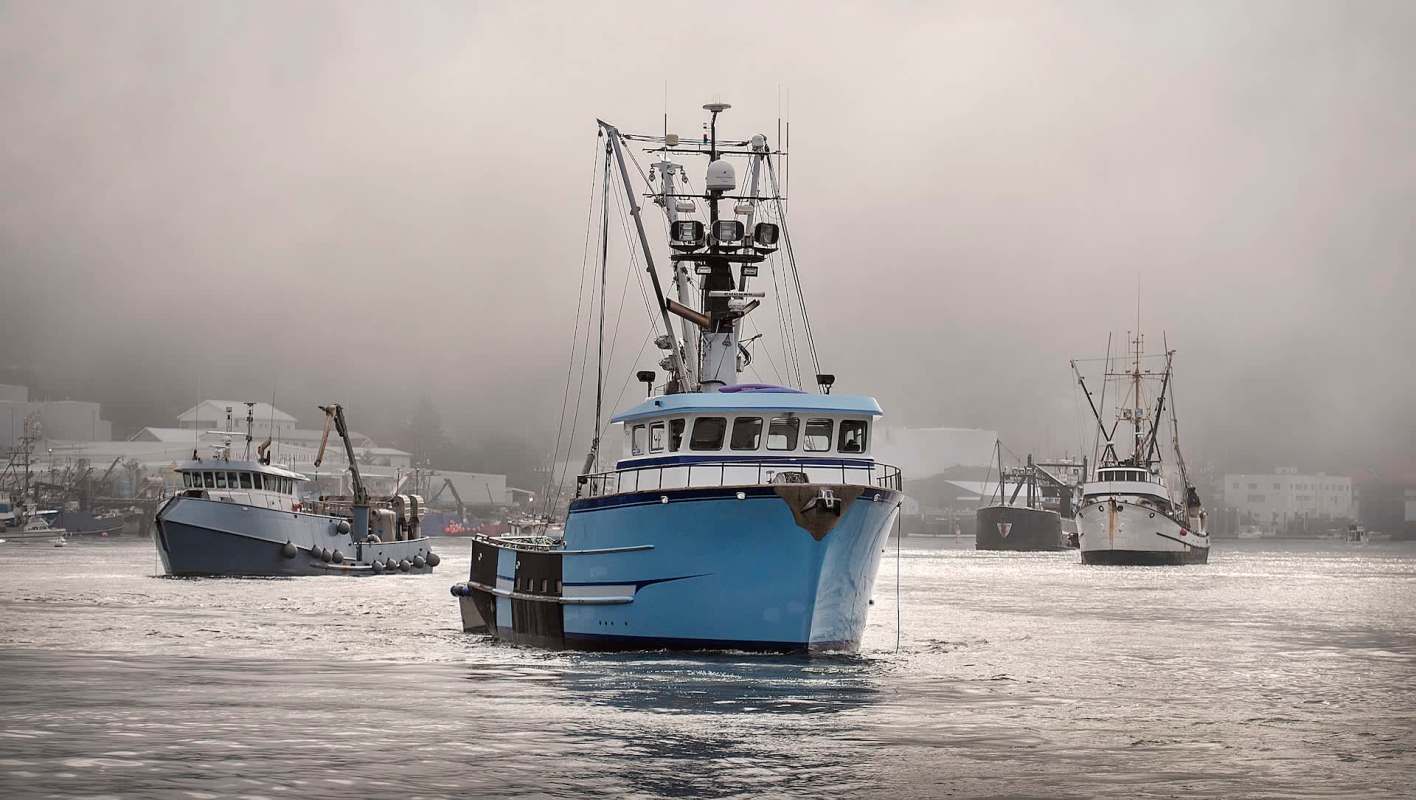
Coastal communities in Alaska are already contending with salmon crashes, shrinking snow crab stocks, and powerful storms, and the state's fishing industry now has a new source of uncertainty.
That concern stems from a federal plan to end a major network that monitors conditions in the deep ocean.
What happened?
According to Inside Climate News, the National Science Foundation plans to retire the Ocean Observatories Initiative, a nearly $368 million system of roughly 900 instruments spread across the Pacific and Atlantic oceans.
Those instruments provide real-time data on ocean conditions, including water temperature, salinity, wave action, ocean chemistry, and other measures, Inside Climate News reported.
Among the biggest losses for Alaska would be Ocean Station Papa, a deep-ocean observation site in the Gulf of Alaska that extends nearly 14,000 feet down. Scientists, fishery managers, weather forecasters, and emergency planners use its data to understand changing ocean conditions and prepare for marine heat waves, flooding, and storm activity.
Michelle Stratton, executive director of the Alaska Marine Community Coalition, stressed how serious the timing of the decision is.
TCD Picks » Quince Spotlight
💡These best-sellers from Quince deliver affordable, sustainable luxury for all




"We're in the middle of salmon crashes, crab collapses, and repeated marine heatwaves, and this decision takes away the data we rely on to understand what's happening and how to manage these fisheries," Stratton said.
The NSF said the move "aligns with the NSF's wider strategy of a nimbler approach to prioritize support for evolving scientific priorities and emerging technologies, as well as smart lifecycle management within its research infrastructure portfolio."
Why does it matter?
The stakes are especially high because Alaska leads the nation in fish production; Inside Climate News reported that its commercial seafood industry is valued at $5.3 billion and supports nearly 42,000 people. Without clear visibility into offshore conditions, protecting fisheries, forecasting dangerous weather, and making decisions that help keep people safe all become more difficult.
Alaska is also warming at roughly twice the global average rate.
That makes the data even more important as marine heat waves have coincided with Chinook salmon and snow crab population crashes, and severe storms have damaged vulnerable coastal villages. Stratton said the instruments help track "ocean temperatures, salinity, current, wave height and direction, wind stress" — information that feeds into models used to predict flooding and storm intensification.
The consequences may fall especially hard on remote, largely Indigenous coastal communities already facing threats to food security, income, and cultural continuity.
"Losing the information provided by Ocean Station Papa on how the ocean is changing with a warming climate is like driving down a dark freeway with no lights on," Carol Janzen, oceanographer with the Alaska Ocean Observing System, said.
What are people saying?
Rick Thoman of the University of Alaska Fairbanks said, "The value of this network is that you get oceanographic information from the entire water column."
Longtime fisheries advocate Tim Bristol also questioned the logic of the move.
"No matter where you are on a particular issue, you hear a desire, a call for more information, better data, more in-depth analysis, and this seems to be, you know, a sprint in the wrong direction," Bristol said.
Stratton described the broader human toll of the loss, saying, "We're not looking at just the biological crisis. It's economic. It's cultural. It's a way of life, too."

Get TCD's free newsletters for easy tips, smart advice, and a chance to earn $5,000 toward home upgrades. To see more stories like this one, change your Google preferences here.






