


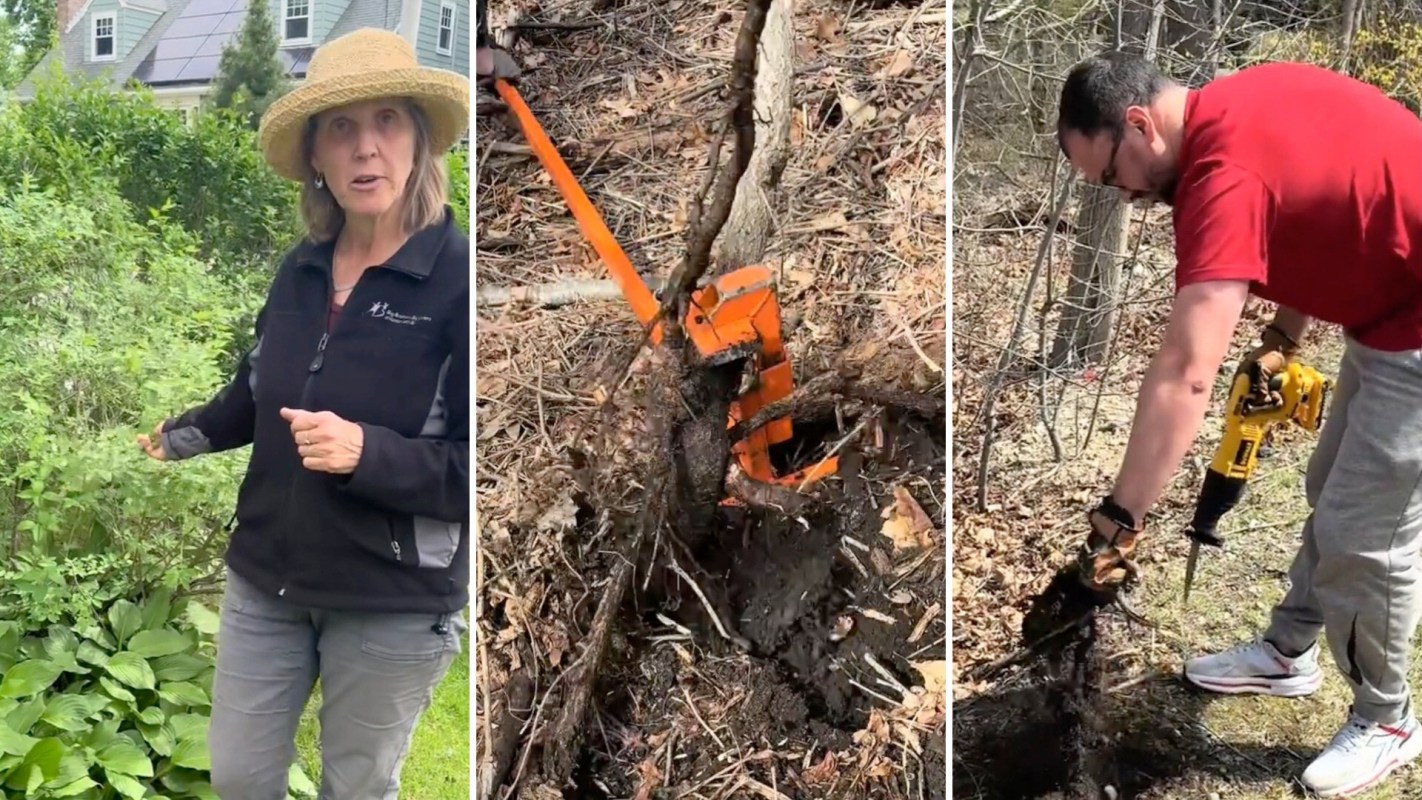
A simple walk through a yard turned into a rapid-fire inventory of invasive plants.
What happened?
In a TikTok by Jess the Garden Coach (@youcandoitgardening), she assesses a yard by naming all the invasive species around her: "You have bittersweet, buckthorn, honeysuckle … multiflora rose, barberry, burning bush, wisteria, trumpet vine, poison Ivy, English Ivy."
@youcandoitgardening I truly believe that if people understood how damaging invasive plants are to our ecosystem and how easy it can be to deal with them that they would choose to get rid of them. They spread everywhere and into wild areas and displace native plants. This disrupts our ecosystem because wildlife that has been depending on these plants for thousands of years no longer has this food source. I am not an expert in invasive plants. If you have any of these, or anything else, do some research with university extension articles on particular plants. (Example: Penn State has a great one on Tree of Heaven and UNH has one on Japanese knotweed—two that are especially complicated to deal with.) For disposal, my understanding is that if something doesn't have any berries or seeds on it, it can go into yard waste or compost. Or just stay right there as habitat in a large yard, and decompose. (Again, this is nuanced.) If you don't want to deal with it and can afford to outsource, hire someone to do jt. In Massachusetts it's illegal to sell any of the 72 designated invasive plants. All states handle this differently and many have zero restrictions. This means that many stores sell invasive plants and make this problem worse. Major advocacy efforts are needed to change this. The applicator tool I'm using in this video is called the Buckthorn Blaster and you can get it at https://naisma.org/2026-annual-conference/ while also supporting this organization. You need a high concentration of herbicide for what is referred to as "woody" plants. This is 41% glyphosate. Foliar spray is a different story (the is would be for something like black swallow wort.) Concerned about herbicide use? Please don't compare wide-scale agriculture use of herbicide with this. They are totally different. Concerned about health issues? Wear PPE. If you would like more hands-on guidance with your landscape, visit my website for information about how to book an in-person consultation in the Boston area or virtual consultation anywhere.https://www.youcandoitgardening.com #youcandoitgardening #invasiveplants #gardeningforbeginners #gardening #herbicide ♬ original sound - You Can Do It Gardening
Jess draws a distinction among the plants in the yard, noting Virginia creeper is "friendly but also kind of a hassle" and forsythia is "fine" and "good habitat." The warning was stronger for some shrubs that were once common in landscaping but spread "a little too quickly," with the creator naming privet, burning bush, and barberry. "This is now invasive," she said.
Jess also pointed out that invasive species regulations are not the same everywhere. As she put it: "So, that's an official classification. You can't sell this in Massachusetts."
The post's caption frames the video as a call to action. "I truly believe that if people understood how damaging invasive plants are to our ecosystem and how easy it can be to deal with them that they would choose to get rid of them," Jess wrote.
Why does it matter?
Invasive plants often show up disguised as harmless landscaping. They can spread into nearby woods and neighboring yards; crowd out native species; and reduce the food and shelter available for birds, pollinators, and other wildlife.
TCD Picks » Quince Spotlight
💡These best-sellers from Quince deliver affordable, sustainable luxury for all




That can leave homeowners with difficult yard work and few healthy plants.
Replacing invasive shrubs with native plants can make a yard easier and less expensive to maintain. Native landscaping often requires less mowing, less fertilizer, and less watering, helping homeowners save time, cut maintenance costs, and lower water bills.
Homeowners looking for alternatives can consider native plant beds, clover, buffalo grass, or xeriscaping depending on their climate and yard needs.
What are people saying?
Commenters shared their struggles with invasive plants.
"Pokeweeds are my battle every year!!" one viewer wrote.
Another said, "Bought a house not knowing the neighbours had a forest of Japanese knotweed and three houses beyond them a MASSIVE mature female tree of heaven."

Get TCD's free newsletters for easy tips, smart advice, and a chance to earn $5,000 toward home upgrades. To see more stories like this one, change your Google preferences here.






