


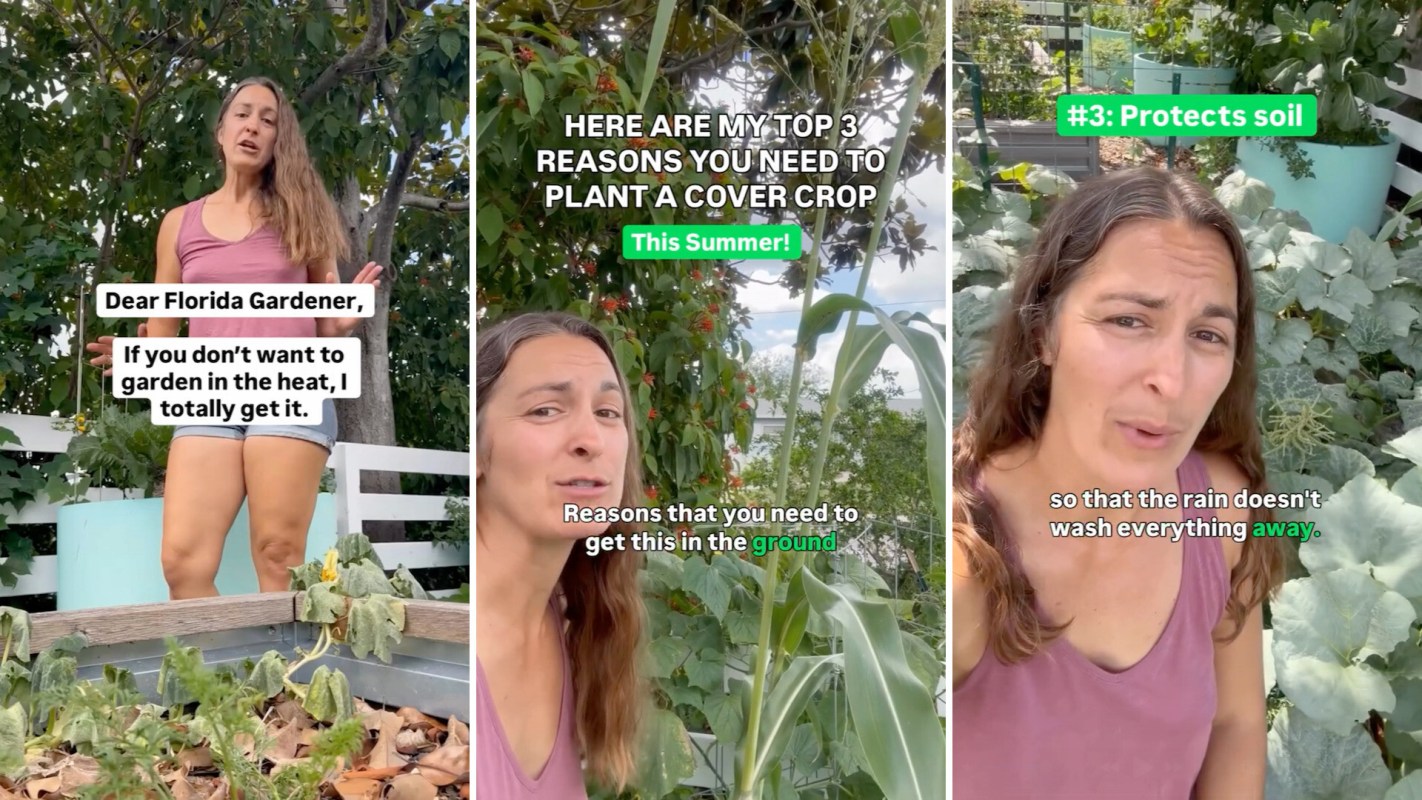
Hot, humid weather can make summer gardening feel miserable. Even so, one gardener says the hardest part of the season is not a reason to leave beds unattended.
In a recent Instagram reel, Elise Pickett (@theurbanharvest) said uncovered beds can run into a series of problems if they are left alone through the summer.
What's happening?
The caption from Pickett focused on what can happen when gardeners step away for the season: "If you don't want to garden in the heat, I totally get it. But please don't just walk away from your garden (or solarize your beds)." The post said empty beds can decline because "Weeds move in, heavy rains wash nutrients out of your soil, soil becomes compacted and lifeless."
The reel recommended a different approach: "consider planting a summer cover crop. Cover crops act like a living mulch." Pickett highlighted cowpeas, sunn hemp, and sweet potato as options for Florida gardeners.
One commenter wrote, "I grew your Florida summer cover crop blend last summer, and it was so beautiful, grew in really poor soil too, this year I planted cow peas everywhere."
Why does it matter?
Bare soil can quickly turn a relaxing garden into a more expensive, labor-intensive project later on. If weeds take over and nutrients wash away, gardeners may have to spend more time and money rebuilding their beds before the next planting season.
TCD Picks » Quince Spotlight
💡These best-sellers from Quince deliver affordable, sustainable luxury for all




Growing food at home can help households save money on produce, enjoy fresher, better-tasting fruits and vegetables, and support mental and physical health through time spent outdoors and active movement. Healthy soil is the foundation for people trying to grow their own food.
Beds keep changing even during a summer slowdown. Rain, heat, and aggressive weed growth can all reshape the soil while a gardener is taking a break. The issue is not limited to large backyard plots. Gardeners are also looking for ways to protect their soil between major harvests and get ready for fall planting.
What can I do?
For gardeners who do not want to do much in summer, the main takeaway is to avoid exposing unused soil when possible. A cover crop suited to the season can help protect the bed and keep soil life going instead of leaving space open for weeds.
In hot climates, the creator's suggestions — cowpeas, sunn hemp, and sweet potato — offer a starting point. If you still have crops producing, such as tomatoes or peppers, you may not want to remove them too early. Instead, consider which empty spaces or beds can stay planted rather than exposed.
Gardeners can also pair that strategy with other low-input approaches, including controlling weeds without chemicals.
As Pickett put it, "please don't just walk away from your garden."
One commenter said the cover crop mix "was so beautiful," while another wrote, "I would really like to improve my soil before October plantings."

Get TCD's free newsletters for easy tips, smart advice, and a chance to earn $5,000 toward home upgrades. To see more stories like this one, change your Google preferences here.






