


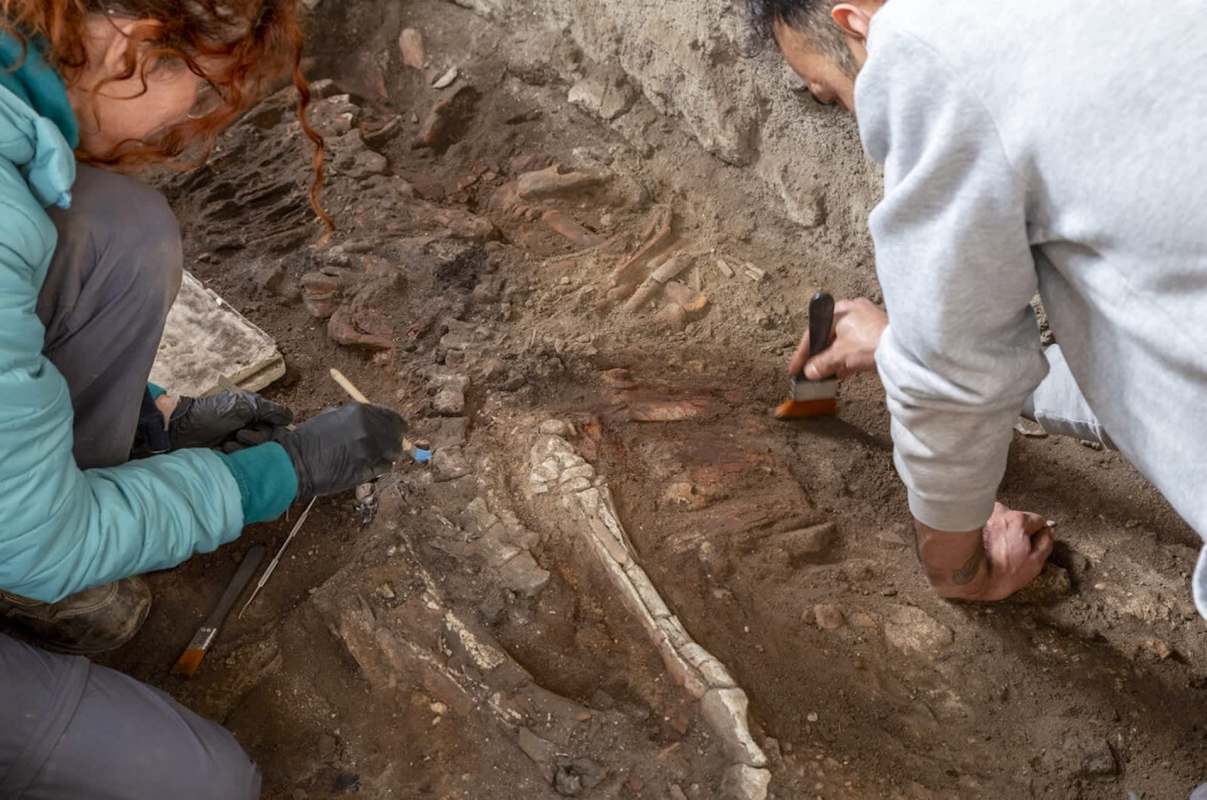
Inside a bakery in Pompeii, archaeologists have identified the skeleton of an equid, a find that could indicate the animal was seeking shelter as Mount Vesuvius destroyed the city nearly 2,000 years ago.
The bones were found at the Insula of the Chaste Lovers, a prominent Pompeii complex known for a fresco of a "chaste kiss" painted in the dining room of the owner's home.
What happened?
At the Insula of the Chaste Lovers, domestic and commercial spaces existed side by side. Along with the residence, the complex contained a bakery, storage areas, and processing rooms, offering researchers an unusually clear look at how home life and business overlapped in Pompeii before Vesuvius erupted in 79 AD.
According to the Greek Reporter, earlier excavations at the site had already revealed other equids in the stables, where they were used to turn grain mills and move grain needed for bread production.
This latest skeleton did not come from the stable area. Instead, archaeologists found it in another room, prompting the view that the animal — broadly identified as a horse or donkey — may have run there during the city's final moments.
The excavation included Applied Research Laboratory specialists examining animal remains, plant life, and human bones. That combined work may help explain the animal's role in the bakery complex and the conditions it faced as the disaster unfolded.
TCD Picks » Quince Spotlight
💡These best-sellers from Quince deliver affordable, sustainable luxury for all




Why does it matter?
This find points to another part of the city's daily reality: the animals whose labor was vital to economic activity, especially food production.
Equids were part of the workforce in the Chaste Lovers bakery. The skeleton provides evidence of the systems that kept an ancient city running — from grinding grain to baking bread — and of the animals that made that labor possible.
What's being done?
Researchers are still analyzing the skeleton and nearby materials in the lab to better understand the animal's place in the bakery and what it experienced during the eruption. The results could improve scientists' understanding of how animals behave during disasters.
The excavation also reflects multidisciplinary collaboration. Research teams are combining evidence from bones, plant remains, and built spaces to reconstruct fuller accounts of daily life.
That approach is turning the site into a detailed record of how an entire community functioned — and how it collapsed.
This latest discovery adds to that record of survival, labor, and life in a world transformed by disaster.

Get TCD's free newsletters for easy tips, smart advice, and a chance to earn $5,000 toward home upgrades. To see more stories like this one, change your Google preferences here.






