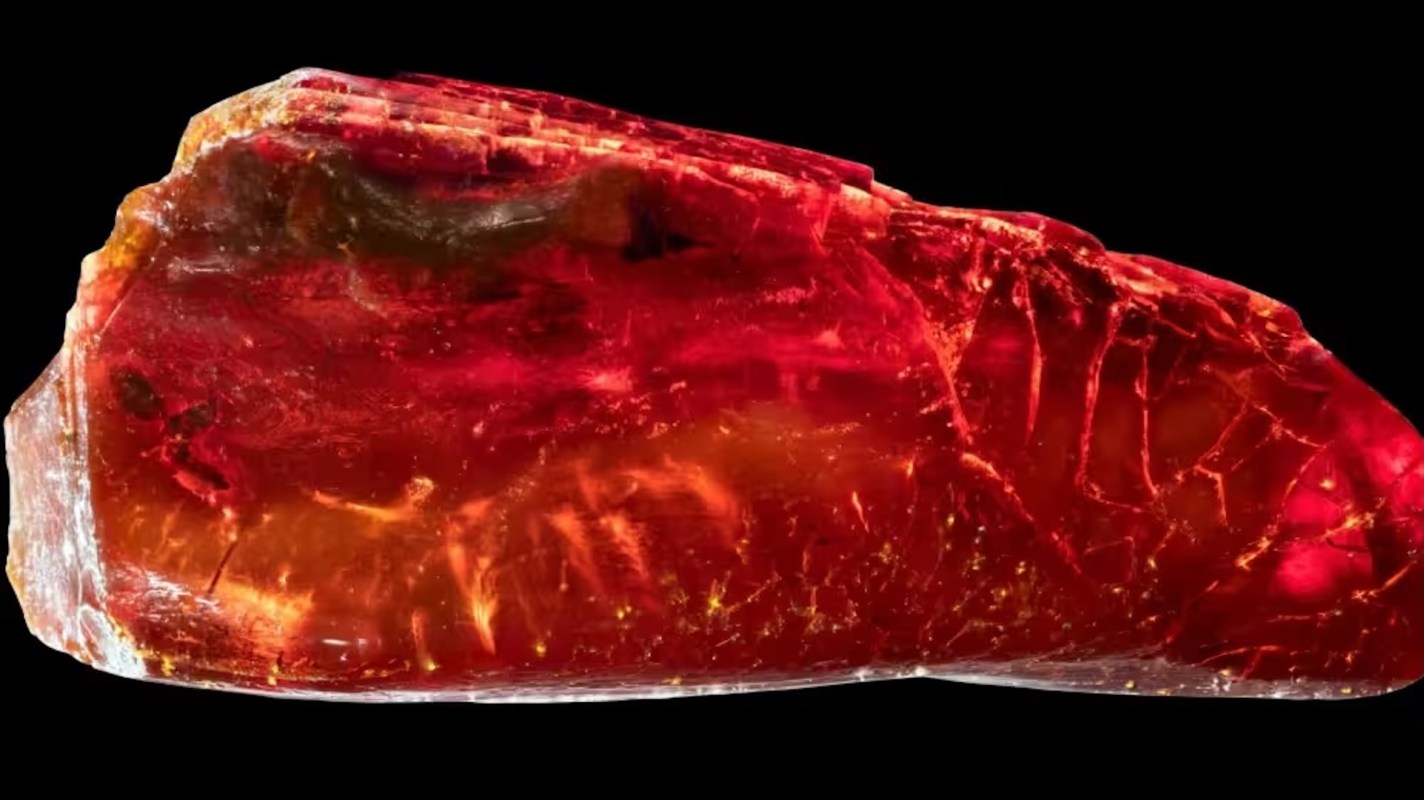
A set of amber specimens once owned by Johann Wolfgang von Goethe contains insect fossils that have been preserved in resin for tens of millions of years.
What happened?
Goethe's Baltic amber collection, kept at the Goethe National Museum and overseen by the Klassik Stiftung Weimar, contains 40 pieces. Researchers found that two of those pieces held fossilized animals that were almost impossible to detect with the naked eye, Science Daily reported.
By scanning rough amber that had never been polished, researchers were able to find and digitally reconstruct animals that had remained hidden from view.
A team from the University of Jena examined the specimens at the German Electron Synchrotron in Hamburg using synchrotron micro computed tomography. The technique produced high-resolution 3D images that exposed three insects: a fungus gnat, a black fly, and an ancient ant. Among the three, the ant stood out because it was so well preserved.
"The ant belongs to the extinct species †Ctenobethylus goepperti (Mayr, 1868), which is very common in amber," explained Bernhard Bock from the Phyletisches Museum of the University of Jena.
"Thanks to its excellent preservation and the extensive investigations, however, we were able to describe it in greater detail than ever before and gain new information about the species and its relationships."
TCD Picks » Good Store Spotlight
Get 10% off your next purchase with code TCD10




Why does it matter?
The scans captured unusual detail, revealing tiny body hairs on the worker ant as well as internal skeletal structures in the head and thorax. That level of preservation shows how modern imaging can uncover new scientific information in museum material that has been sitting in collections for generations.
Amber fossils can preserve ancient life with exceptional clarity, making them useful for reconstructing past ecosystems. In this case, comparisons between the extinct ant and the modern genus Liometopum, found in North America and the warmer parts of Europe, may help researchers infer how the species lived.
The researchers think these ants likely formed large nests in trees, a behavior that may help explain why they are so often found preserved in amber.
What are people saying?
Researchers said the digital component of the project could make the discovery valuable well beyond a single museum.
"We have fully processed the specimen and, based on the newly acquired information, created a 3D reconstruction that is available online," said Daniel Tröger from the University of Jena, according to Science Daily. "This model helps colleagues worldwide to identify and compare further fossils of this species."
Bock also linked the breakthrough back to Goethe himself, stating, "Goethe is regarded as the founder of morphology and would likely have been delighted to see how we were able to gain valuable insights in this field using entirely new methods."

Get TCD's free newsletters for easy tips, smart advice, and a chance to earn $5,000 toward home upgrades. To see more stories like this one, change your Google preferences here.