


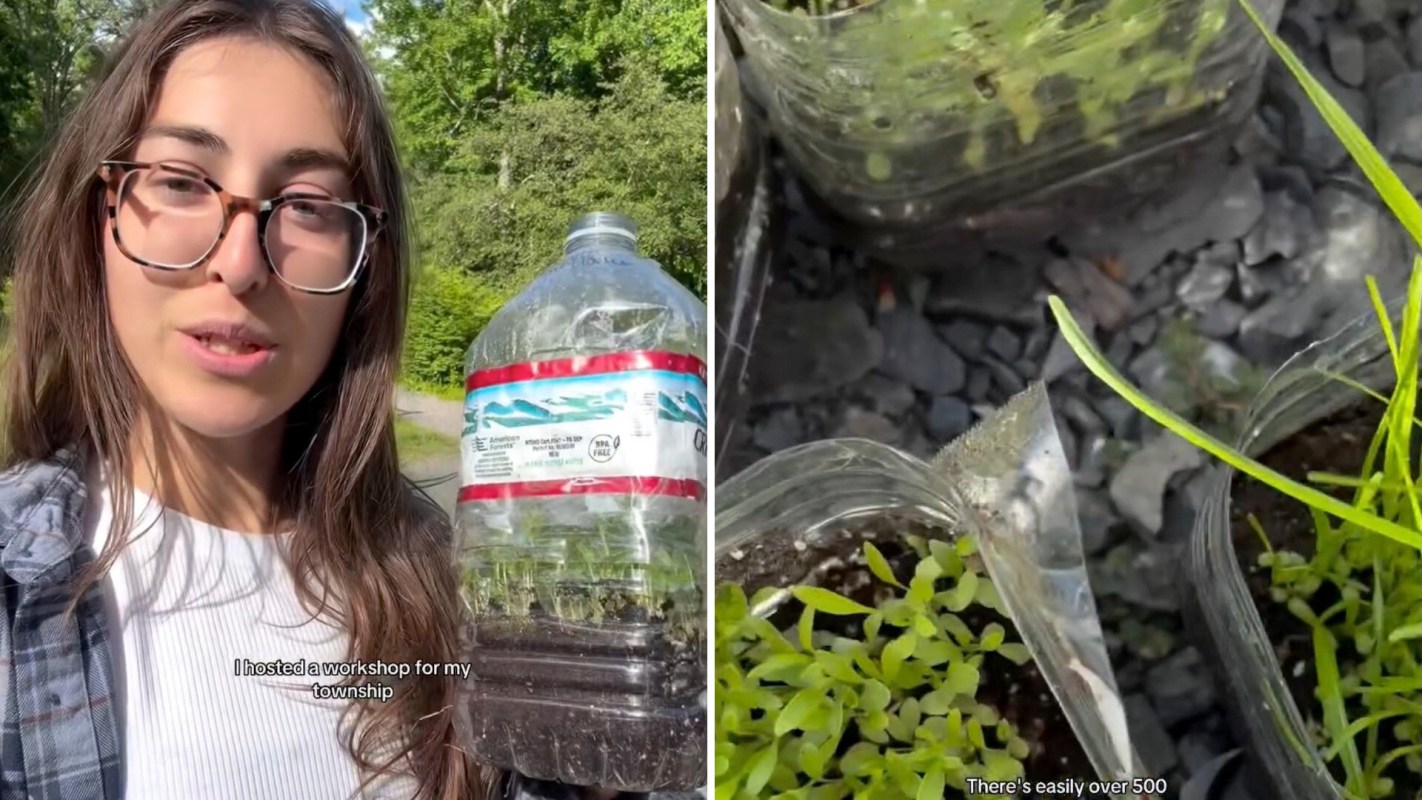
Used plastic jugs turned out to be enough for one gardener to raise a remarkable number of pollinator-friendly native plants without spending a fortune.
In an Instagram Reel, creator Drea the Nature Girl (@dreanaturegirl) said the technique yielded hundreds of seedlings for her community, with jugs that featured "easily over 500 seedlings" among them.
What's happening?
The clip recapped a town workshop wherein Drea taught residents how to grow native plants from seeds. Instead of buying costly starter trays or greenhouse gear, the group used old plastic jugs to raise seedlings over the winter.
Drea planted hers, and when she opened them, they were packed with vigorous growth. Among the native plants thriving inside were common milkweed, orange milkweed, downy sunflower, and purple coneflower.
The video has drawn more than 38,000 plays, over 2,500 likes, and dozens of comments from users wanting to know how to try the jug method for themselves.
Drea said that common milkweed serves as a host plant for monarch butterflies and that orange milkweed is one of her best sellers at a farmer's market.
TCD Picks » Quince Spotlight
💡These best-sellers from Quince deliver affordable, sustainable luxury for all




Why does this matter?
Reusing old plastic jugs and bottles keeps costs low, gives plastic a second life, and removes one barrier for people who want to help pollinators but are not sure where to begin.
Native plants support butterflies, bees, and other wildlife, and those pollinators can benefit nearby vegetable gardens too. For households that are also growing food, it can mean better harvests; lower spending on store-bought produce; and fresher fruits, veggies, and herbs.
Gardening can also offer everyday benefits, including time outdoors, physical activity, and stress relief — whether someone is planting a pollinator patch, growing tomatoes, or creating a peaceful place to read a book.
Because this workshop happened at the township level, it also shows how communities can expand habitat support without major infrastructure or huge budgets.
What can I do?
Thankfully, getting started doesn't require elaborate equipment. By saving plastic jugs, sowing native seeds, and starting them before spring, people can produce a surprisingly high number of plants for a yard, a neighborhood project, or even a local plant sale.
Drea also recommended taking the idea to your municipality. A community workshop can introduce beginners to native gardening, create more habitat for pollinators, and spark interest in other low-cost gardening projects.
Her biggest practical warning? "Don't sow as heavily as I did," she wrote, since crowded seedlings are harder to transplant.
"I love this method as a way to reuse old plastic jugs to easily grow so many beneficial native plants," Drea added. "... Such a fun workshop, and most people who showed up actually had never grown or planted native plants before, but they knew they were good for pollinators!"

Get TCD's free newsletters for easy tips, smart advice, and a chance to earn $5,000 toward home upgrades. To see more stories like this one, change your Google preferences here.







