


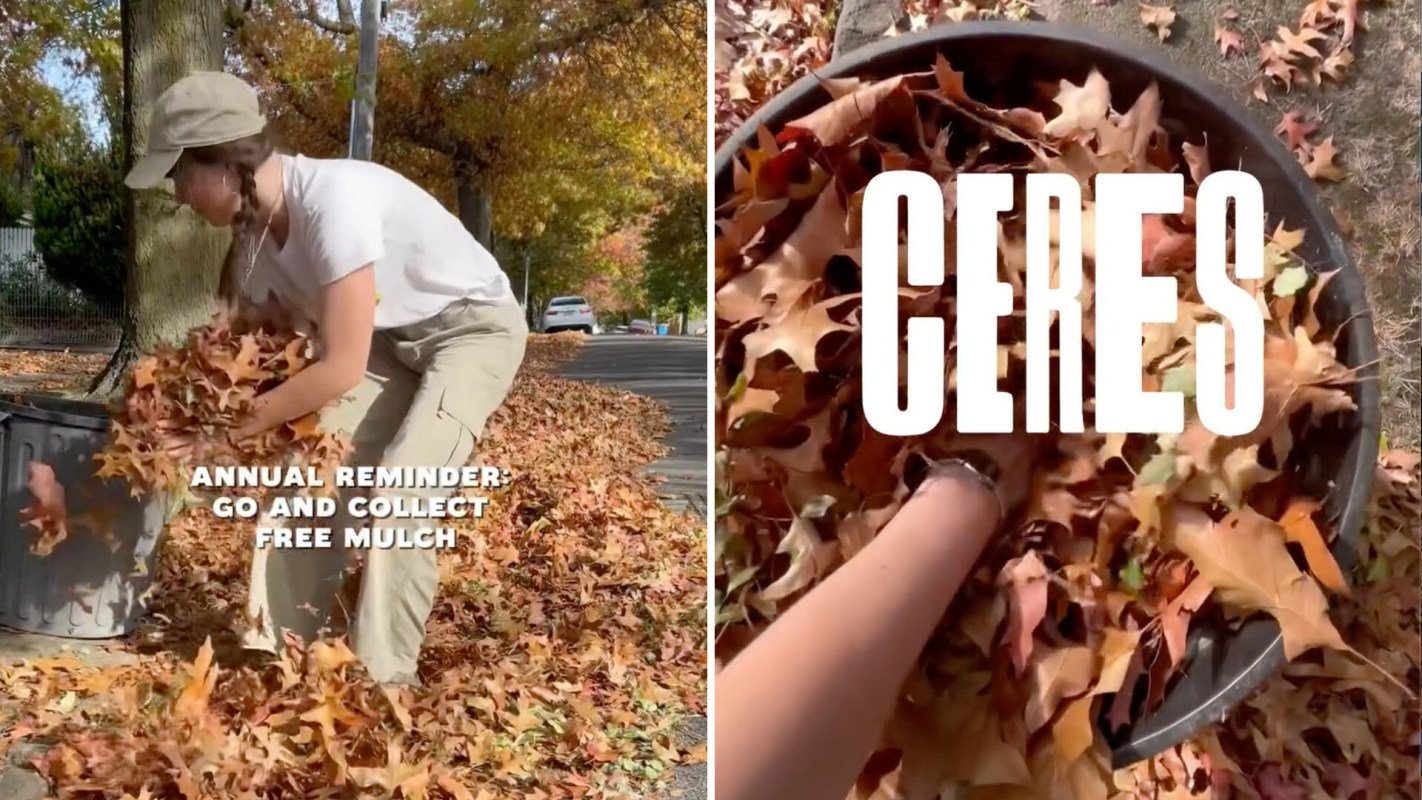
An Instagram reel from environmental education center CERES (@ceresbrunswick) shared that leaves on sidewalks and roads can be free material for compost or mulch right now, with one important caveat.
What's happening?
The reel says leaves from hard surfaces can be useful in compost or as mulch, unlike leaves in green spaces.
In the video, CERES encourages people to gather leaves from the pavement and use them in home compost systems or as mulch in the garden.
Dry leaves add carbon to compost, helping balance food scraps and other "green" materials. They can also be reused directly in garden beds instead of being treated as waste.
But the post also included a clear warning not to rake up leaves from gardens, parks, or nature strips. As the caption explained, the leaves are already helping the ground in those places, shielding roots, and serving as winter habitat for insects.
Why does it matter?
Leaf litter can be a small-budget win. Compost, fertilizer, and mulch can cost money at garden centers, so finding a no-cost source on nearby hard surfaces can help people grow more at home for less. It also is valuable to know exactly where the materials are coming from.
TCD Picks » Quince Spotlight
💡These best-sellers from Quince deliver affordable, sustainable luxury for all




Growing your own food can lower grocery bills, and many gardeners say homegrown produce tastes better, too. Time in the garden can also support mental and physical health, offering light exercise, time outdoors, and a calming routine. It also reduces the environmental toll of mass agriculture by lowering demand for mass-produced groceries that travel long distances.
That being said, it's prudent to leave park and garden leaves alone. Those leaves are part of a living system, helping to keep soils healthy and creating winter habitat for insects. There's a difference between collecting displaced leaves from pavement and stripping useful organic matter from places where it belongs.
One commenter also pointed to another possible benefit of collecting leaves from gutters, saying it may help keep phosphorus out of waterways and reduce algal blooms.
What can I do?
The video suggests sticking to leaves that have ended up on pavement and other hard surfaces. Use them in your compost pile as a dry "brown," or spread them around your garden as mulch, as the post suggested.
If you're composting at home, leaves can help balance wetter kitchen scraps and create a healthier mix. If you're using them as mulch, they can help support a more resilient garden while reducing the need to buy bagged materials.
Street-collected leaves may need to be handled carefully, commenters suggested.
"Please wear gloves while foraging free gutter or park leaves!!" one implored.

Get TCD's free newsletters for easy tips, smart advice, and a chance to earn $5,000 toward home upgrades. To see more stories like this one, change your Google preferences here.






