



A Harvard study is drawing attention for challenging a theory often cited when extreme weather strikes several places at the same time.
The widely referenced jet stream explanation for worsening heat waves and floods may not be as solid as previously thought.
What happened?
Researchers at Harvard's John A. Paulson School of Engineering and Applied Sciences published a new study in Science Advances examining a proposed mechanism known as "quasiresonant amplification of quasistationary Rossby waves," or QRA. The theory has been cited as one way to explain stalled jet stream patterns that can keep heat waves or heavy rain parked over the same areas, according to a summary article from the university on Phys.org.
Rossby waves are the large bends and dips in the jet stream. When those patterns get stuck, they can drive prolonged extreme weather at ground level.
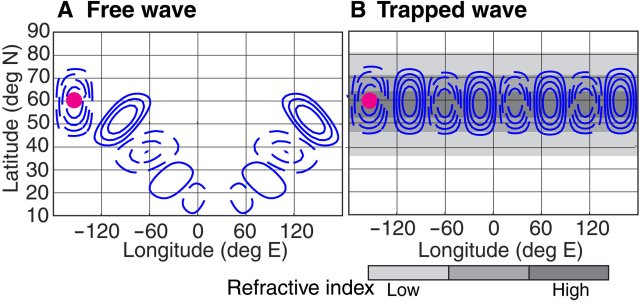
Research associate Todd Mooring said, "The result was the opposite of what you would expect," adding: "In conditions that are supposed to favor these large-amplitude waves, we actually get smaller waves."
The researchers said the findings support a more cautious approach to linking heat waves or heavy precipitation to this single atmospheric explanation.
TCD Picks » Quince Spotlight
💡These best-sellers from Quince deliver affordable, sustainable luxury for all




Why does it matter?
Many parts of the Northern Hemisphere have seen heat waves and intense rainfall become more common and more severe.
The leading jet stream theory shapes future research, media coverage, and public conversations about extreme weather. If that theory is being overstated or partially incorrect, then we shape the future in the wrong direction.
The Harvard researchers were careful not to suggest that climate change is somehow not a factor. This particular explanation may not be enough on its own to account for the observed rise in certain extreme events. Climate change is still likely worsening extreme weather.
Although this study suggests that atmospheric details are more complicated than previously assumed.
The study's authors are urging restraint.
The researchers said this single theory should not be used to assume simultaneous heat waves will necessarily occur across many regions, even as climate change continues to worsen some forms of extreme weather.

Get TCD's free newsletters for easy tips, smart advice, and a chance to earn $5,000 toward home upgrades. To see more stories like this one, change your Google preferences here.






