


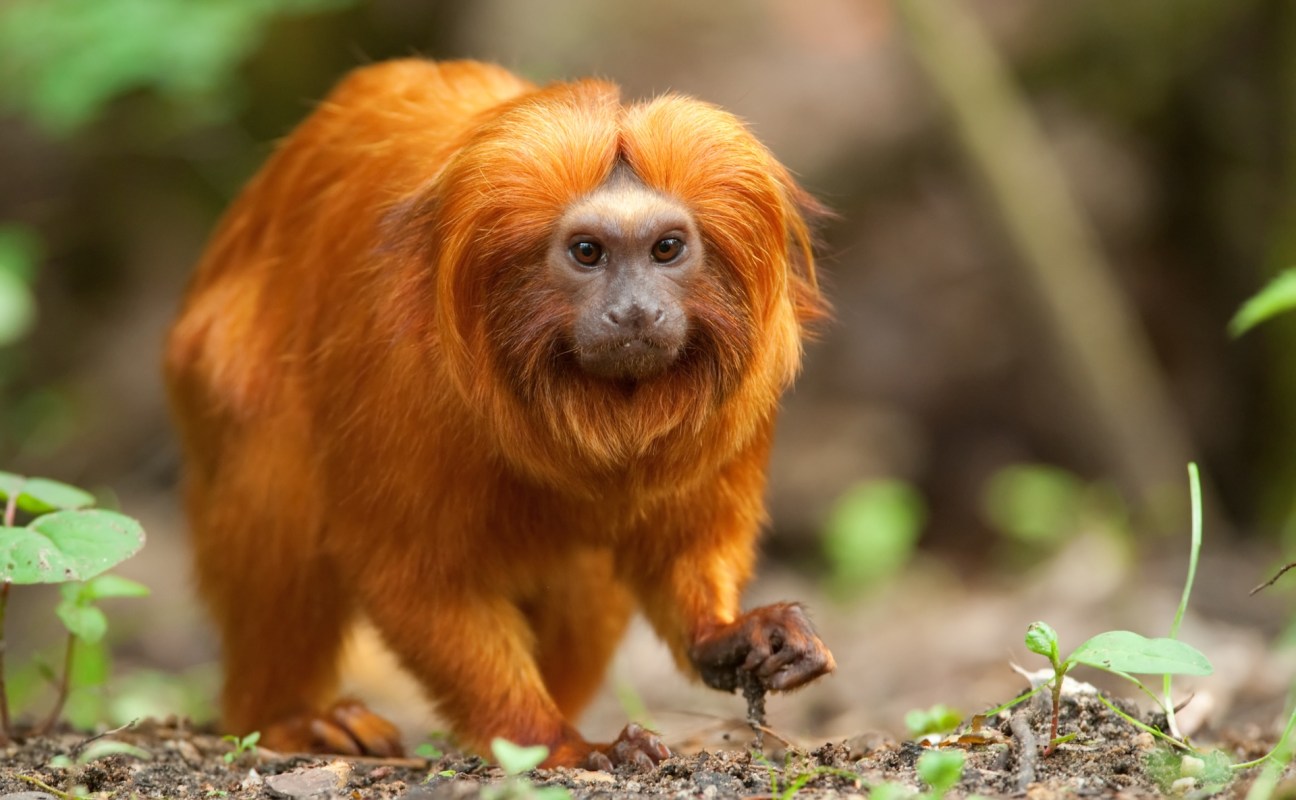
The golden lion tamarin, with its bright orange fur and unmistakable mane, is one of Brazil's most recognizable endangered animals.
But photos from a wildlife-trafficking bust are drawing fresh attention to a brutal black market once again targeting the tiny monkey.
Mongabay reported that traffickers have moved golden lion tamarins out of Brazil by car, by air, and even by sailboat, with some collectors said to pay as much as $100,000 for a single animal.
Reporting has traced a growing international trafficking pipeline for the species, which is found only in a small part of Brazil's Atlantic Forest. Mongabay reported that authorities linked seizures in Suriname, Togo, and the Brazilian Amazon to organized trafficking groups moving animals through Latin America and Africa, at times using fake documents and assumed identities.
In one case, authorities found 20 golden lion tamarins and 12 Lear's macaws on a sailboat near Togo after a 40-day Atlantic journey. Three of the monkeys died during the trip.
Images shared from the rescue show the tamarins crammed into cages after the failed voyage. Rescuers said the surviving animals were soaked in seawater, severely underweight and missing fur.
TCD Picks » Quince Spotlight
💡These best-sellers from Quince deliver affordable, sustainable luxury for all




In another case, Mongabay reported that Brazilian police stopped a driver in Rondônia and discovered eight caged golden lion tamarins in the vehicle's back seat. Investigators said the route was tied to a known international trafficking corridor.
The golden lion tamarin has long been considered a conservation success story. The species' population once fell to fewer than 200 in the wild, but decades of conservation work helped bring that number back to roughly 4,800. Even so, the monkeys still live in a limited range and remain endangered.
When animals are taken from the wild, forest ecosystems lose key species, conservation workers face growing danger in the field, and criminal networks profit from routes also associated with other forms of smuggling.
The situation also shows how loopholes in international wildlife trade rules can be exploited to "launder" wild-caught animals as captive-bred, making enforcement even more difficult.
Luis Paulo Ferraz of the Golden Lion Tamarin Association called the resurgence of trafficking "frightening," saying field teams have increasingly crossed paths with criminals in the forest.

Get TCD's free newsletters for easy tips, smart advice, and a chance to earn $5,000 toward home upgrades. To see more stories like this one, change your Google preferences here.







