


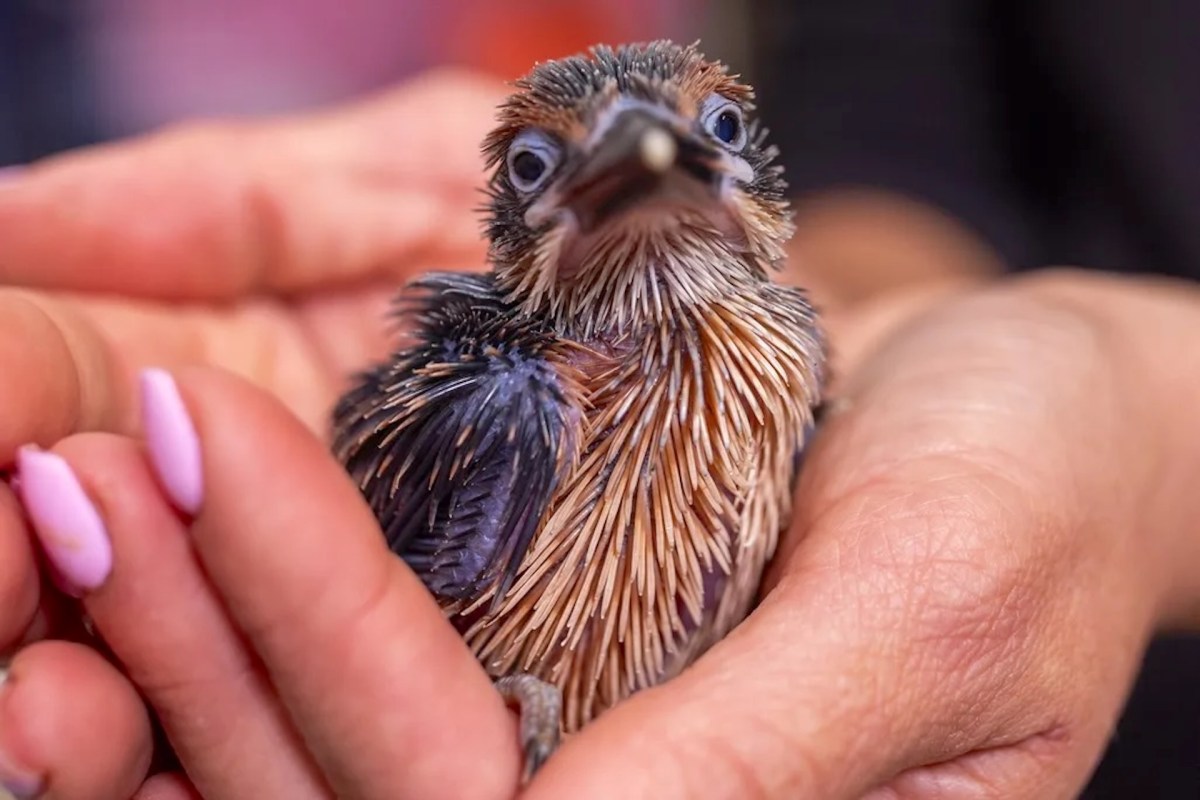
A hopeful conservation update is drawing attention online: Four Guam kingfisher chicks, also known as sihek, hatched this spring at the Smithsonian Conservation Biology Institute in Virginia.
For a bird that is extinct in the wild across its native range and has a global population of only about 125 individuals, the achievement marks a significant milestone.
Smithsonian Magazine reported that two of the chicks emerged in April — on the 12th and 14th — and two more followed at the end of May, on the 27th and 28th. The hatchlings were born to first-time parents Poki and Antonio, tying the institute's season-high total for sihek chicks.
The sihek is one of the rarest birds on Earth.
Once native to Guam, the species disappeared from the wild after invasive brown tree snakes — introduced after World War II, likely through military cargo — devastated local bird populations.
Breeding the birds in captivity has not been simple. Sihek are highly territorial, and Poki and Antonio reportedly did not get along well enough to breed last year.
TCD Picks » Quince Spotlight
💡These best-sellers from Quince deliver affordable, sustainable luxury for all




This year, however, the pair succeeded. Given the lack of experience of the parents, staff incubated and hand-turned the eggs and let Poki and Antonio practice with plaster-filled "dummy eggs."
U.S. Fish and Wildlife Service biologist Megan Laut told Smithsonian magazine that "every additional individual is incredibly valuable," especially with such a small global population.
The chicks also add genetic diversity, as their lineage remains underrepresented among living sihek.
The sihek is culturally important to the Indigenous Chamorro people of Guam and once helped keep insect and lizard populations in balance.
In 2024, conservationists released nine sihek on predator-free Palmyra Atoll, and all have survived so far — a much better outcome than expected.
Some of the birds have even started nesting. While their first eggs did not hatch, experts said that may simply reflect inexperienced parents.
"This was their first time caring for their eggs, and it is anticipated that it may take a few more attempts for the birds to mature their skills and successfully hatch and rear chicks," the U.S. Fish and Wildlife Service said.
"We are hopeful that we'll soon have our first wild chick in almost 40 years as these birds grow a bit older and gain more parenting experience," John Ewen, a professor in species recovery at the Zoological Society of London's Institute of Zoology, told Smithsonian Magazine.

Get TCD's free newsletters for easy tips, smart advice, and a chance to earn $5,000 toward home upgrades. To see more stories like this one, change your Google preferences here.







