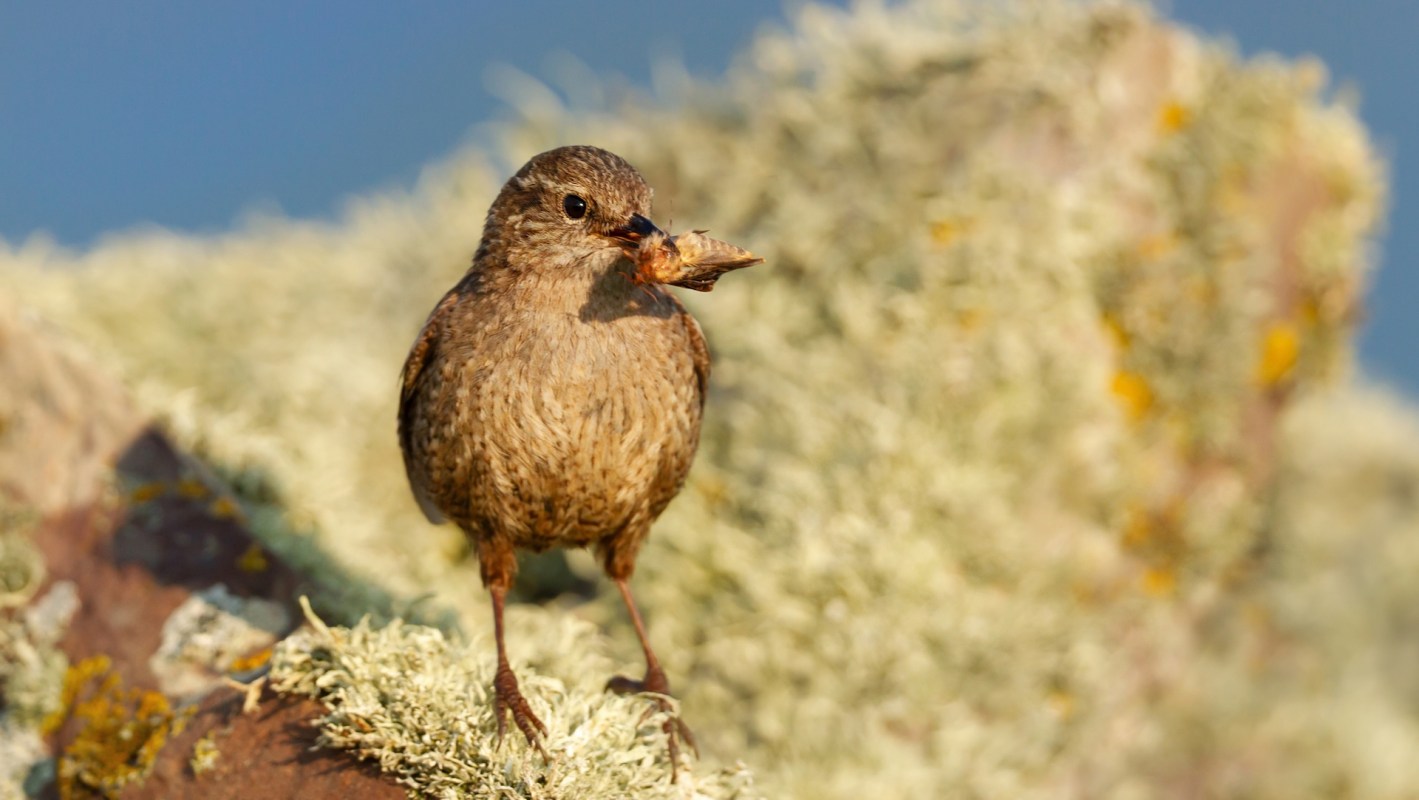
Tiny wrens living on some of Scotland's most remote islands are giving scientists an unusually clear view of evolution in action.
A new study found that several isolated island wren populations are changing in different ways — and that in two places, the birds have grown dramatically larger than their mainland relatives.
Researchers at the University of Birmingham examined four subspecies of the Scottish island wren — those on Shetland, Fair Isle, the Outer Hebrides, and St Kilda. Their findings were published in the Evolutionary Journal of the Linnean Society, and cited by ScienceDaily.
The most striking result came from Shetland and St Kilda, where scientists documented "island gigantism," the phenomenon in which animals isolated on islands can become far larger than related mainland species.
Mainland British wrens typically weigh around 7 to 10 grams. On St Kilda, by contrast, the birds weighed about 13 to 16 grams, and the largest were more than twice the size of the smallest wrens found on mainland Great Britain.
The team also found that each of the four island groups is genetically distinct from mainland wrens, with Shetland and St Kilda showing the biggest differences in appearance and song.
TCD Picks » Quince Spotlight
💡These best-sellers from Quince deliver affordable, sustainable luxury for all




The study provides scientists with a rare, detailed example of how isolation can drive evolution in new directions, even in places that appear to have broadly similar environments.
Islands are already famous for producing unusual wildlife, from giant tortoises to Komodo dragons, ScienceDaily noted. Researchers estimate that 20% to 30% of Earth's species live on islands, making them especially important for understanding biodiversity.
The new research suggests that similar island settings can produce similar traits — such as bigger bodies — through different genetic pathways.
If isolated populations are evolving into something increasingly distinct, losing one island population could mean losing a separate evolutionary path altogether.
To work out how these birds changed, researchers used body measurements, song recordings, and whole-genome sequencing to compare island wrens with mainland birds. It was one of the most detailed examinations yet of the biological processes behind so-called "island syndromes."
The genome data showed that each island population is largely isolated, and that even wrens that ended up looking alike — particularly those from Shetland and St Kilda — grew larger through distinct genetic changes.
That points to "parallel evolution," in which similar pressures independently lead to similar results. Meanwhile, wrens on Fair Isle and in the Outer Hebrides remained genetically closer to mainland birds, showing that island evolution doesn't unfold the same way everywhere.
Researchers say these wrens could now serve as a powerful model for future studies of how biodiversity forms, how species diverge, and why island ecosystems so often produce extraordinary animals.
As lead author Dr. Michał Jezierski said, "Their genetic distinctiveness is so high, that it is likely they are on their way to becoming new species." Co-author Will Smith called them "a powerful case study to understand the mechanisms by which island biodiversity is generated worldwide."

Get TCD's free newsletters for easy tips, smart advice, and a chance to earn $5,000 toward home upgrades. To see more stories like this one, change your Google preferences here.