


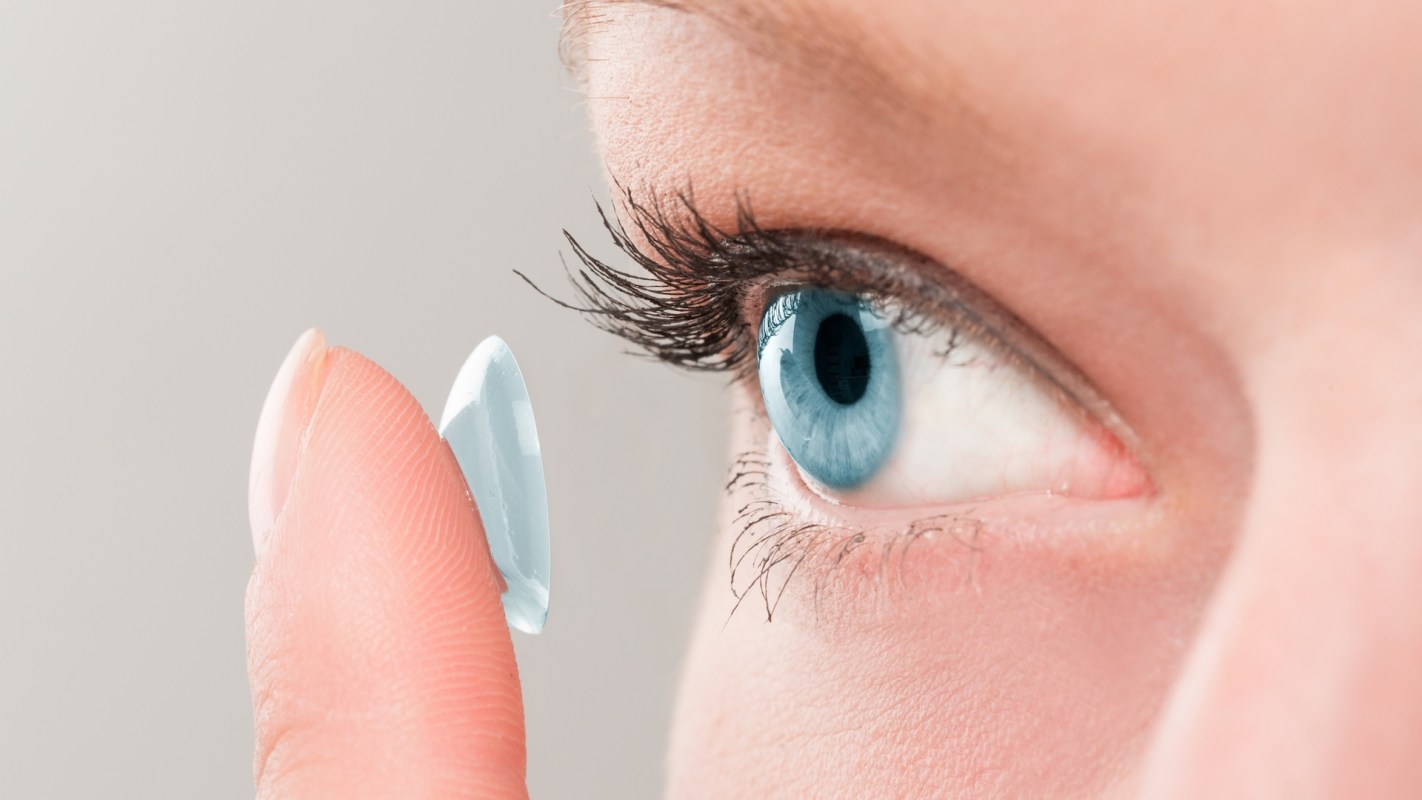
While LASIK has helped many people see clearly, researchers are testing a different approach that sounds almost futuristic: an electric contact lens-like device that reshapes the eye in about a minute.
The technique is still experimental, but early tests on rabbit eyes suggest it could someday offer a lower-cost, less invasive alternative to laser eye surgery.
What's happening?
Teams at Occidental College and the University of California, Irvine have been developing a method known as electromechanical reshaping, or EMR, to alter the curve of the cornea without cutting away tissue, ScienceDaily reported.
Instead of using lasers to permanently remove part of the cornea, the process applies a mild electrical current to briefly make the tissue pliable enough to mold into a new shape.
"The whole effect was discovered by accident," Brian Wong, professor and surgeon at the University of California, Irvine, explained to the American Chemical Society. "I was looking at living tissues as moldable materials and discovered this whole process of chemical modification."
In early experiments, the team used specially designed platinum "contact lenses" as electrodes and tested the method on 12 rabbit eyeballs placed in a tear-like saline solution.
TCD Picks » Quince Spotlight
💡These best-sellers from Quince deliver affordable, sustainable luxury for all




Ten of those eyes were treated to mimic correction for myopia, and researchers reported that the corneas reached the intended focusing power.
The procedure took about one minute. Corneal cells remained alive because pH changes were carefully controlled, which affects how stiff or flexible the collagen-rich tissue becomes.
Why does it matter?
Vision problems can affect everyday safety, school performance, work, and quality of life. And while LASIK is widely used and generally considered safe, it works by removing corneal tissue.
That can come with downsides, including dry eyes, glare, halos, and, in some cases, weakening the cornea's structure. EMR may avoid some of those tradeoffs by reshaping the tissue rather than carving it away.
If the technology ultimately proves effective in living animals and humans, it could broaden access to vision correction by reducing reliance on costly, complex laser systems.
The treatment is not currently available to patients, and vision correction still depends on established options and guidance from eye care professionals.
What's next?
Scientists are continuing to refine the technology and study how well it holds up over time.
So far, EMR has been studied mainly in isolated rabbit eyes rather than living animals or humans, so the next steps include more animal studies to determine whether the reshaped cornea remains stable and whether any side effects emerge.
Researchers are developing smarter electrode contact lenses that could track corneal shape, hydration, and transparency during treatment.
That could make the technique more precise and help doctors understand exactly how much reshaping is taking place in real time.
Scientists are also exploring whether EMR might eventually be adapted not just for nearsightedness, but also for farsightedness and astigmatism.
Separate experiments suggest it may help reverse certain types of corneal clouding, which in severe cases can require a corneal transplant today.
"There's a long road between what we've done and the clinic," said Michael Hill, the project's team lead and professor of chemistry at Occidental College. But, he added, "if we get there, this technique is widely applicable, vastly cheaper and potentially even reversible."

Get TCD's free newsletters for easy tips, smart advice, and a chance to earn $5,000 toward home upgrades. To see more stories like this one, change your Google preferences here.






