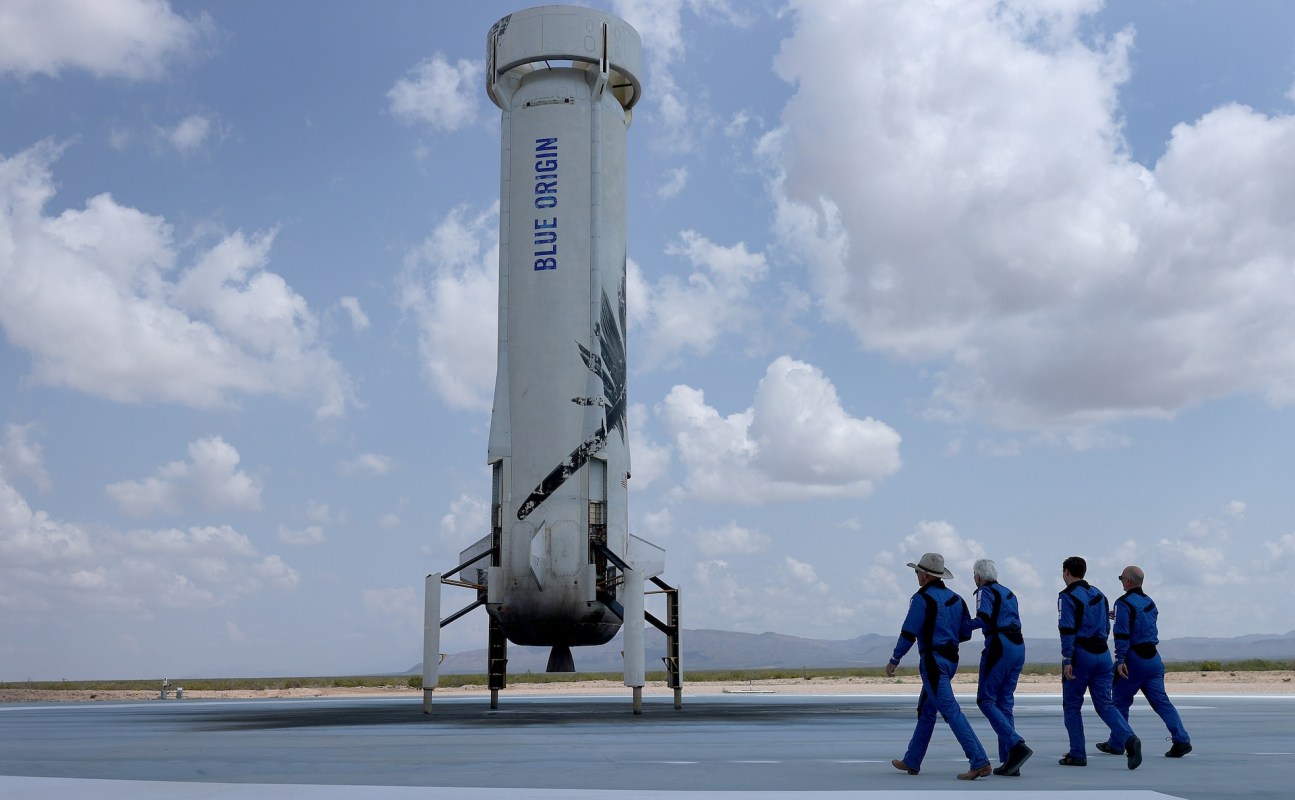
A Blue Origin rocket that was set to launch Amazon broadband satellites erupted into a fireball during a late-night engine test in Florida, dealing a major setback to Jeff Bezos' space company and renewing concerns about the risks tied to high-stakes launch programs.
What's happening?
Blue Origin's New Glenn rocket exploded around 9 p.m. local time on May 28 during a hot-fire test at Cape Canaveral Space Force Station in Florida, E! News reported.
A hot-fire test involves firing a rocket's engines at full power while it remains secured to the ground before launch.
Video from the scene, shared by Spaceflight Now (@SpaceflightNow) on the social platform X, appeared to show the 320-foot New Glenn vehicle destroyed on the pad, with visible damage left at the launch site.
Here's our video of the explosion at Launch Complex 36. It happened about 9 pm ET (0100 UTC) as Blue Origin was beginning a static fire test of its New Glenn rocket.
— Spaceflight Now (@SpaceflightNow) May 29, 2026
Watch live views: https://t.co/tm2wZQmAVD pic.twitter.com/PmbgQC6Qmq
The rocket had been expected to launch 48 satellites for Amazon's low-Earth-orbit broadband network as early as next month, though the satellites were not on board during the test.
Bezos addressed the incident publicly about an hour later, writing on X that all personnel were safe and that the company had already started investigating.
TCD Picks » Quince Spotlight
💡These best-sellers from Quince deliver affordable, sustainable luxury for all




"Very rough day, but we'll rebuild whatever needs rebuilding and get back to flying. It's worth it," Bezos wrote.
Blue Origin described the explosion as "an anomaly" and warned that debris could wash ashore in the coming days or weeks, urging the public not to touch anything they may find.
The setback follows another recent problem for New Glenn. The rocket was sidelined in April after problems on its third flight led to a Federal Aviation Administration investigation.
Why does it matter?
Incidents like these can put workers at risk, damage expensive infrastructure, scatter debris into nearby communities and shorelines, and delay projects tied to both public and commercial services.
TCD Picks » Quince Spotlight
💡These best-sellers from Quince deliver affordable, sustainable luxury for all
In this case, Blue Origin had been preparing to support Amazon's satellite internet plans, which have been promoted as a way to bring broadband access to people without reliable service.
Wreckage and debris from an industrial explosion can also pose a public health risk, particularly if it contains sharp fragments or dangerous materials. Nearby ecosystems are especially at risk, as foreign materials, chemicals, and pollutants can harm already vulnerable species.
What's being done?
Bezos said the company had already begun investigating the root cause of the explosion and would rebuild.
NASA has signaled that it will remain engaged as the investigation moves forward.
NASA Administrator Jared Isaacman wrote on X that the agency would support "a thorough investigation of this anomaly" and assess "near-term mission impacts."
If debris washes ashore, it should be reported to local authorities or handled according to instructions from Blue Origin:
• Email: MissionRecovery@blueorigin.com
• Call: 1-321-222-4355

Get TCD's free newsletters for easy tips, smart advice, and a chance to earn $5,000 toward home upgrades. To see more stories like this one, change your Google preferences here.