


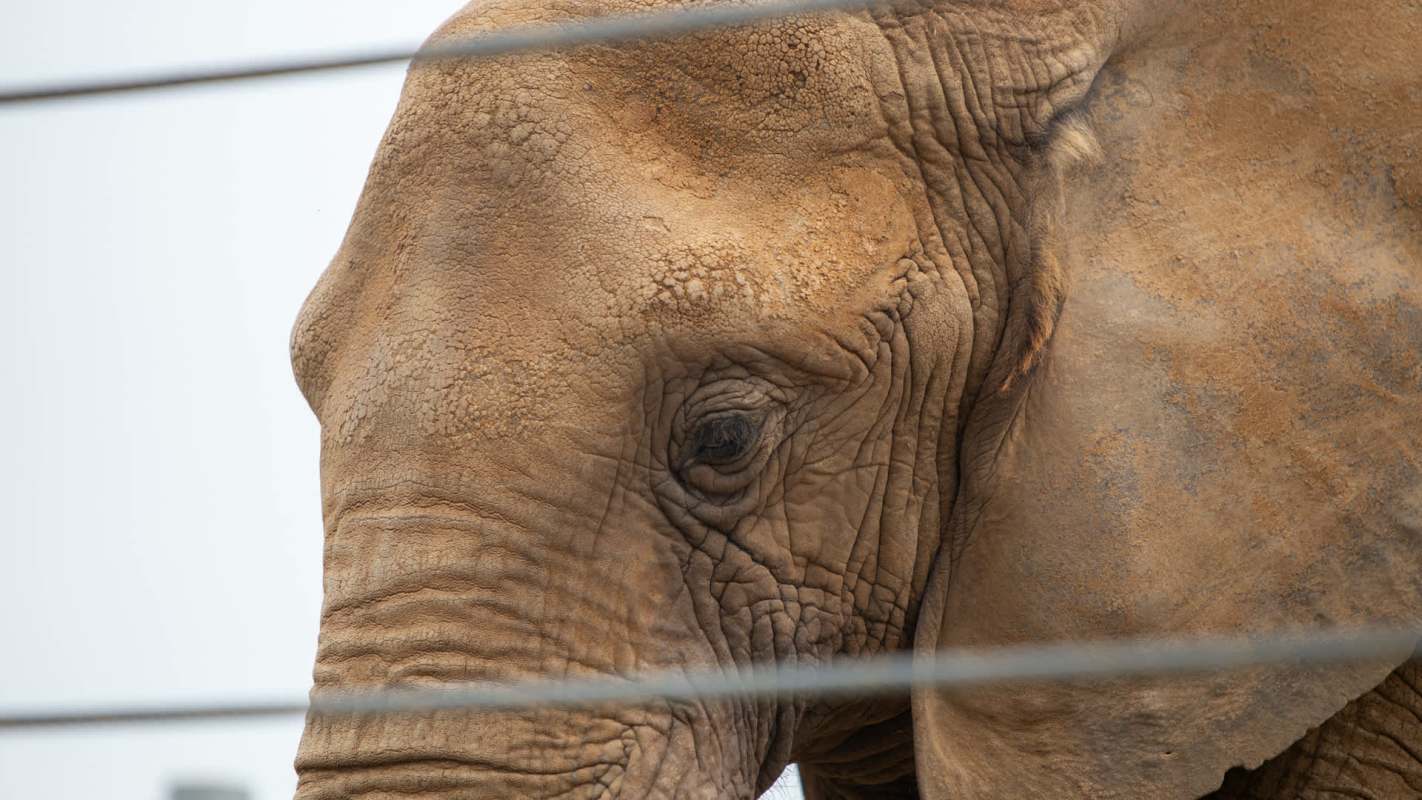
Happy, the Bronx Zoo elephant whose mirror-test breakthrough helped reshape scientists' understanding of elephant minds, has died at 55.
Her death brings to a close nearly 50 years at the zoo, and a saga that also became a major flashpoint in the debate over animal captivity and legal rights, as the AP reported.
What happened?
The Bronx Zoo said Happy was euthanized Tuesday after age-related health problems worsened recently; she appeared to have declining kidney or liver function. Officials said a necropsy later found arthritis and sizable, inoperable uterine tumors that cannot be detected in elephants through exams or imaging.
Happy was taken from the wild in Asia and brought to the United States at age 1. She arrived at the Bronx Zoo in 1977, where she would spend most of her life. Zoo officials said Asian elephants in U.S. zoos typically have a median life expectancy of about 45 years.
"She was a wonderful elephant," interim zoo director Craig Piper told the AP. "She served as a tremendous ambassador for elephants and for elephant conservation."
Zoo officials said Happy spent her final weeks in an off-exhibit barn and yard within her enclosure by her own choice. Staff members provided what Piper described as hospice-style care at the zoo, including fluids, nutrition, and pain control.
TCD Picks » Quince Spotlight
💡These best-sellers from Quince deliver affordable, sustainable luxury for all




Happy became internationally known in 2005, when researchers discovered that she could identify herself in a mirror. That was a marker of self-awareness documented in very few species, as the AP noted.
During the experiment, she repeatedly touched an X above her eye, using the mirror to locate it.
Her mirror test became a widely cited example of elephants' cognitive complexity, adding to a growing body of evidence that the animals experience the world in sophisticated ways, according to the AP.
The finding also fed into a much broader argument over whether large, social animals can truly thrive in captivity, particularly in urban zoos, the AP noted.
Why does it matter?
Over the course of Happy's lifetime, elephant exhibits came under growing scrutiny, with critics saying such spaces are too constrained for animals that travel far in the wild.
In her later years, Happy lived apart from the zoo's other elephants after her final close companion died in 2006. However, the animals could still see, smell, and touch one another across a divider.
Her case eventually moved from the realm of science to the courts.
In 2018, the Nonhuman Rights Project filed suit against the Bronx Zoo, asking that Happy be recognized as a legal "person" and transferred to a sanctuary, according to the AP. The outlet reported that New York's highest court ultimately rejected that claim, though two judges issued strong dissents, with one calling her captivity "inherently unjust and inhumane."
The Bronx Zoo's parent organization, the Wildlife Conservation Society, ended pachyderm acquisitions 20 years ago, signaling a long-running shift in how it manages its elephant program.
What's being done?
With Happy gone, Patty, 57, is now New York City's only elephant on exhibit. What happens next for Patty remains unsettled.
The Wildlife Conservation Society said in 2006 that if just one elephant remained, that animal could be moved to another zoo under the right circumstances, and Piper told the AP that the zoo will be "really thoughtful and careful" in weighing that decision.

Get TCD's free newsletters for easy tips, smart advice, and a chance to earn $5,000 toward home upgrades. To see more stories like this one, change your Google preferences here.






