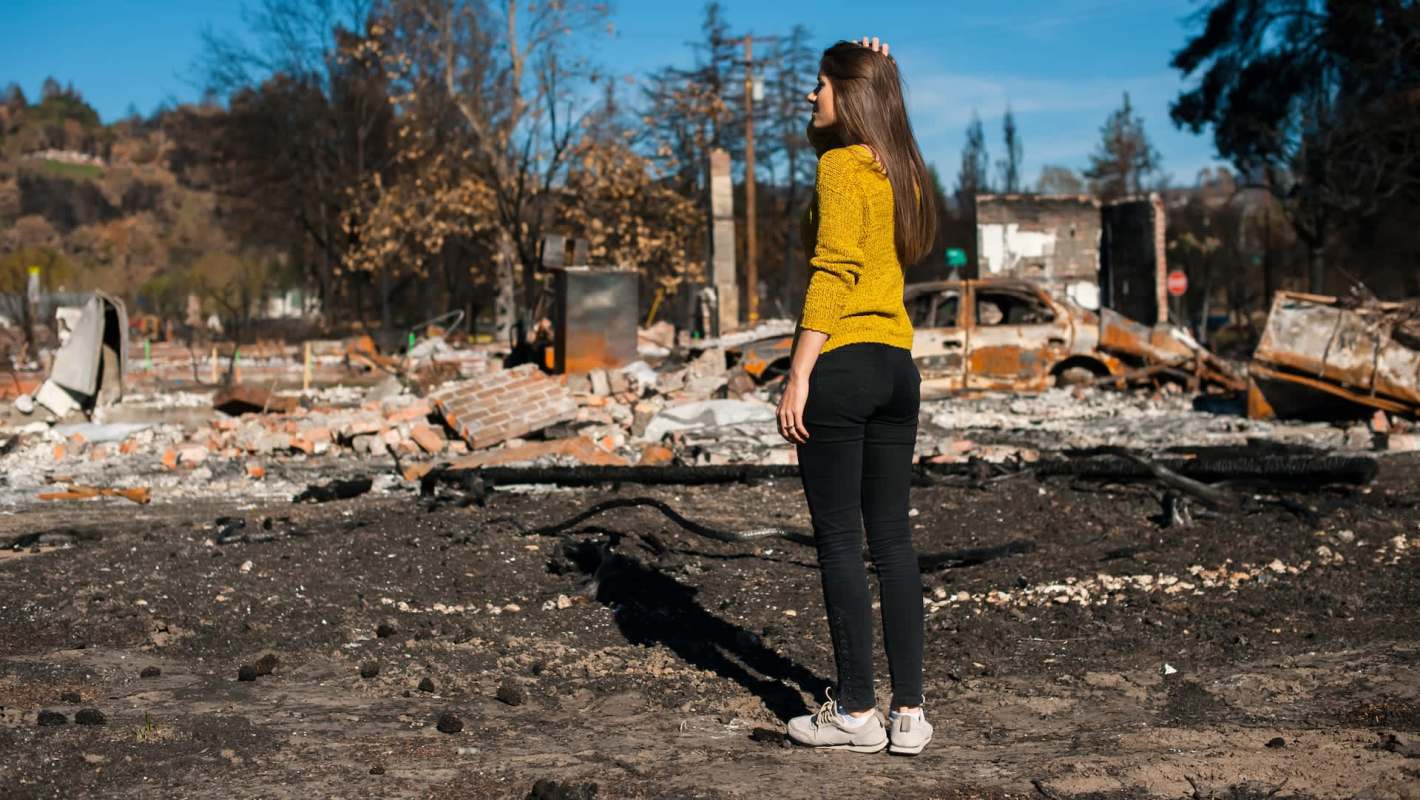
Parents who fled the Los Angeles wildfires in January 2025 are still grappling with a painful question: Did toxic smoke begin affecting their children before they were even born?
A new report from Grist and the Australian Broadcasting Corporation suggests that fear is not unfounded and that public health systems in the U.S. and Australia are still struggling to give pregnant families clear answers.
The report ties the recent disasters in Los Angeles to Australia's 2019-2020 "Black Summer," when wildfire smoke blanketed major cities and left many pregnant people with little guidance beyond staying inside.
Researchers already know that fine particulate pollution can enter the lungs, pass into the bloodstream, and disrupt pregnancy. Early wildfire-specific studies are now linking smoke exposure during pregnancy to higher risks of preterm birth, low birth weight, asthma, and even autism diagnoses in children exposed in utero.
That has left families such as Anneke French's in Canberra, Australia, and Irene Farr's in Pasadena, California, wondering what the smoke may have done.
French gave birth nearly five weeks early during Black Summer after a placental abruption. Farr, whose 11-month-old daughter was with her when the Eaton Fire occurred in January 2025, still has not moved back home because of concerns about lingering contamination from burned buildings, cars, plastics, and other urban materials.
TCD Picks » Quince Spotlight
💡These best-sellers from Quince deliver affordable, sustainable luxury for all




Scientists say these newer city fires may create a more complex — and potentially more dangerous — mix of pollutants than vegetation fires alone.
The wildfire smoke problem is no longer confined to remote forests. It is reaching dense neighborhoods, hospitals, schools, and homes, including places where babies are developing and families believe they are safe.
Many people are being asked to make major decisions — whether to evacuate, whether to return home, whether to let children play outside — without consistent medical guidance or complete air-monitoring data. In Los Angeles, some monitors were not designed to detect the full range of toxins released during the burning of urban infrastructure.
Grist and the Australian Broadcasting Corporation report that Australia's Black Summer was linked to more than 400 deaths from indirect smoke inhalation. They also report that about 100 million people in the U.S. were exposed to hazardous smoke from Canada's 2023 wildfires. Emergency visits for asthma and heart symptoms have also jumped during major smoke events.
The uncertainty itself becomes part of the harm. Parents are left worrying about asthma, eczema, or developmental issues that may not appear until years later.
Grist and the Australian Broadcasting Corporation report that researchers from several universities in Los Angeles are examining the fires' near-term and long-term health effects, with pregnant people and first responders among the groups of interest. Early testing has already found unusual blood markers in exposed residents and elevated levels of dangerous compounds in the burn zone.
But scientists say funding is shaky, and wildfire smoke research is not standardized across countries. Experts said that scientists need shared methods for measuring smoke exposure so hospitals and governments can develop clearer thresholds and policies more quickly.
The best available tools are still imperfect but important: tracking local air quality, reducing outdoor exposure during smoke events, using HEPA filtration when possible, wearing a well-fitted mask such as an N95 when conditions are bad, and asking doctors in advance about smoke plans during pregnancy or infancy.
The report also points to the need for stronger institutional protections, including better hospital filtration, more specialized air monitoring, and long-term health tracking after major fires.
"We are facing an entirely new challenge when wildfires burn into major cities," researcher Mike Kleeman said, per Grist. For parents like French, the hardest part is the uncertainty. "I don't know how that will affect her," she said of her daughter. "I still don't know."

Get TCD's free newsletters for easy tips, smart advice, and a chance to earn $5,000 toward home upgrades. To see more stories like this one, change your Google preferences here.