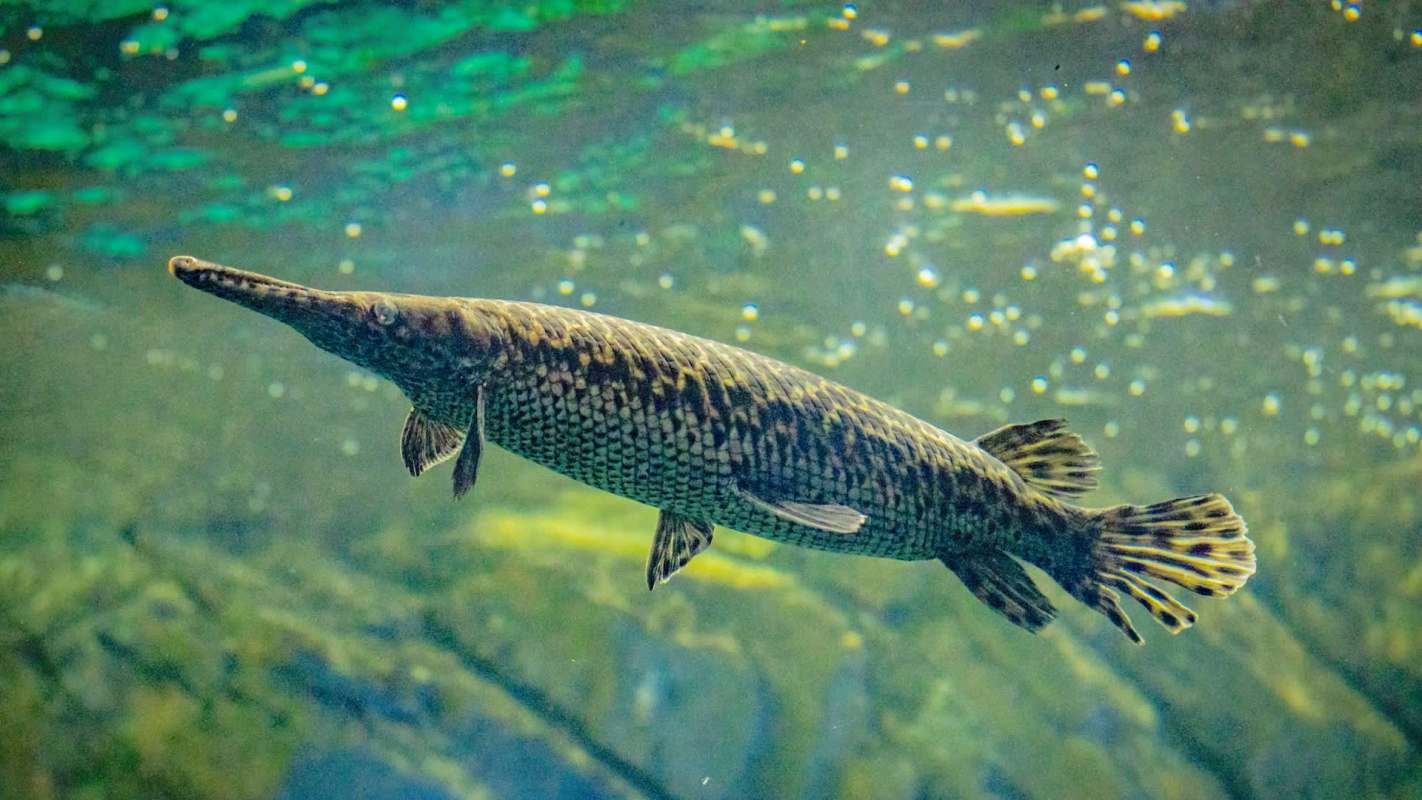
A newly described fossil turtle from ancient Florida appears to have survived a brutal encounter with one of North America's largest freshwater fish — and carried the evidence in its shell for millions of years.
Paleontologist Jason Bourque says the small musk turtle, now named Sternotherus pugnatus, likely tangled with an alligator gar around 5.5 million years ago in a late Miocene river system.
The Florida Museum of Natural History detailed last week how Bourque described the extinct species after examining hundreds of turtle fossils from Montbrook in North Florida. The full findings were published in the journal Historical Biology.
The name Sternotherus pugnatus refers to the turtle's apparent toughness. Bourque found many shells with healed scratches, bite marks, fractures, and broken bones, suggesting the animal regularly survived dangerous encounters.
One of those attackers appears to have been an alligator gar, or a close relative. Bourque found tiny tooth fragments lodged in pits on several shells, and comparisons with other fossils and a preserved gar skull pointed to fish teeth as the best match. Alligator gar can grow up to 10 feet long and weigh as much as 370 pounds.
"I immediately thought of gar. Their teeth fall out pretty regularly," Bourque said. At Montbrook, he added, "We could barely find dirt as we probed the ground with our screwdrivers, just a pavement of turtle, fish, and alligator bones scrambled together."
TCD Picks » Quince Spotlight
💡These best-sellers from Quince deliver affordable, sustainable luxury for all




The fossils came from Montbrook's so-called "turtle death layer," a dense deposit packed with turtle, fish, and alligator bones. Researchers think it may have formed when turtles clustered in a shrinking pool during drought, though another possibility is that birds dropped turtle remains there over time.
The discovery offers a glimpse of how ancient freshwater ecosystems worked and how small animals could survive clashes with giant predators. Musk turtles are understudied in the fossil record, so the large sample of well-preserved shells gives scientists a chance to track both behavior and anatomy.
If drought concentrated turtles and gars in a dwindling body of water, the scenario has a modern parallel. Today, human-caused climate shifts and altered waterways can shrink habitat, crowd wildlife together, and change how predators and prey interact.
Healthier rivers and wetlands support biodiversity, help buffer drought, and protect local communities that depend on freshwater systems. Fossils like these can help researchers better understand what species endured in the past and what could happen as today's ecosystems face growing pressure.
Museum staff, students, and volunteers have been excavating Montbrook since 2015, and the site has already produced major finds, including an elephant graveyard, a saber-toothed cat skull, and other extinct species. Bourque spent about a decade sorting through the turtle material to identify the new species.
The "turtle death layer" may preserve clues not just about drought, but also about predation, scavenging, and how remains moved through an ancient food web.

Get TCD's free newsletters for easy tips, smart advice, and a chance to earn $5,000 toward home upgrades. To see more stories like this one, change your Google preferences here.