


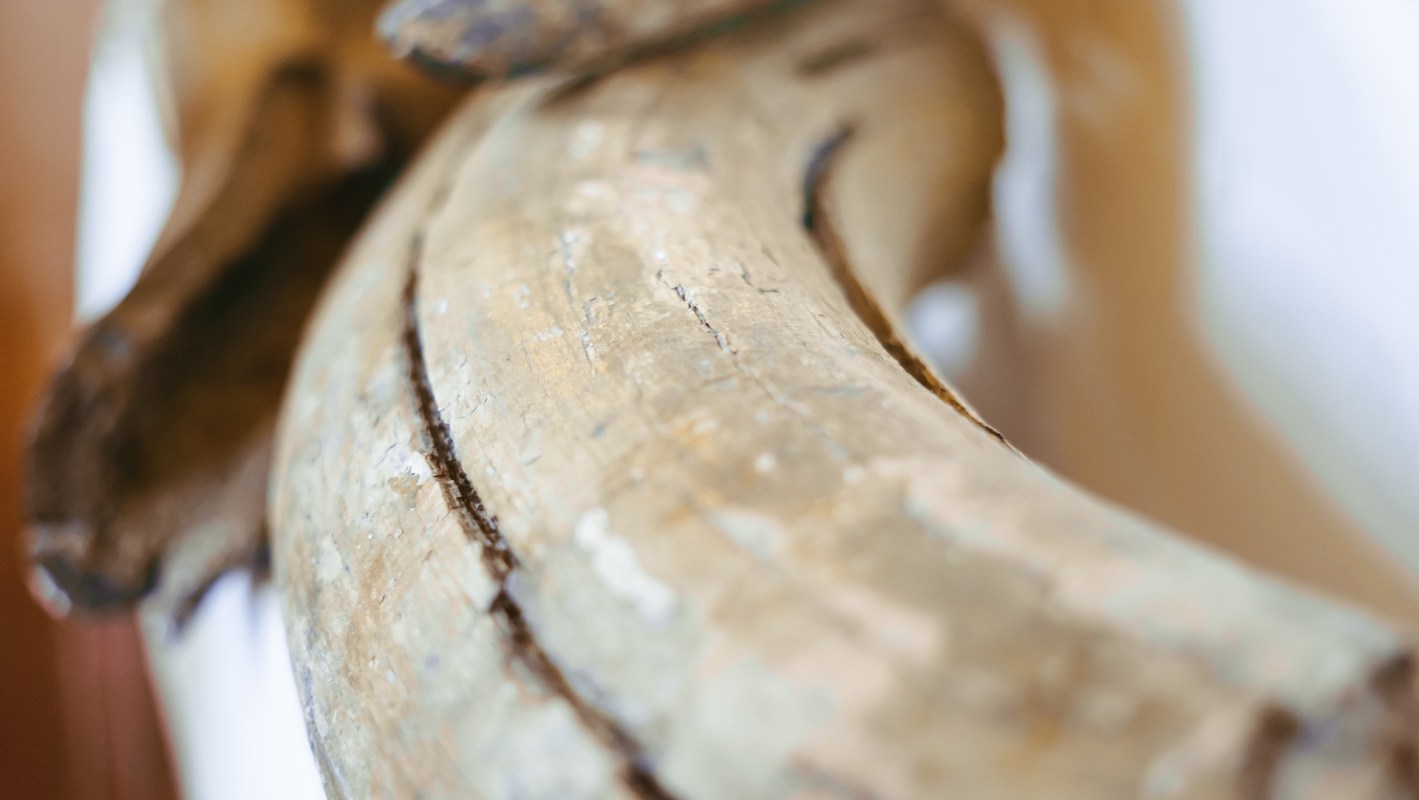
What for decades looked like a remarkable woolly mammoth discovery in Alaska has turned into an even stranger scientific mystery.
Researchers say fossilized backbones — not a complete skeleton — unearthed deep in Alaska's interior were not mammoths after all; they were whales, found about 250 miles from the nearest coastline, Science Alert reported.
The story began in 1951, when archaeologist Otto Geist found the large bones while traveling through Alaska's interior, in the prehistoric region known as Beringia. Because of their size, and because late Pleistocene megafauna remains were common in the area, the bones were identified as woolly mammoth bones.
That interpretation stood for decades.
But when scientists at the University of Alaska Fairbanks finally radiocarbon-dated the fossils, the timeline no longer made sense. The bones appeared to be only about 2,000 to 3,000 years old, far too recent for mammoths, which are generally believed to have vanished around 13,000 years ago, with only a few isolated groups surviving until roughly 4,000 years ago.
As the study team explained, "Mammoth fossils dating to the Late Holocene from interior Alaska would have been an astounding finding: the youngest mammoth fossil ever recorded."
TCD Picks » Quince Spotlight
💡These best-sellers from Quince deliver affordable, sustainable luxury for all




Instead, chemical clues in the fossils pointed in a very different direction.
The bones had unusually high levels of nitrogen-15 and carbon-13, isotope signatures more commonly associated with marine animals than grass-eating land mammals.
Researchers then analyzed mitochondrial DNA and matched the bones to whales, probably a Northern Pacific right whale and a common minke whale. The study was published in the Journal of Quaternary Science.
Had the fossils truly belonged to mammoths, they would have dramatically rewritten the species' timeline in Alaska.
Researchers examined several possible explanations for how the remains ended up so far inland, though none has been confirmed.
One idea is that whales somehow traveled inland via ancient inlets or river routes, though the team considers that unlikely given the animals' size and the limited habitat in interior Alaska.
Another possibility is that ancient humans carried the bones inland from the coast. Similar movement of marine remains has been documented elsewhere, though not in Alaska's interior.
The team also acknowledged a more mundane explanation: a museum mix-up. Geist gathered specimens from across Alaska and donated many of them in the early 1950s, so it is possible labels or locations were confused along the way.
"Ultimately, this may never be completely resolved," the researchers wrote. "However… this effort has successfully ruled these specimens out as contenders for the last mammoths."

Get TCD's free newsletters for easy tips, smart advice, and a chance to earn $5,000 toward home upgrades. To see more stories like this one, change your Google preferences here.







