


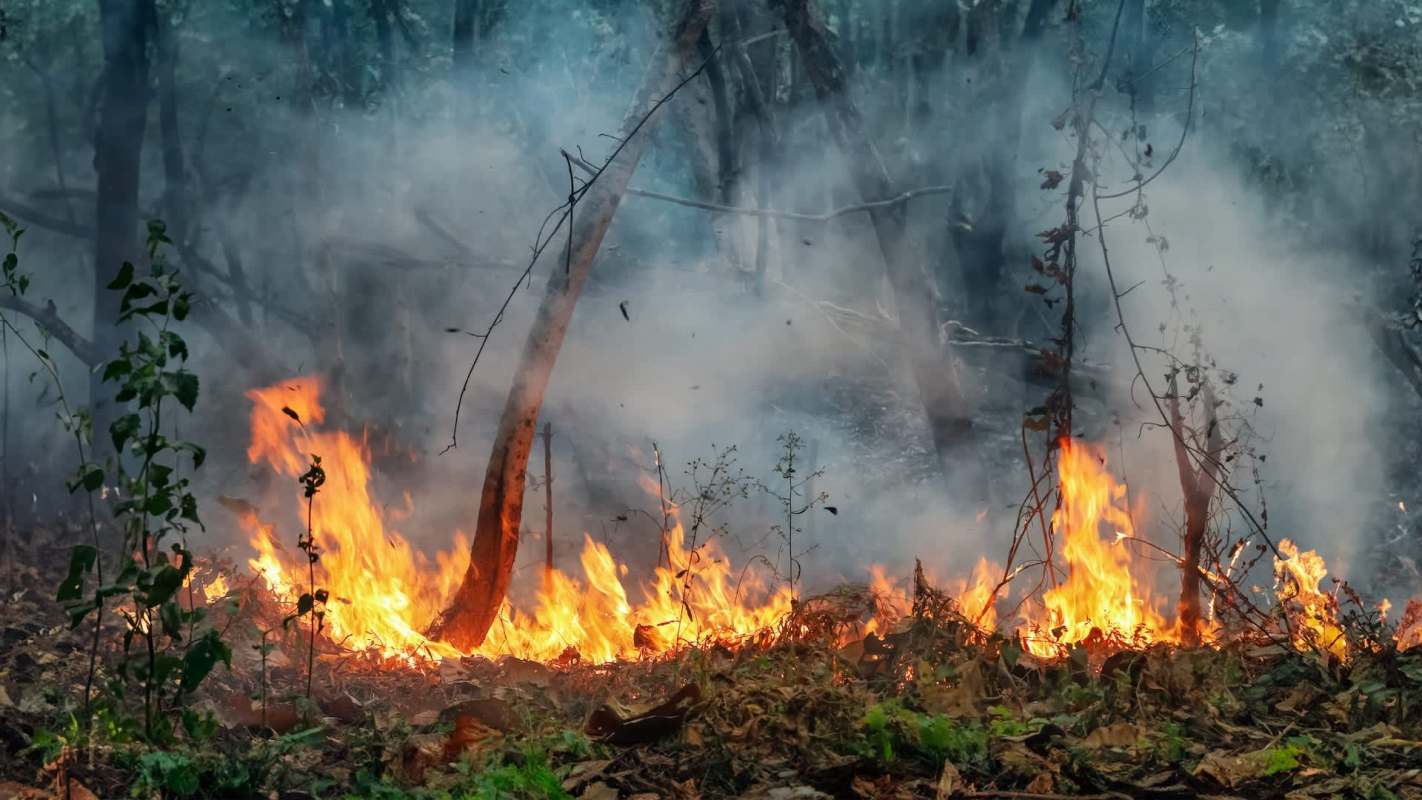
A wildfire burning near a critical nesting area in Wood Buffalo National Park is raising alarm for one of North America's rarest birds: the endangered whooping crane.
The threat is drawing attention after a longtime local crane expert warned that losing nests there would be "devastating" for a species that took decades to recover from the brink of extinction.
What's happening?
A lightning-sparked blaze known as Fire WB004 was first detected on Thursday, May 21, in the northern part of Wood Buffalo National Park, said Kaitlyn Werden, a fire information officer with Wood Buffalo National Park. According to CBC, the fire originated on the edge of a whooping crane nesting area about 40 miles northwest of Fort Smith.
Ronnie Schaefer, who has monitored cranes in the region for more than 40 years, said he spotted the fire from the air over the weekend while helping with an annual bird count. Working as a spotter in a helicopter, he was tracking nesting pairs and searching for eggs when he saw the blaze near the wetlands the birds rely on.
By Tuesday morning, the fire had grown to roughly 12,353 hectares, or about 30,524 acres, though cooler temperatures and intermittent precipitation had helped reduce its intensity on Sunday and Monday.
Crews were battling the fire with helicopters and air tankers, and additional firefighters were expected to arrive.
TCD Picks » Quince Spotlight
💡These best-sellers from Quince deliver affordable, sustainable luxury for all




Why does it matter?
Whooping cranes nearly went extinct in the 1940s and 50s, and a small flock has grown since the 1970s through international conservation efforts.
By 2018, the flock was estimated at 508 birds, CBC reported.
If the fire destroys nests or forces the birds to abandon the area, it could slow that progress and add more uncertainty for a species that still has very little margin for error.
Healthy wetlands support biodiversity, store carbon, and help stabilize ecosystems that nearby communities rely on. When wildfire threatens fragile habitat, it can endanger wildlife and disrupt landscapes that support both nature and people.
What are people saying?
Schaefer warned that even if the birds avoid the flames, they could still be displaced from the area.
"If the fire does approach, it's going to affect the whole general area because they'll move away," he said. "So they're going to be finding someplace else to live."
Officials were still stepping up the response, with helicopters, air tankers, and additional crews being deployed.

Get TCD's free newsletters for easy tips, smart advice, and a chance to earn $5,000 toward home upgrades. To see more stories like this one, change your Google preferences here.







