


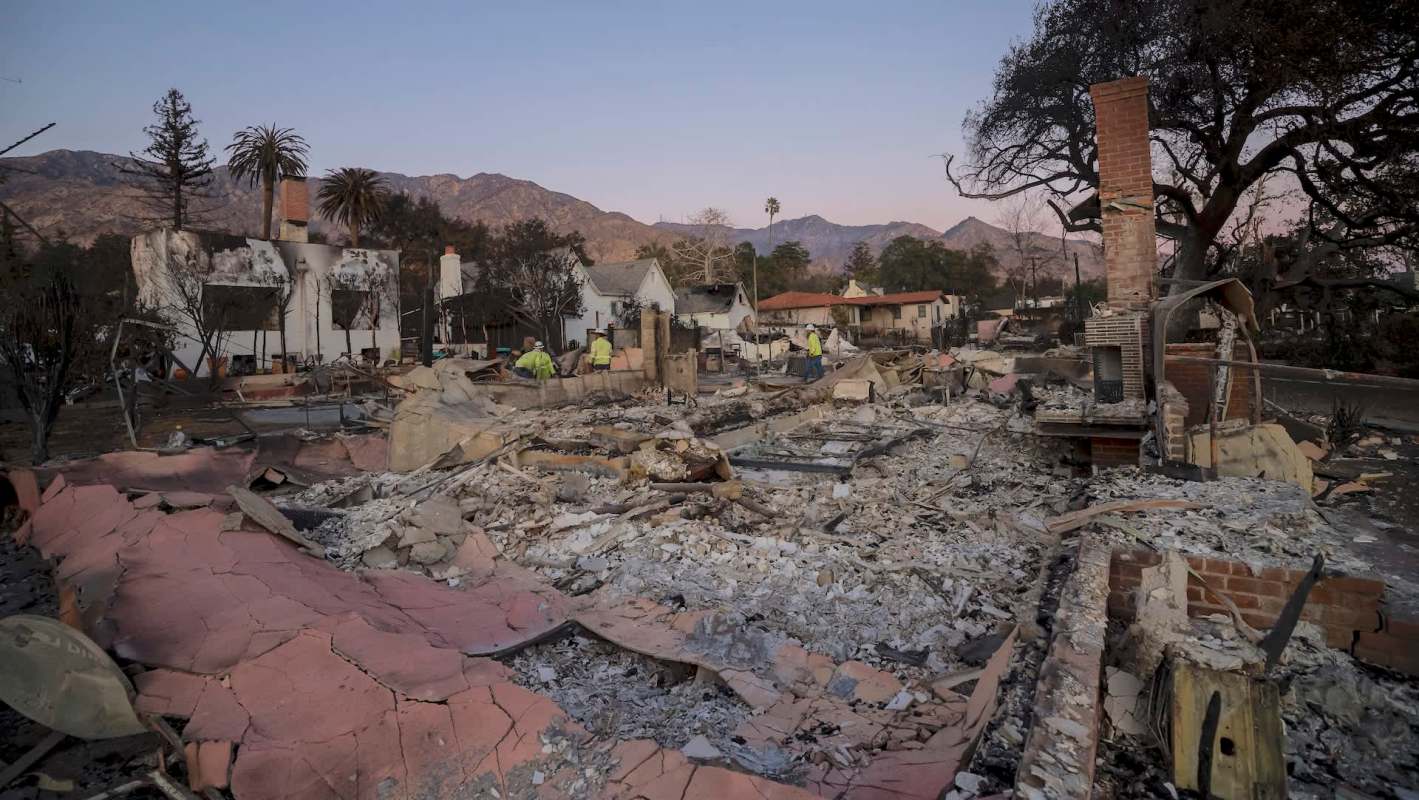
When the Eaton Fire tore through Altadena in January 2025, it did more than just destroy homes. It also crippled a local water system — and now, many residents are being told to pay thousands more to keep their service connected.
The wildfire scorched more than 14,000 acres near the southern boundary of Angeles National Forest, hitting an area served by Las Flores Water Company especially hard.
By the time the fire was out, the small private utility's two reservoirs had been destroyed, and roughly three-quarters of its customers' homes were lost.
More than a year later, the company began charging customers a $3,000 per-household surcharge starting April 1, according to Circle of Blue.
The fee is being added to water bills in $50 monthly increments over 60 months, though residents who can afford it can make a one-time $2,600 payment.
If customers don't pay, their water service could be shut off.
TCD Picks » Quince Spotlight
💡These best-sellers from Quince deliver affordable, sustainable luxury for all




"Such an action is not taken lightly, and we recognize that the imposition of this flat fixed fee may have economic consequences for some of you," John Bednarski, the board president, wrote in a September 2025 letter to customers.
For Las Flores, the surcharge is intended to stave off bankruptcy while it repairs damaged infrastructure and waits for residents to return so revenue can recover.
Climate Central has reported that the past three years marked a high point for U.S. billion-dollar weather disasters, adding strain to already aging water systems across the country.
Worsening extreme weather disasters can damage the systems people rely on every day for drinking water, sanitation, firefighting, and public health.
When water infrastructure fails, families can face unsafe conditions, businesses can be disrupted, and entire communities can be hit with steep new costs at the worst possible time.
In Altadena, residents already recovering from a catastrophic wildfire are now being asked to shoulder a new financial burden or risk losing service altogether.
Hurricane Helene damaged dozens of water and wastewater systems in western North Carolina in 2024.
In New Mexico, wildfire ash and debris damaged a watershed so severely that a city water treatment plant had to be replaced. In Corpus Christi, Texas, persistent drought has pushed reservoirs to dangerously low levels.
At the same time, utilities are dealing with old pipes, expensive treatment upgrades, inflation, tariffs, and rising borrowing costs.
Bluefield Research said water and sewer bills across 50 large U.S. cities climbed 24% over the last five years, as reported by Circle of Blue.
In many cases, state and federal aid is helping utilities recover after disasters, but officials say the money available falls far short of the need.
After Hurricane Helene, the state of North Carolina approved $861 million for 217 wastewater and drinking-water projects, but more than $600 million in applications still went unfunded.
Some communities are also pursuing major investments to make their water supplies more resilient.
Corpus Christi, for example, is weighing at least $1 billion in projects — including groundwater pumping, brackish groundwater treatment, recycled water, and possibly seawater desalination.
A judge ordered the reinstatement of a major Federal Emergency Management Agency grant program for climate-resilient infrastructure after it was canceled, and additional water infrastructure funding from the Infrastructure Investment and Jobs Act is set to expire this year.
That leaves many small and rural systems especially vulnerable, since they often have limited revenue and fewer financial options when disaster strikes.

Get TCD's free newsletters for easy tips, smart advice, and a chance to earn $5,000 toward home upgrades. To see more stories like this one, change your Google preferences here.






