


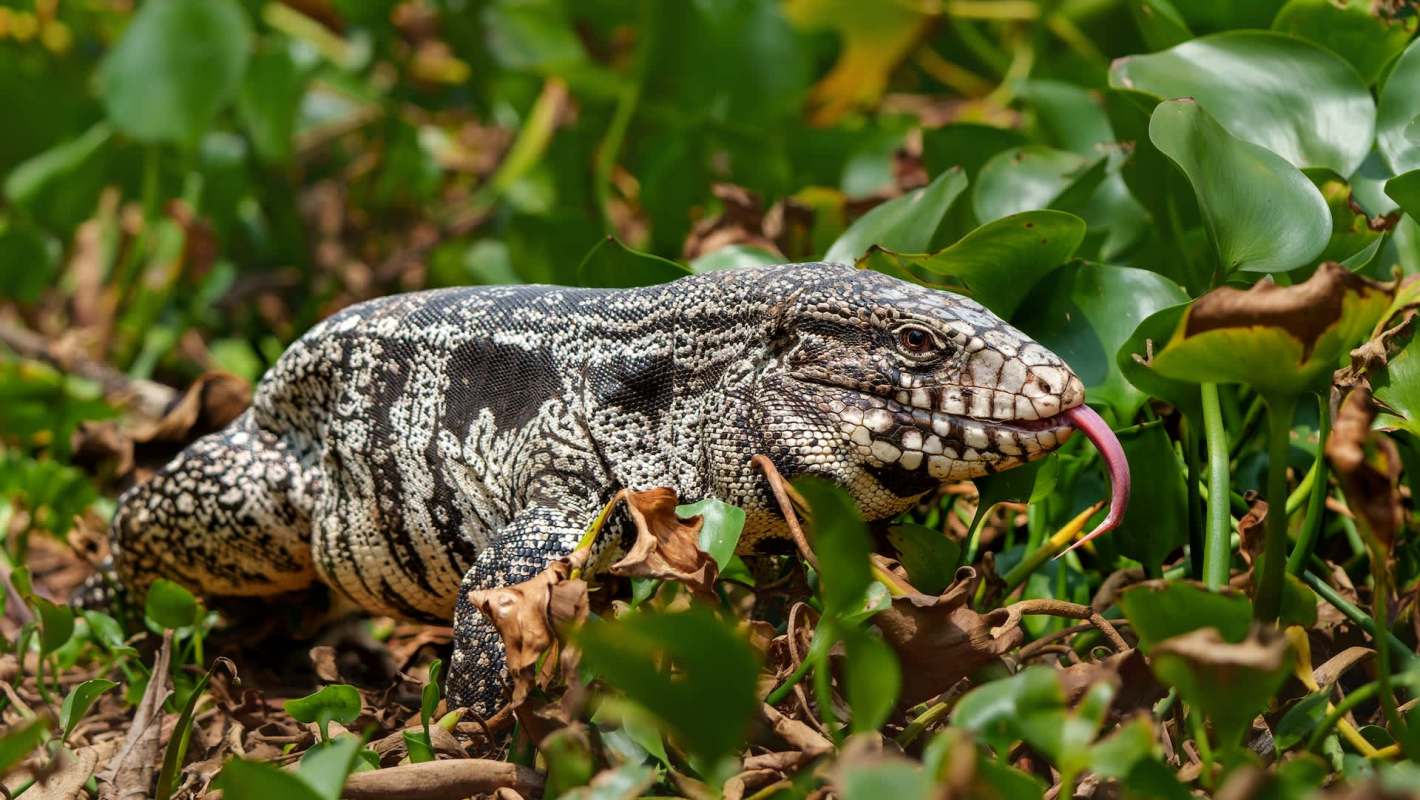
A large lizard stretching up to 4 feet long is not something most Georgia residents expect to encounter in their yards or neighborhoods.
But wildlife officials in the state are warning people to watch out for exactly that.
The invasive Argentine tegu, a reptile native to South America, has been turning up across southern Georgia and raising new concerns about the threat it could pose to native animals and local ecosystems, GPB News reported.
Georgia's Department of Natural Resources is urging the public to report Argentine tegus found in the state and, if possible, kill them.
Georgia counties Tattnall and Toombs have had 30 tegus captured or killed since 2018, according to the agency. Officials also say the invasive lizards have now been spotted in 30 Georgia counties.
Daniel Sollenberger, a senior wildlife biologist with the Georgia Department of Natural Resources' Wildlife Resources Division, said the animals can be difficult to catch because they move quickly, and state officials are asking residents to act if they see one.
TCD Picks » Quince Spotlight
💡These best-sellers from Quince deliver affordable, sustainable luxury for all




When animals are moved beyond their native range, often through human activity, they can establish themselves in places where local wildlife has few defenses.
Argentine tegus are especially concerning because they are opportunistic eaters. In Georgia, officials say they prey on the eggs of ground-nesting birds and the endangered gopher tortoise, putting two vulnerable parts of the state's natural landscape at even greater risk.
If they continue to spread, they could put added pressure on native species already struggling and disrupt food webs in the areas they invade.
Officials have also warned that the tegus could spread diseases, adding another layer of concern for residents and wildlife managers alike.
The sooner officials know where one has been spotted, the better their chances of setting traps or advising residents on next steps.

Get TCD's free newsletters for easy tips, smart advice, and a chance to earn $5,000 toward home upgrades. To see more stories like this one, change your Google preferences here.







