


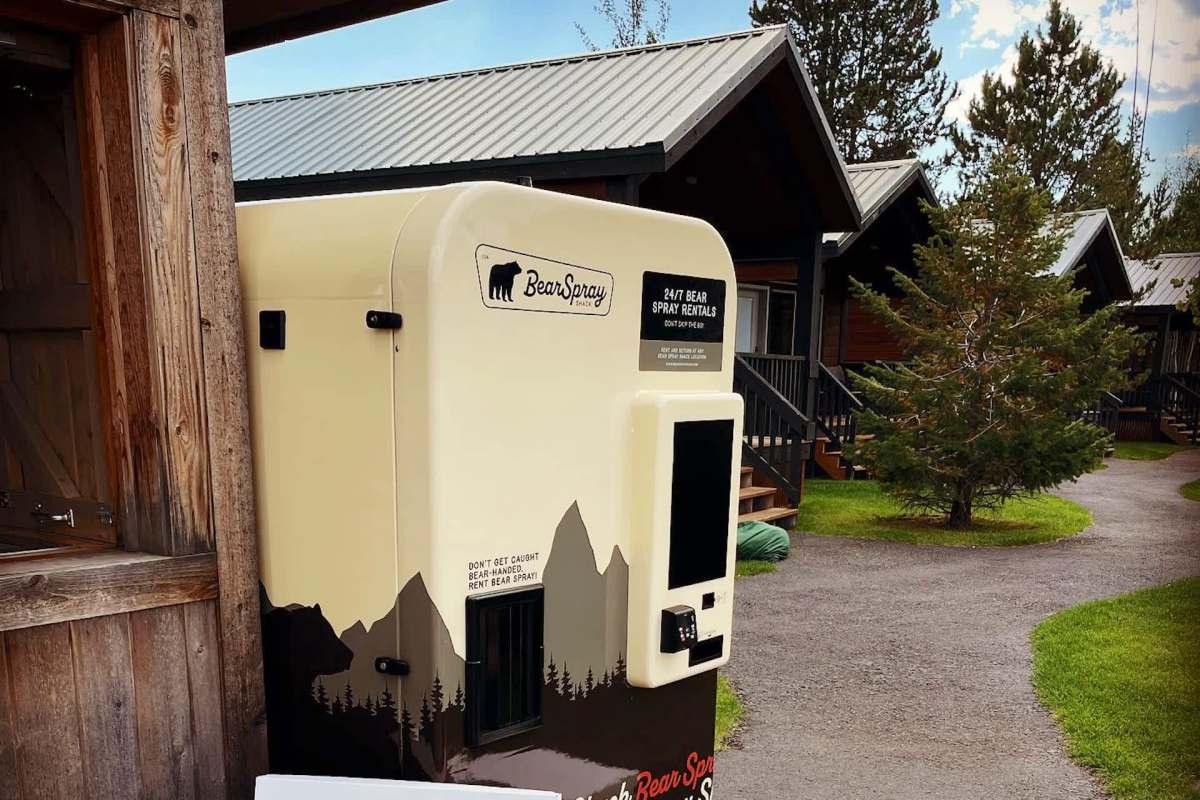
As national parks grapple with dangerous bear encounters, a growing network of automated kiosks is making it easier for visitors to pick up bear spray the moment they arrive — without having to buy a can they may use for only a day or two. That kind of convenience could mean more hikers are carrying one of the most effective deterrents available in bear country.
Bear Spray Shack, a company founded by Holly Longen and Ryder Febo, has built automated rental kiosks that dispense bear spray 24/7 near major outdoor destinations, including Glacier, Grand Teton, and Denali.
According to Flathead Beacon, the idea for the company began in Alaska in 2021 after the pair realized they did not have bear spray in an area with signs of bear activity and had trouble finding a place to rent it. Within a few years, they had developed a vending-style kiosk that lets customers scan identification and a payment card, accept a digital waiver, and receive a canister with a belt holster.
According to Febo, "Last season, we put over 7,000 canisters in people's hands over five machines." Rentals cost $10 for the first day and $5 for each additional day, and users pay the full amount only if a canister is not returned or has been deployed.
This season, the company is expanding from five machines to 11, with new locations at Denali's entrance and the National Elk Refuge in Jackson Hole.
Glacier National Park, which has more than 1,000 bears, recently closed 10 trails after a hiker died in what appeared to be a bear attack, the first such death there in almost 30 years, the Flathead Beacon reported.
TCD Picks » Quince Spotlight
💡These best-sellers from Quince deliver affordable, sustainable luxury for all




While bear encounters are often framed as isolated wildlife incidents, they are also shaped by human activity. More visitors are recreating in bear habitat, and trails, roads, lodging, and food attractants can all increase overlap between people and animals. Parks have spent decades trying to reduce conflicts with measures such as bear-proof trash cans and food storage rules, but close encounters on trails can still happen.
Bear spray is not a guarantee, but it can make a critical difference. A 2010 study in the Journal of Wildlife Management found that bear spray was effective in stopping aggressive bear behavior more than 90% of the time. Airlines do not allow it in checked or carry-on luggage, leaving many visitors without it when they need it.
The kiosks are designed to remove some of the biggest barriers, including limited store hours, high purchase costs, and uncertainty about whether a borrowed canister will work. Each returned canister is checked six times before it is put back out for rental, and any that do not pass are removed and recycled.
The founders have also added training features for people who may be carrying spray for the first time. Each canister includes a QR code linking to an "On the Go Guide" about bear safety, and newer machines also play a multilingual demo video during dispensing.
Carrying bear spray is only part of the equation — hikers also need to know how to access it and use it quickly. As Longen put it, "We have a captive audience. We're going to use that time to make sure you're getting some bear spray education."

Get TCD's free newsletters for easy tips, smart advice, and a chance to earn $5,000 toward home upgrades. To see more stories like this one, change your Google preferences here.







