


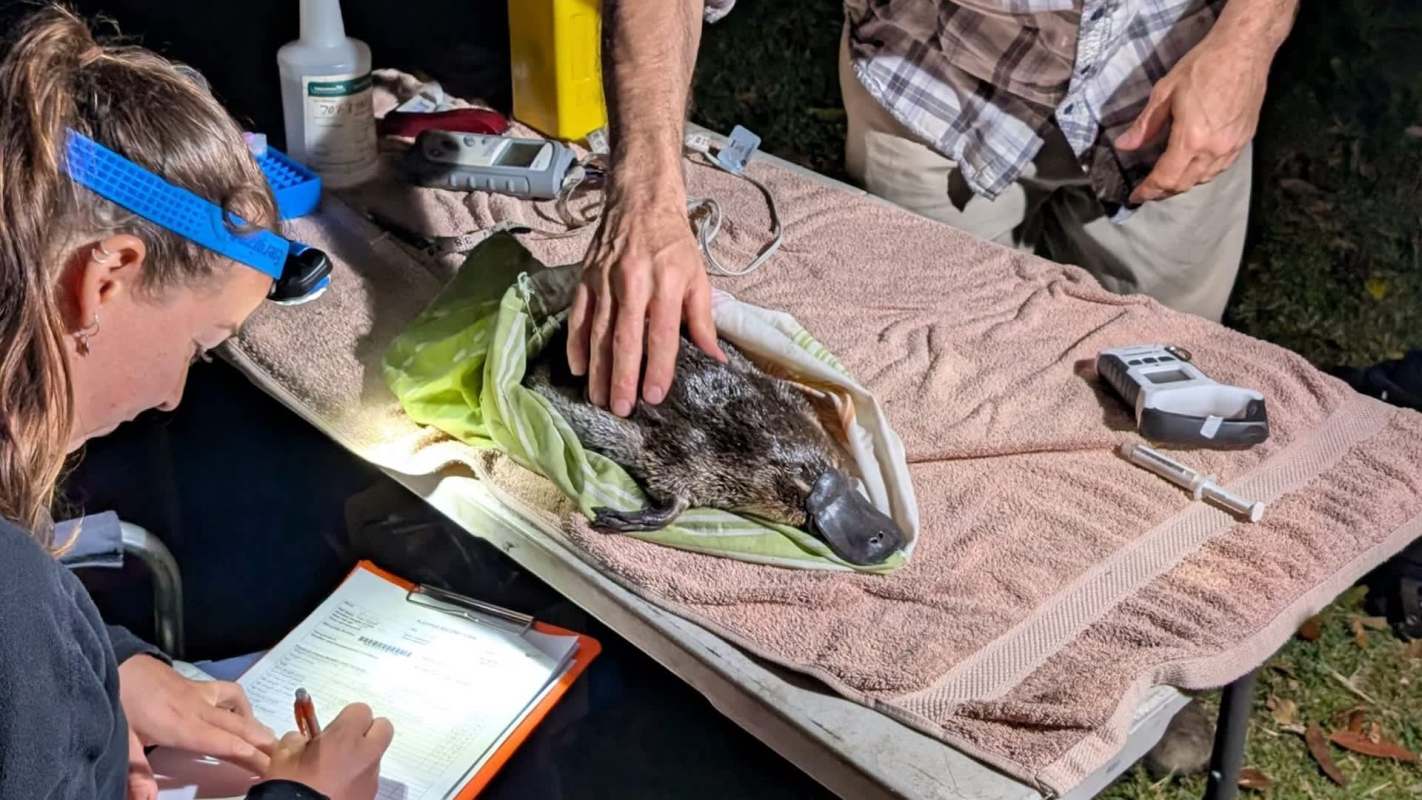
At least 20 platypuses are now known to be inhabiting Royal National Park waterways, marking a major milestone in a rewilding effort that is bringing one of Australia's most beloved animals back to a river system where it disappeared more than 50 years ago.
According to the Australian Broadcasting Corporation, scientists leading the Royal National Park platypus restoration said the delicate project is showing early signs of success.
Last week, four adult platypuses — two males and two females — were relocated at twilight into the Hacking River system south of Sydney.
The species is believed to have vanished from the river after an oil spill decades ago. Since 2023, the project has rehomed 17 adult platypuses there.
One adult male died last year, but researchers have also identified four juveniles during regular surveys, bringing the known total in the park to at least 20.
Project lead and UNSW ecologist Dr. Gilad Bino said the latest releases featured males Ducky and Absinthe and females Hydra and Dawn.
TCD Picks » Quince Spotlight
💡These best-sellers from Quince deliver affordable, sustainable luxury for all




He said he is tracking 20 platypuses in the park and is "absolutely certain" there could be more.
Just as encouraging, the team has now found evidence of two successful breeding seasons — a sign the animals are not just surviving, but also establishing themselves.
"It's really an indication that when the conditions are favourable, the [platypuses] can survive and thrive," Dr. Bino said, per the ABC. "Now we've got evidence of two successful breeding seasons, which we are over the moon about."
Platypuses are more than a national icon. They are also an important indicator of freshwater ecosystem health, so their return suggests the Hacking River is becoming a stronger, more functional habitat again.
In a major city region, having wildlife rebound in a public national park can make environmental recovery feel tangible.
Dr. Bino said several wet years in the park have supported a stronger food web, giving platypuses a better chance to thrive. That progress also shows how restoration can help repair long-lasting damage from pollution.
The work has been painstaking. Dr. Bino described the translocation process as "exhausting," and researchers head out around 11 p.m. to find suitable animals in other tributaries of New South Wales, check their sex and condition, and return them to the water as quickly as possible.
Acoustic tags lasted roughly 18 months, and researchers are now also using radio transmitters to locate burrows and study how quickly the animals settle in.
There is still one final phase ahead: three more adults are due for release in 2027.

Get TCD's free newsletters for easy tips, smart advice, and a chance to earn $5,000 toward home upgrades. To see more stories like this one, change your Google preferences here.







