


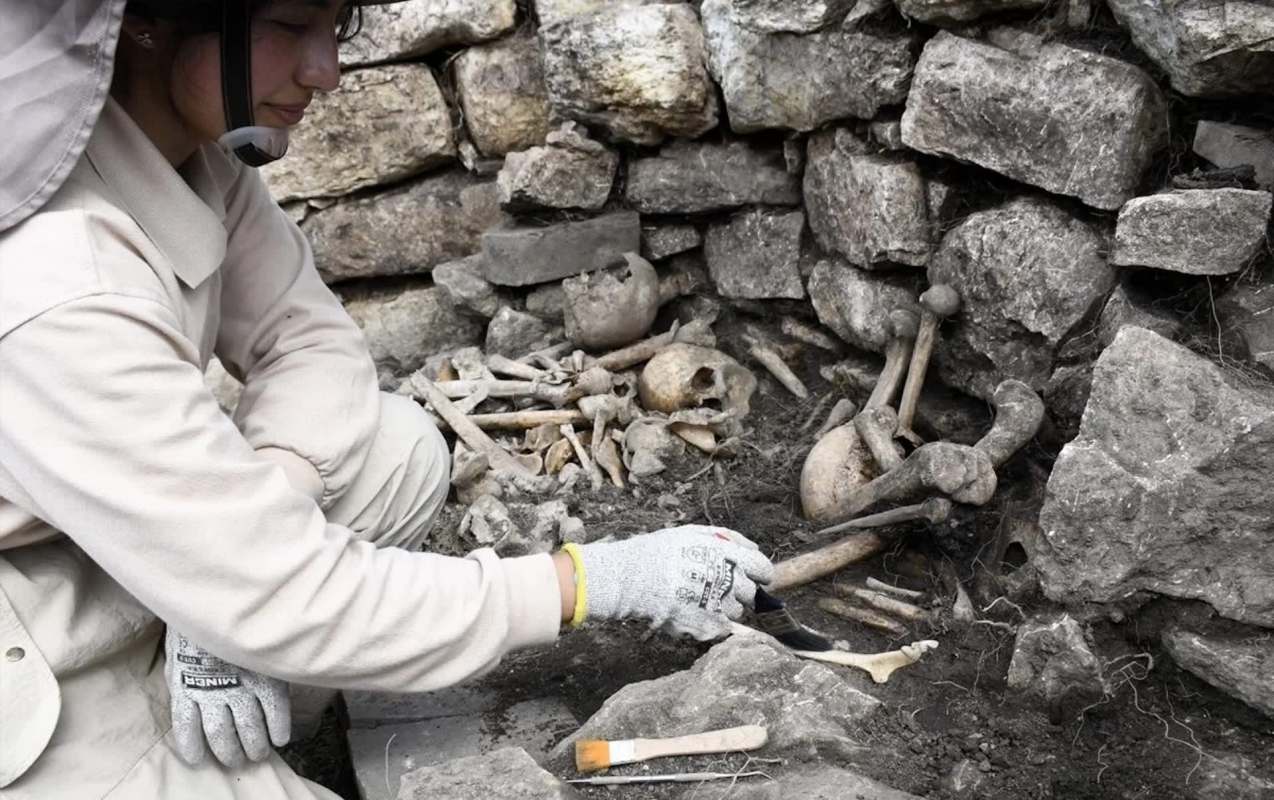
Archaeologists working at Peru's ancient Kuelap fortress recently uncovered a five-person tomb filled with ceremonial objects, offering a revealing glimpse into burial customs at one of the Andes' most remarkable archaeological sites, Heritage Daily reported.
The discovery includes the remains of four adults and one infant, along with ceremonial offerings tied to the Late Horizon period.
What happened?
Peru's Ministry of Culture announced that specialists at Kuelap found the funerary structure in Area 12 of the archaeological complex, where Access Routes 1 and 2 meet, per Heritage Daily. Kuelap Archaeological and Interdisciplinary Research Program (PRIAK) specialists conducted the excavation.
Researchers identified a U-shaped stone tomb with two steps connected to a nearby platform south of Access 2. That surrounding area had already shown signs of funerary activity, making the new find valuable for understanding how this part of the fortress was used.
Inside, archaeologists found the remains of five people, including four adults and one infant. They also recovered ceremonial offerings. That included a phytomorphic paccha — a ritual vessel used for libations — made in the Regional Inca style and shaped like the fruit of Inga feuilleei, which locals refer to as pacay or guaba.
Other items inside included a carved bone object depicting a stylized human face with a Chachapoya-linked headdress, plus metal tweezer fragments, lithic mortars, and a piece of Spondylus shell, Heritage Daily said.
TCD Picks » Quince Spotlight
💡These best-sellers from Quince deliver affordable, sustainable luxury for all




The artifacts recovered from the tomb date to the Late Horizon, roughly A.D. 1470 to 1532, a period associated with major political and cultural change in the Andes, per the outlet.
Why does it matter?
As Heritage Daily described, the excavation is part of a broader effort to better understand and preserve Kuelap. The massive fortified settlement in northern Peru continues to yield new archaeological evidence. PRIAK specialists are carrying out interdisciplinary work at the site.
Officials from the Directorate of Culture of Amazonas said more information about the artifacts and the ongoing investigation will be released in the coming days, per Heritage Daily. Specialists said the structure likely held significant symbolic and visual importance within Kuelap's broader architectural setting, according to the outlet.
What's being done?
As analysis continues, the tomb is already providing a clearer window into Kuelap's ceremonial past. One of those insights is that the site could be reused for multiple funeral occasions, according to the researchers.
"Due to the position of the individual, placed in a seated position and deposited on top of other skeletal remains, we believe this funerary structure underwent a second phase of use, during which previously deposited bones were disturbed," the PRIAK team told Heritage Daily.
While that might be more of a grisly discovery, the researchers' work is shining a unique light on life nearly six centuries ago.

Get TCD's free newsletters for easy tips, smart advice, and a chance to earn $5,000 toward home upgrades. To see more stories like this one, change your Google preferences here.






