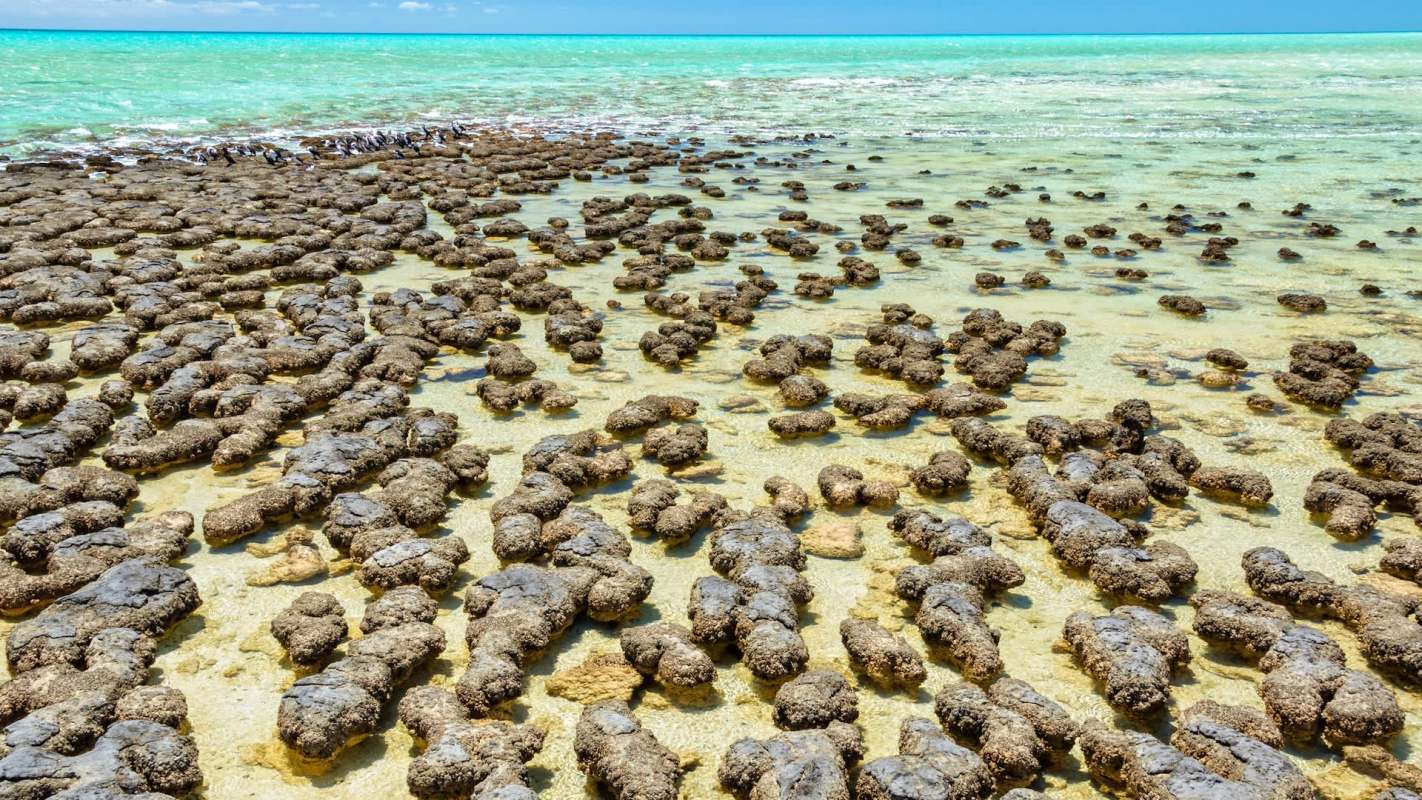
An ancient crater in South Korea may be preserving clues to a major shift in Earth's past: the rise of an oxygen-rich atmosphere.
Researchers say layered rock structures within the crater could indicate impact lakes as early refuges for oxygen-producing microbes.
What happened?
According to ScienceDaily, a team from the Korea Institute of Geoscience and Mineral Resources discovered stromatolites inside the Hapcheon impact crater, the only confirmed asteroid impact crater on the Korean Peninsula. The findings were published in Communications Earth & Environment, part of the Nature Portfolio.
Stromatolites are layered rock formations built by ancient microbial communities. They are among the earliest known signs of life on Earth, with fossils at least 3.5 billion years old. Many are linked to cyanobacteria, microbes that generate oxygen by photosynthesis.
The researchers found several stromatolites in the crater's northwestern region, each about 10 to 20 centimeters across. The structures likely formed in a hydrothermal lake created by the impact, where heat from the collision melted nearby rock and kept the water warm for extended periods.
Geochemical testing found signatures from extraterrestrial material and local bedrock, plus signs that hot water later changed the structures.
TCD Picks » EDF Spotlight
💡EDF's Vital Signs newsletter delivers stories about game-changing solutions close to home and around the world




Why does it matter?
The discovery could help scientists better understand the Great Oxidation Event, when atmospheric oxygen surged about 2.4 billion years ago and reshaped life on Earth.
Asteroid impact craters may have created isolated hydrothermal lakes where oxygen-producing microbes survived and spread before oxygen became common worldwide. These craters may have served as localized "oxygen oases."
Oxygen laid the groundwork for the complex life that came later. Understanding where and how early microbes thrived could help scientists explain how Earth became habitable as we know it today.
The findings may also matter beyond Earth: Early Mars may have had water-filled impact craters like those on ancient Earth, making them strong places to look for signs of past microbial life.
What's being done?
By studying the Hapcheon crater in detail, scientists are strengthening the case that asteroid impacts may have done more than scar Earth's surface — they may also have created conditions that helped life endure and evolve.
The team used geochemical analysis to trace how the stromatolites formed and how hydrothermal activity changed them over time. That testing helps researchers distinguish ordinary lake deposits from structures shaped by impact-driven heat and mineral-rich water.
The study also points to new targets for future exploration. Similar impact craters on Earth could be revisited for overlooked biosignatures, especially in places where warm, mineral-rich water may once have persisted.
The work adds another reason to study ancient crater lakes on Mars. If impact environments supported microbial communities on Earth, they could be among the best places to look for signs that life once existed there, too.
"This is the first comprehensive evidence suggesting that stromatolites could form in hydrothermal lakes created by asteroid impacts," said Dr. Jaesoo Lim, lead author of the study.

Get TCD's free newsletters for easy tips, smart advice, and a chance to earn $5,000 toward home upgrades. To see more stories like this one, change your Google preferences here.
Cool Picks