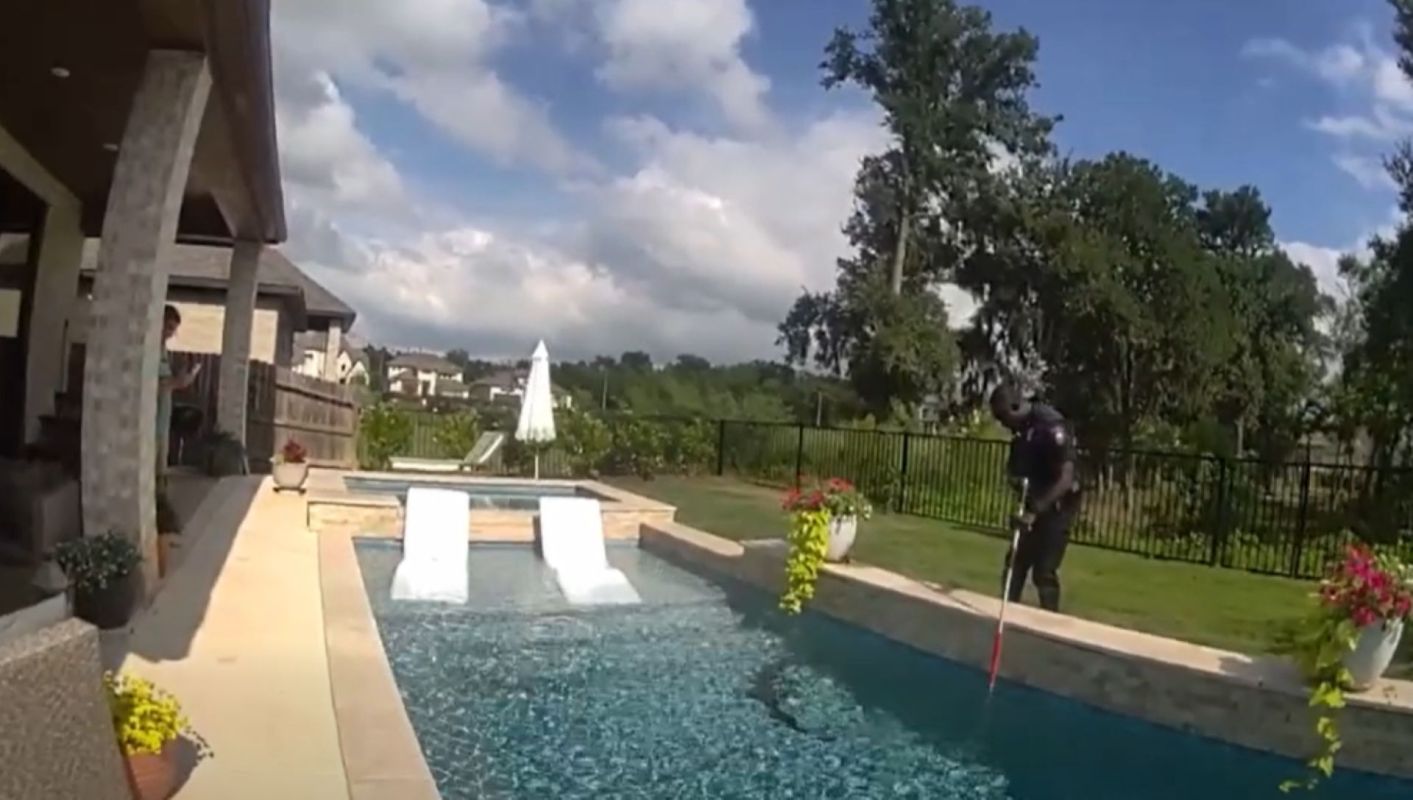
A wandering alligator turned a backyard in Fulshear, Texas, into an unexpected wildlife rescue scene this week after officers found the reptile swimming in a homeowner's pool and eventually loaded it into the back seat of a patrol car.
It was the second Houston-area video of a pool gator to emerge in just a week.
What happened?
Body camera footage shared by Fulshear police shows officers responding Wednesday to a home where an alligator had taken over a backyard pool. KHOU 11 reported that officers needed several tries to secure the animal before putting it in a squad car and releasing it at a nearby pond.
The encounter came days after a similar incident in Cinco Ranch, where homeowners used a pool net to remove a smaller alligator from their backyard pool and relocate it. In nearby Sienna, residents have also reported seeing larger gators walking through neighborhoods and crossing roads.
Alligator mating and nesting season runs through the end of May, making the animals more active and more likely to appear in unexpected places.
Human development is also part of the story. As neighborhoods expand around ponds, drainage channels, and former wetland habitat, encounters like these can become more common, especially since man-made water features can look appealing to wildlife on the move.
Enjoy your best summer vacation yet with 15% off your next stay With Hilton, you can find a hotel that matches your mood — whether you’re recharging at the beach, exploring natural beauty, or traveling with your crew. Enjoy vibrant summers in Hawaii, weekend trips in major cities, and even extended itineraries at adventurous sites like Moab’s desert canyons. Plus, save up to 15% during Hilton’s summer sale until June 1st. |

Why does it matter?
An alligator in a swimming pool reflects how closely people and wild animals now live in many fast-growing communities. When homes are built near waterways and green corridors, animals do not recognize property lines.
That creates risks for families, pets, and the animals themselves. A startled alligator in a backyard or roadway can quickly become dangerous if someone gets too close or tries to handle it without training.
Wildlife officials warn that human behavior can make the problem worse. Feeding alligators is illegal in Texas because it can cause them to lose their natural fear of people, increasing the chances that they approach homes, sidewalks, or anyone near the water.
Not every sighting means an alligator is acting aggressively. Texas Parks and Wildlife guidance says gators near ponds or streams are often just regulating body temperature rather than hunting.
TCD Picks » Quince Spotlight
💡These best-sellers from Quince deliver affordable, sustainable luxury for all




What can I do?
If you see an alligator, experts say the safest response is to keep your distance. Texas Parks and Wildlife says alligators generally avoid people and back away when approached.
If an alligator hisses, you are too close. Slowly back away, keep children away from the animal, and make sure pets are leashed and kept far from the water, since small animals can be seen as easy prey.
Residents should also avoid trying to move an alligator themselves, especially if it is on a road. Instead, contact local authorities or animal control professionals trained to handle wildlife safely.
Communities can also reduce risk by respecting natural habitat, never feeding wild animals, and staying alert during peak activity seasons. In places where suburban growth meets marshes, creeks, and ponds, awareness helps prevent frightening encounters from becoming tragic ones.

Get TCD's free newsletters for easy tips, smart advice, and a chance to earn $5,000 toward home upgrades. To see more stories like this one, change your Google preferences here.
Cool Picks