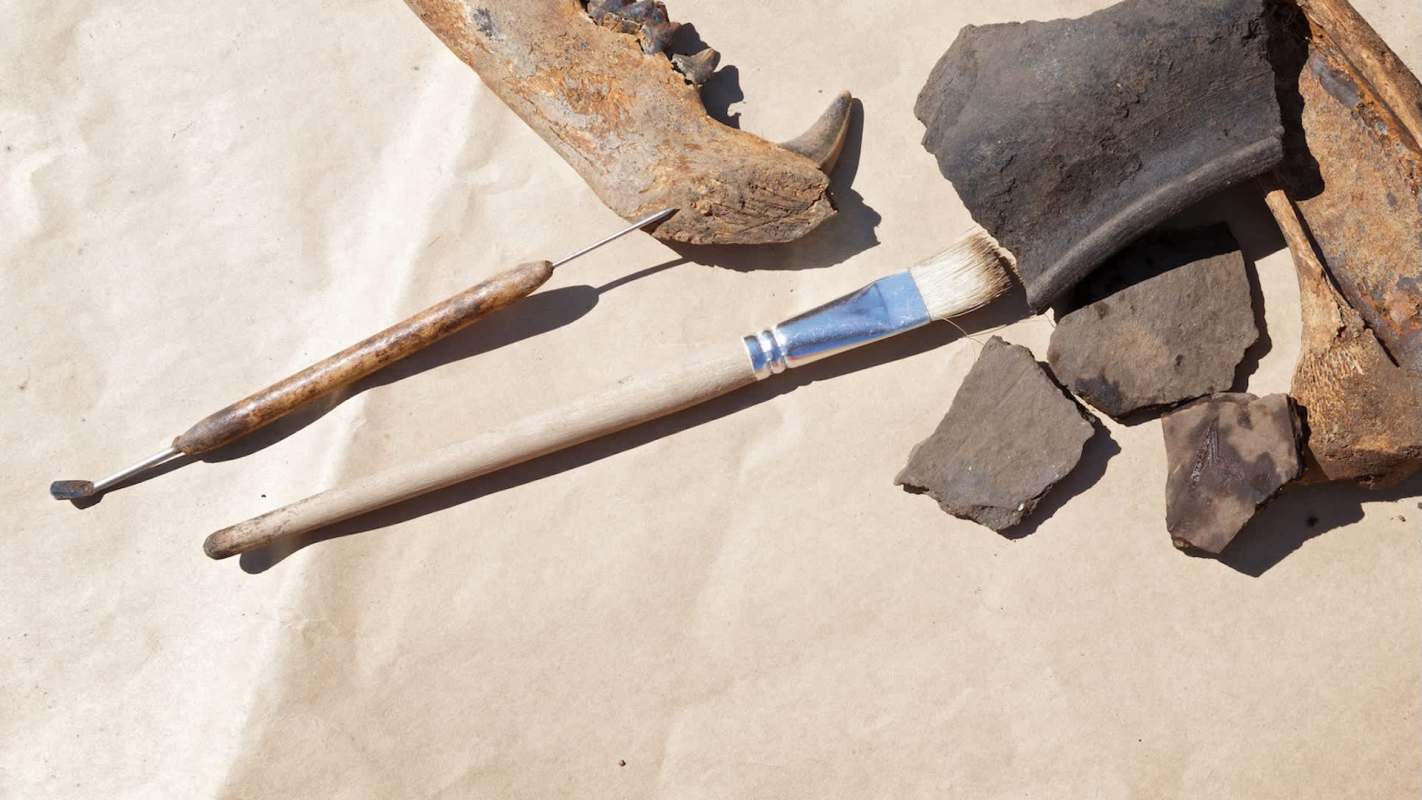
A fossilized upper jaw found in southern France is rewriting part of reptile history. Paleontologists say the discovery shows that a relative of the crocodile lizard was in Europe at least 30 million years earlier than scientists had previously known.
Researchers said a partial upper jaw unearthed near Villeveyrac in France's Hérault region belongs to a newly identified pan-shinisaur genus and species, according to Sci.News. The animal, named Acutodon villeveyracensis, lived during the Campanian age of the Late Cretaceous, around 83 million years ago.
According to the team, that makes it the oldest known European record for this group. In research published this week in the Journal of Vertebrate Paleontology, the scientists said the fossil "pre-dates the occurrence of this clade in Europe by around 30 million years."
Newly described crocodile lizard, Acutodon villeveyracensis from the Campanian of France. Estimated at >1 m in length and with thin, sharp, recurved teeth, it likely competed with two other large squamates: a large terrestrial monstersaur and a freshwater mosasaur. pic.twitter.com/MopkCe3YQh
— Ausarchosaur (@ausar_the) May 24, 2026
The only known material is a fossilized upper jawbone measuring about 2.8 centimeters (about 1 inch) long. Even so, its shape and teeth gave researchers enough information to estimate that the animal may have grown longer than 1 meter (about 3 feet), using skull proportions from living crocodile lizards as a guide.
Its slender, recurved teeth also suggest it was a predator — and not a small one. Researchers said it likely shared its habitat with other large squamates and competed in both size and habitat type.
It adds a major new piece to the history of pan-shinisaurs, an anguimorph lizard lineage dating back to the Early Cretaceous, with only one living representative today: the Chinese crocodile lizard.
TCD Picks » Quince Spotlight
💡These best-sellers from Quince deliver affordable, sustainable luxury for all




That surviving species, Shinisaurus crocodilurus, is endangered and now confined to forest-stream habitat in southeastern China and northern Vietnam. Just a few hundred are thought to remain in the wild, putting pressure on conservation efforts.
The fossil helps researchers better understand a group that is disappearing in real time. As the scientists noted, the living species faces habitat destruction, poaching, and climate-related threats, yet its deeper evolutionary history remains poorly understood.
Biodiversity loss also means losing chances to understand millions of years of natural history, ecosystem resilience, and how specialized species survive environmental change.
By formally describing Acutodon villeveyracensis, researchers have expanded the known range and timeline of the pan-shinisaur family tree, giving conservationists and paleontologists a clearer picture of what is at stake.
The discovery also shows the value of protecting fossil sites and continuing fieldwork. Even a single jaw fragment can reshape long-standing assumptions about when a lineage arrived in a region and how large or diverse it may have been.
As the researchers wrote, the Chinese crocodile lizard "faces severe threats, including habitat destruction and escalating levels of poaching," and "the species could disappear before we untangle the mysteries of its origins."

Get TCD's free newsletters for easy tips, smart advice, and a chance to earn $5,000 toward home upgrades. To see more stories like this one, change your Google preferences here.