


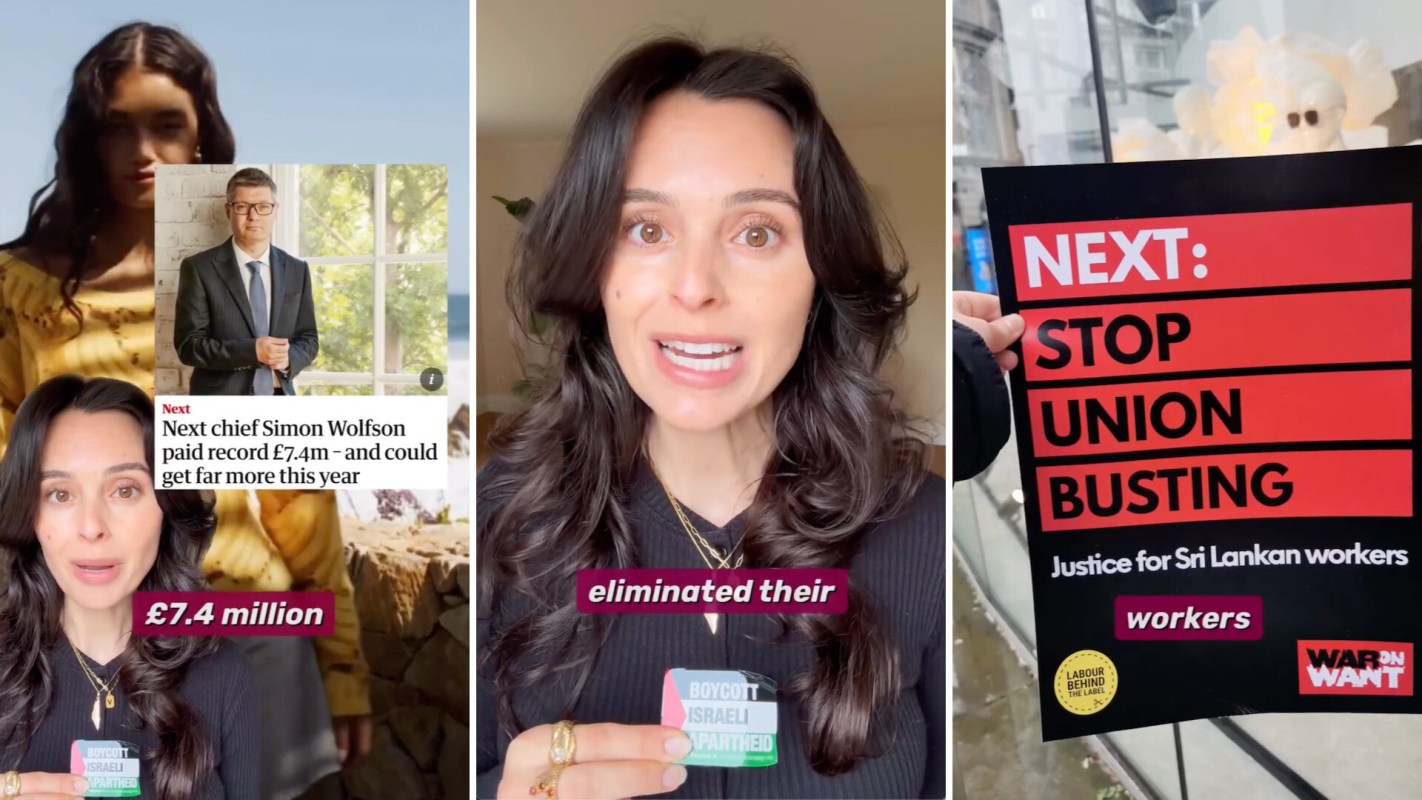
A new social media campaign is putting fashion retailer Next under intense scrutiny, with activists alleging that the company told 1,416 unionized garment workers at a Sri Lankan factory they were out of a job through WhatsApp.
The accusations, shared in a widely viewed Instagram reel, are fueling renewed criticism of fast fashion's human and environmental costs.
What happened?
In a recent post, creator and campaigner Venetia La Manna said in her Instagram reel that last year, Next let go of its unionized workforce at a factory in Katunayake, Sri Lanka, after deciding not to add a small monthly pay increase. In the video, she said the workers were still earning below a living wage.
La Manna also alleged that Next takes in more than £1 billion ($1.3 billion) a year, while its CEO was paid £7.4 million ($9.9 million) and could receive £9.27 million ($12.5 million) if a proposed bonus is approved. She further criticized the company's labor record in the U.K., saying in the video that its CEO had pushed back on stronger worker protections and that some U.K. workers were not being paid a living wage.
La Manna said she was joining Labour Behind the Label and War on Want in calling for Next to restart production at the Katunayake factory, reinstate the collective bargaining agreement there, and publicly pledge to honor workers' rights to organize and bargain collectively at all Next-owned and operated factories in Sri Lanka.
Why does it matter?
The allegations have struck a nerve because they connect two of the biggest criticisms of fast fashion: worker exploitation and rampant overproduction.
TCD Picks » Quince Spotlight
💡These best-sellers from Quince deliver affordable, sustainable luxury for all




Cheap, disposable clothing often depends on squeezing labor costs as low as possible, even as brands continue pushing out more garments than people actually need. That model comes with a steep environmental price.
Overproduction of low-cost clothing contributes to textile waste, beach pollution, water contamination from dyes and treatments, and air pollution tied to manufacturing and shipping.
There's also a direct hit to shoppers' wallets. Fast-fashion pieces are often made to be worn briefly, lose shape quickly, or fall apart after repeated washing. This forces consumers into a cycle of constant replacement. What looks cheap at checkout can become wasteful and expensive over time.
What can I do?
Activists are asking the public to pressure the company directly. In her caption, La Manna called on Next to "Bring back the garment worker jobs by re-opening production at the factory in Katunayake with sufficient orders and fair prices," "Reinstate the Collective Bargaining Agreement," and "Commit publicly to respect the right to organize and negotiate collectively."
For consumers, one practical response is to buy less and buy better. Choosing higher-quality clothing, repairing what you already own, and shopping secondhand can reduce both waste and the demand for ultra-cheap garments made under questionable conditions.
That approach can save money, too. Instead of repeatedly replacing poorly made basics, shoppers can stretch their budgets through resale platforms, vintage shops, swaps, and timeless pieces that last longer.
As one commenter put it, "There's too many clothes for all our needs. Don't be victims of fast fashion."

Get TCD's free newsletters for easy tips, smart advice, and a chance to earn $5,000 toward home upgrades. To see more stories like this one, change your Google preferences here.






