


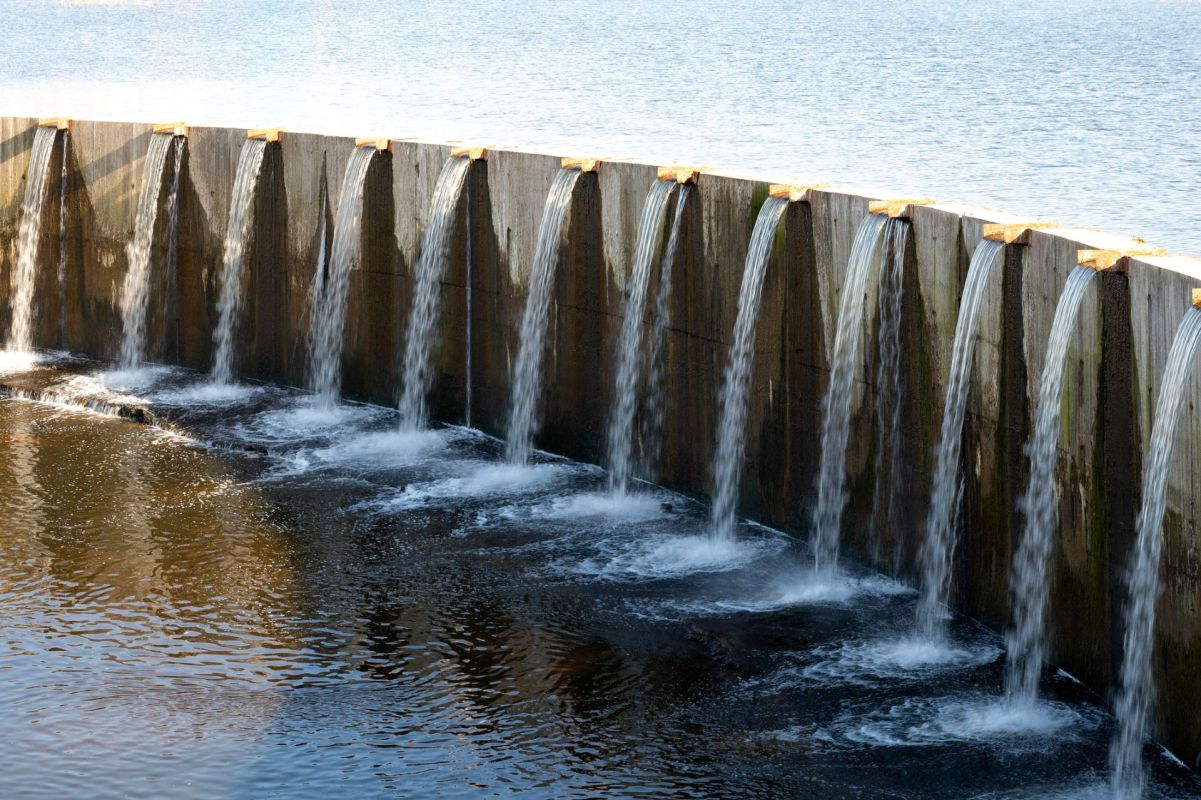
A giant dam stretching over 50 miles between Alaska and Siberia may sound like science fiction. But Futurism detailed how two researchers say it could, in theory, preserve one of the planet's most important ocean currents as global temperatures keep rising.
That's according to a study in Science Advances. As ScienceNews reported, it explored whether blocking the Bering Strait could stabilize the weakening Atlantic Meridional Overturning Circulation, or AMOC.
What's happening?
The proposal is not a construction plan — at least not yet. But it is a stark illustration of how seriously scientists are taking the risks facing the AMOC.
Jelle Soons of Utrecht University and Henk A. Dijkstra focused on the Bering Strait because it is a route through which relatively fresh Pacific water can move into the Arctic and eventually the Atlantic, per Futurism.
The AMOC is a major ocean circulation system that carries warm water northward and colder water south in a vast loop. It plays a huge role in shaping weather patterns around the world, and continued warming could weaken it further or even trigger a collapse, with major consequences for Europe, the tropics, and the U.S. East Coast.
Using computer simulations, the researchers found that a dam could reduce freshwater moving through the strait, helping the Atlantic remain salty. That could support the current's stability.
TCD Picks » Quince Spotlight
💡These best-sellers from Quince deliver affordable, sustainable luxury for all




There was, however, a major caveat. Timing matters, as Futurism noted. Building the barrier while the AMOC is still relatively strong could preserve it. Doing so after significant weakening, on the other hand, could make matters worse.
Why does it matter?
If the current fails, Europe could lose some of the warming influence it now gets from the Atlantic, leading to much colder temperatures. Tropical rainfall patterns could shift and sea levels along the American East Coast could rise, adding more pressure to already vulnerable coastal communities.
There is debate among scientists over how close the AMOC is to collapse and exactly how weak it is today, as ScienceNews noted. The study did not attempt to solve the enormous practical challenges of building a barrier across an international waterway.
A dam could disrupt marine migration routes, affect major shipping lanes, and raise geopolitical issues between the United States and Russia, the Financial Times pointed out.
What's being done?
Many experts argue that cutting planet-warming pollution and limiting future temperature rise remains a more practical response before ocean systems reach dangerous tipping points.
Soons characterized the proposal as a "proof of concept" and said building the dam could be a "possible measure in a worst-case scenario," per the Times.
The approach wasn't warmly received by the U.K. Met Office.
"The Met Office does not advocate geoengineering solutions to climate change, which can often bring dramatic and unintended consequences," a spokesperson said. "Fighting to stave off every fraction of a degree rise of global temperature is the more sustainable and pragmatic approach."

Get TCD's free newsletters for easy tips, smart advice, and a chance to earn $5,000 toward home upgrades. To see more stories like this one, change your Google preferences here.






