


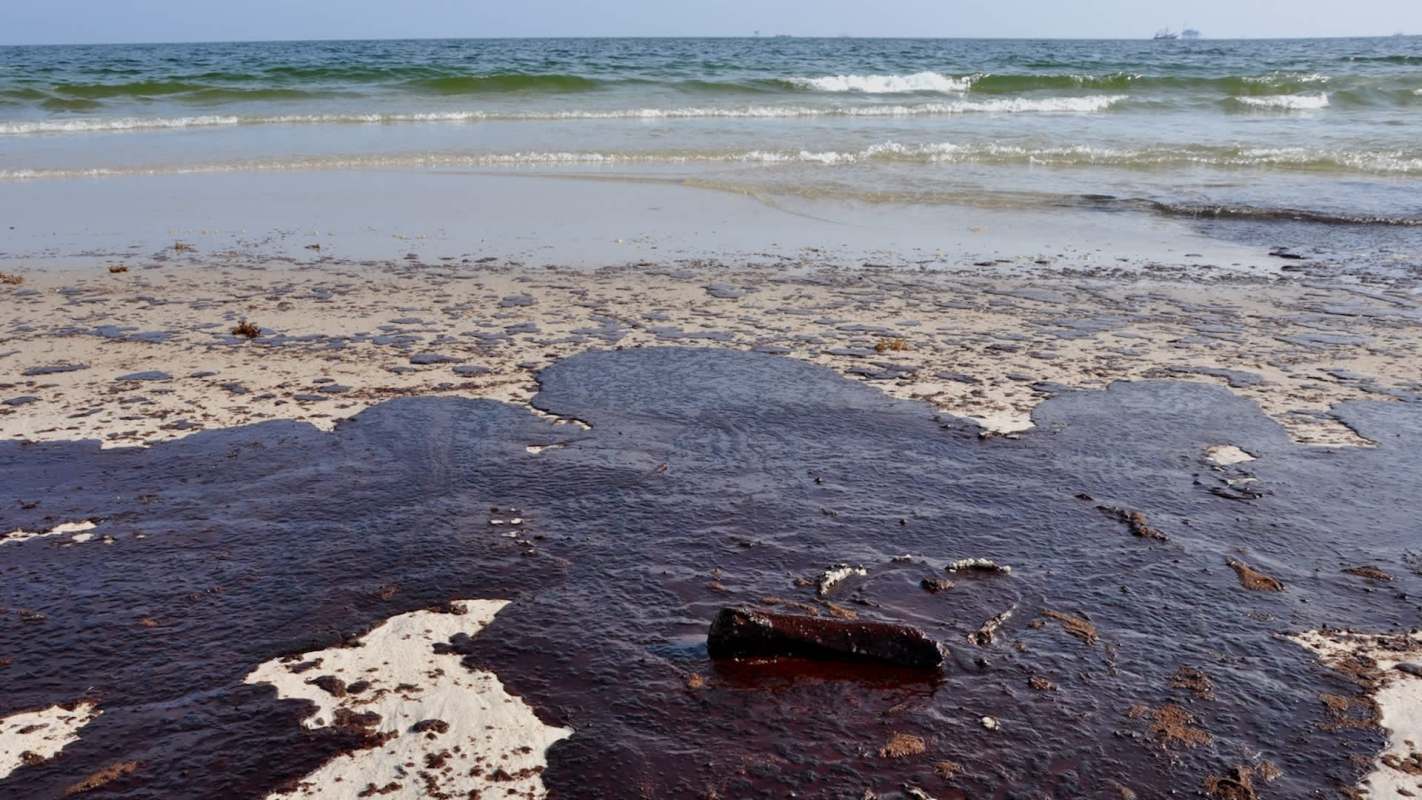
A protected island in the Persian Gulf that serves as a crucial breeding refuge for wildlife has been ringed by oil after an attack on Iran's Lavan oil refinery, according to videos and satellite imagery.
As reported by the Associated Press, videos filmed by Mohammad Jalali and satellite photos taken April 10 appear to show oil spreading through waters around Shidvar Island, locally known as Maroo Island, after a fire at the Lavan refinery was still burning two days after the attack.
The small island, which covers about 870 hectares (3.3 square miles), is recognized under the Ramsar Convention on Wetlands and has long been viewed as a major tern nesting site in Iran. Iran has also treated it as a wildlife refuge since 1972.
As AP detailed, the footage shows an oil-covered bird and crab, a man displaying a dead swordfish, and dolphins surfacing in slick-covered water. Jalali's narration captured the scale of the destruction.
"The sea is full of oil; the beautiful Maroo Island is ruined now," he said.
Iranian officials have not publicly acknowledged environmental damage from the attack. The strike came amid a broader regional conflict involving Iran, Israel, the United States, and Gulf states, with energy infrastructure increasingly caught in the crossfire.
TCD Picks » Quince Spotlight
💡These best-sellers from Quince deliver affordable, sustainable luxury for all




Oil spills do not just threaten wildlife. They can also undermine livelihoods, food systems, and public health for people living nearby. Coastal communities depend on healthy waters for fishing, tourism, and long-term economic stability, and contamination can linger long after headlines fade.
For wildlife, the timing and location of the spill make it especially troubling. Protected breeding grounds are intended to provide vulnerable species with a safe place to reproduce and recover. When those habitats are fouled by oil, eggs, chicks, marine mammals, and other coastal species can all be put at risk at once.
It is also another example of how war can derail progress toward a cleaner, safer future. Damage to fragile ecosystems can take years to reverse, and every new disaster adds more pressure to already stressed seas.
For now, much of the response appears to be centered on documentation. Local footage and high-resolution satellite imagery have made it harder for the damage to go unseen, even without an official accounting from Iranian authorities.
Shidvar's protected status could matter in what happens next. Because the island is internationally recognized as an important wetland and nationally identified as a wildlife refuge, there is at least a formal basis for environmental monitoring, cleanup demands, and future restoration efforts.
"Poor birds, look how they are stuck in oil," Jalali said, according to AP. He also described the wider devastation in simple terms: "Look what they did to this island. Look what they have done. The corpses of fish are coming to the surface one by one."

Get TCD's free newsletters for easy tips, smart advice, and a chance to earn $5,000 toward home upgrades. To see more stories like this one, change your Google preferences here.







