


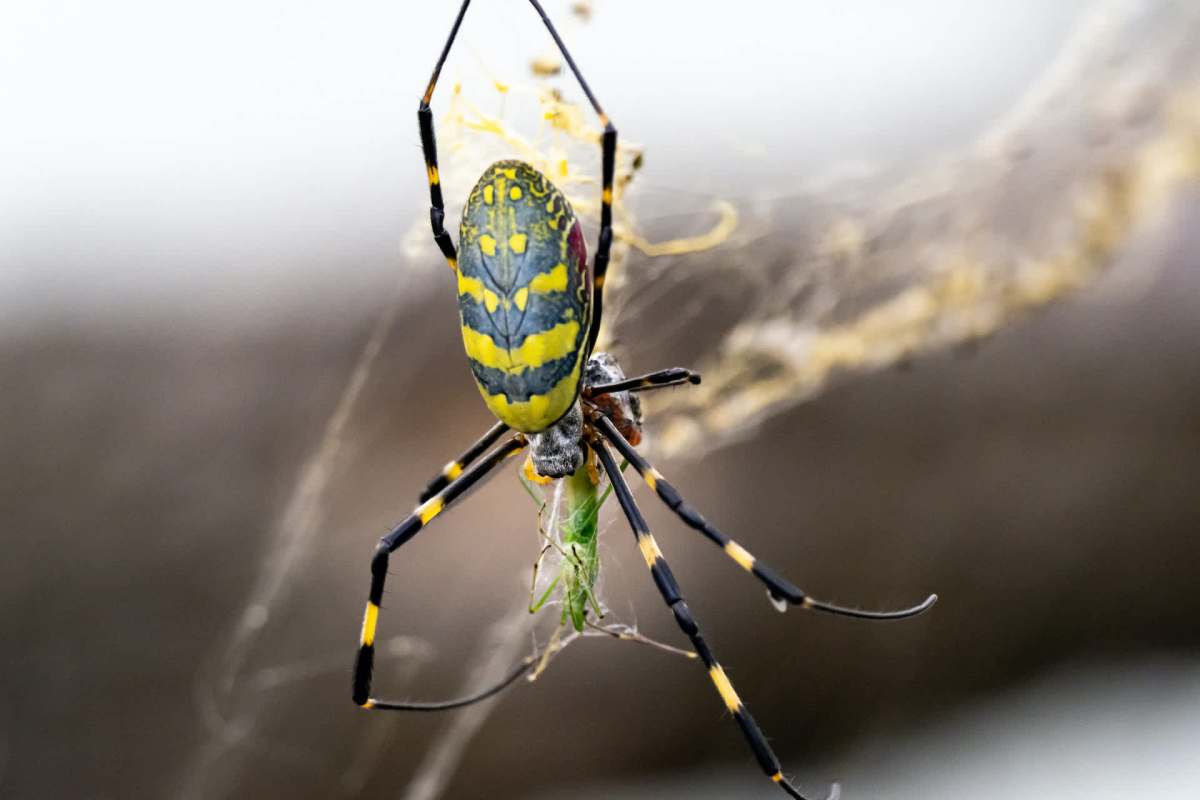
A Joro spider native to East Asia has turned up in a hotel in Santa Barbara County, raising questions about how easily invasive species can slip into new communities.
The sighting marks the first known record of the large yellow-and-black spider in the county and may offer an early signal of how non-native species can arrive through global travel and trade.
According to Noozhawk, naturalist and birding instructor Sophie Cameron spotted a lone Joro spider last fall in foliage on a hotel building in Santa Barbara County. She later alerted Alex Harman, Schlinger chair of entomology at the Santa Barbara Museum of Natural History, about the discovery.
The spider, identified as female, was recognized by its yellow, black, and gray patterning and its unusually large size, which can reach up to 4 inches across.
The species, Trichonephila clavata, had not previously been reported farther west in the United States than Oklahoma. It was first documented in Georgia in 2014.
Researchers believe the spider likely arrived the same way many invasive species do, by hitchhiking through human commerce.
TCD Picks » Quince Spotlight
💡These best-sellers from Quince deliver affordable, sustainable luxury for all




"These hotels are bringing in lots of fresh cut flowers for weddings and parties and things like that," he said, according to Noozhawk. "We suspect that the spider probably came in on a shipment of flowers."
While the Joro spider is considered harmless to humans, it is known for spinning large, distinctive webs that can stretch up to 10 feet across.
On its own, a single sighting may not seem alarming. But ecologists caution that invasive species can have outsized impacts when they enter ecosystems that have not evolved alongside them.
"The big concern is that an invasive species … doesn't have any predators or parasites that help limit its population," Harman said.
That imbalance can allow a species to spread more easily, potentially affecting native insects, disrupting food webs, and creating new challenges for land managers responsible for parks, farms, and public spaces.
At this stage, there is no clear evidence of the spider's regional impact, since local research is limited. But the broader pattern is familiar: When a species arrives without natural controls, it can expand quickly and compete with native wildlife in unexpected ways.
Invasive species have historically created problems for agriculture, biodiversity, and local economies when they have become established in new regions.
For now, the response is focused on early detection and prevention.
Monitoring is carried out by agencies such as U.S. Customs and Border Protection, the U.S. Department of Agriculture, and the California Department of Food and Agriculture, while local oversight in Santa Barbara County is handled by its Agricultural Commissioner's Office.
Officials emphasize that early reporting is key. Catching a species before it spreads widely can make containment far more manageable.
Residents, growers, and business owners, especially those receiving imported plants or cut flowers, are encouraged to report unusual insects or spiders to local agricultural authorities or museum experts.
"We're crossing our fingers that it was just this one individual," Harman said, according to Noozhawk. "Again, it's a big, scary spider, but it's not going to hurt anyone. So, they don't need to be terribly worried about it."

Get TCD's free newsletters for easy tips, smart advice, and a chance to earn $5,000 toward home upgrades. To see more stories like this one, change your Google preferences here.







