


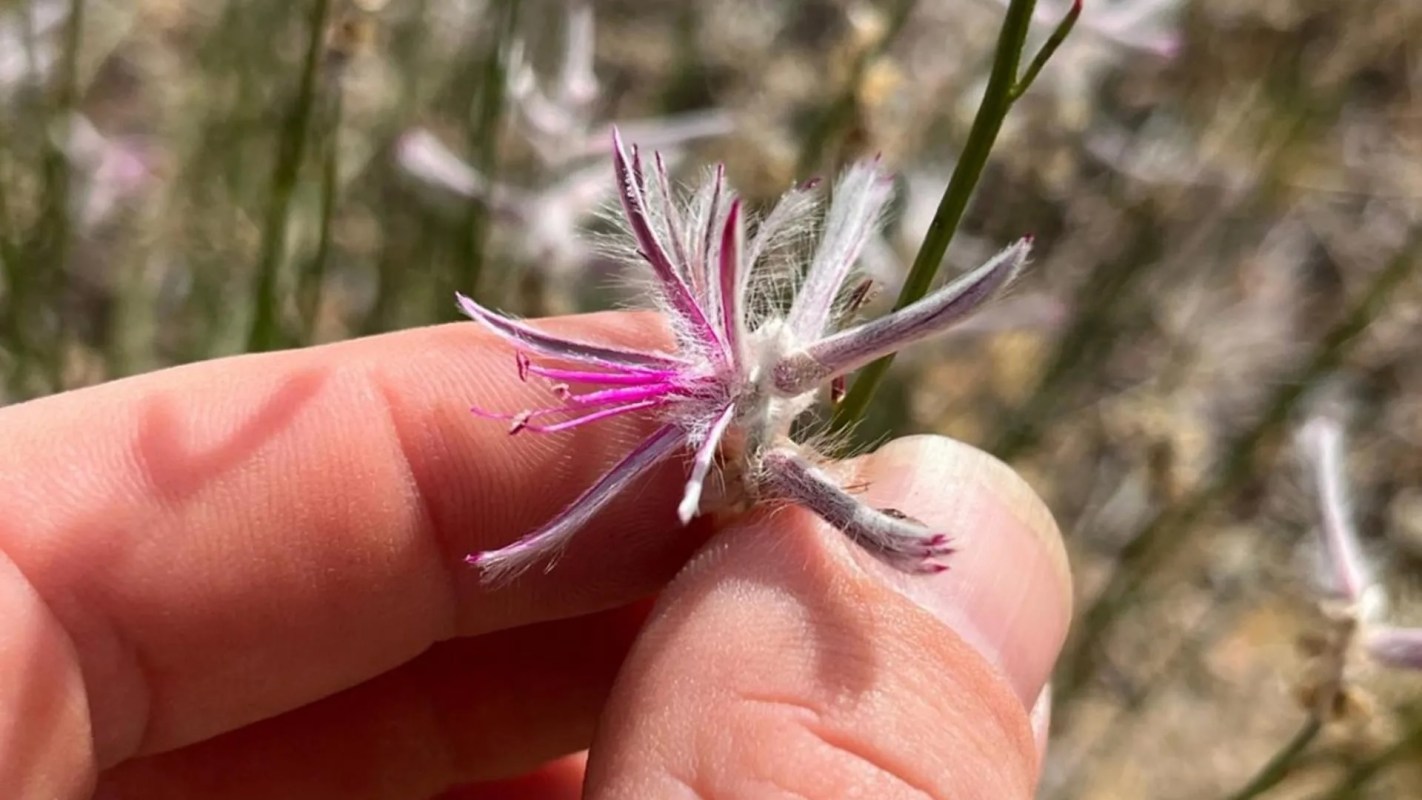
A chance photo upload from remote Queensland has led scientists to a plant that had been missing from the wild for nearly 60 years — and it's a pretty remarkable reminder that ordinary people with a phone camera can end up helping reshape conservation science.
While assisting with bird banding on a large outback property in northern Australia, horticulturalist Aaron Bean spotted a plant he didn't recognize. He took several photos and, after getting service again, posted them to iNaturalist, according to ScienceDaily.
Those images later drew the notice of botanist Anthony Bean at the Queensland Herbarium, who identified the plant as Ptilotus senarius. It is a delicate shrub with purple-pink flowers and has not been recorded since 1967. It had been widely considered extinct in the wild.
Researchers later verified the ID with assistance from the property owner, who gathered a specimen. Thomas Mesaglio of the UNSW School of Biological, Earth and Environmental Sciences, who wrote up the rediscovery for the Australian Journal of Botany, called the moment "very serendipitous."
Ptilotus senarius has now been reclassified as critically endangered, which opens the door to more focused protection efforts.
While this story centers on one rare flower, it points to something much bigger. Citizen science is becoming an increasingly powerful tool for biodiversity research at a time when many species are under pressure and scientific resources are limited.
TCD Picks » Quince Spotlight
💡These best-sellers from Quince deliver affordable, sustainable luxury for all




Australia is vast, biologically rich, and hard to fully survey. About one-third of the continent is privately owned land, meaning scientists often can't access potentially important habitats without help from landowners or permitted visitors. In cases like this one, observations from everyday people can reveal species that experts might otherwise miss for decades.
Better biodiversity data can help guide smarter land management, conservation funding, and habitat protection, all of which support healthier ecosystems and communities. When rare species are found before they disappear for good, scientists have a better chance of protecting landscapes that also support pollinators, soil health, and local resilience.
The rediscovery also offers a hopeful counterpoint to what Science Daily described as roughly 900 plant species believed to be lost from the wild worldwide since the 1750s.
Scientists say the public can make these tools even more useful by sharing better observations. One tight flower photo often isn't sufficient for identification when similar species look alike.
Taking extra images of leaves, stems, bark, and the whole plant can give experts the clues they need.
Context matters, too. Notes about soil, nearby plants, pollinators, or even smell can all increase the scientific value of an observation. As Mesaglio explained, detailed records create more opportunities for future research and conservation.
Researchers are also encouraging more landowners to get involved. In New South Wales, the Land Libraries project, run by the state government's Biodiversity Conservation Trust, helps landholders record species on their properties and share those observations on citizen science platforms.
That kind of participation builds scientific knowledge while also helping people feel more connected to the places they live, which can make conservation more practical, local, and lasting.
"It's one of these situations where everything had to fall into place and there was a bit of good fortune involved," Mesaglio said. He also summed up why citizen observations matter so much: "The more information you can provide and the more context you can provide, the more potential uses that that record will have in the future."

Get TCD's free newsletters for easy tips, smart advice, and a chance to earn $5,000 toward home upgrades. To see more stories like this one, change your Google preferences here.







