


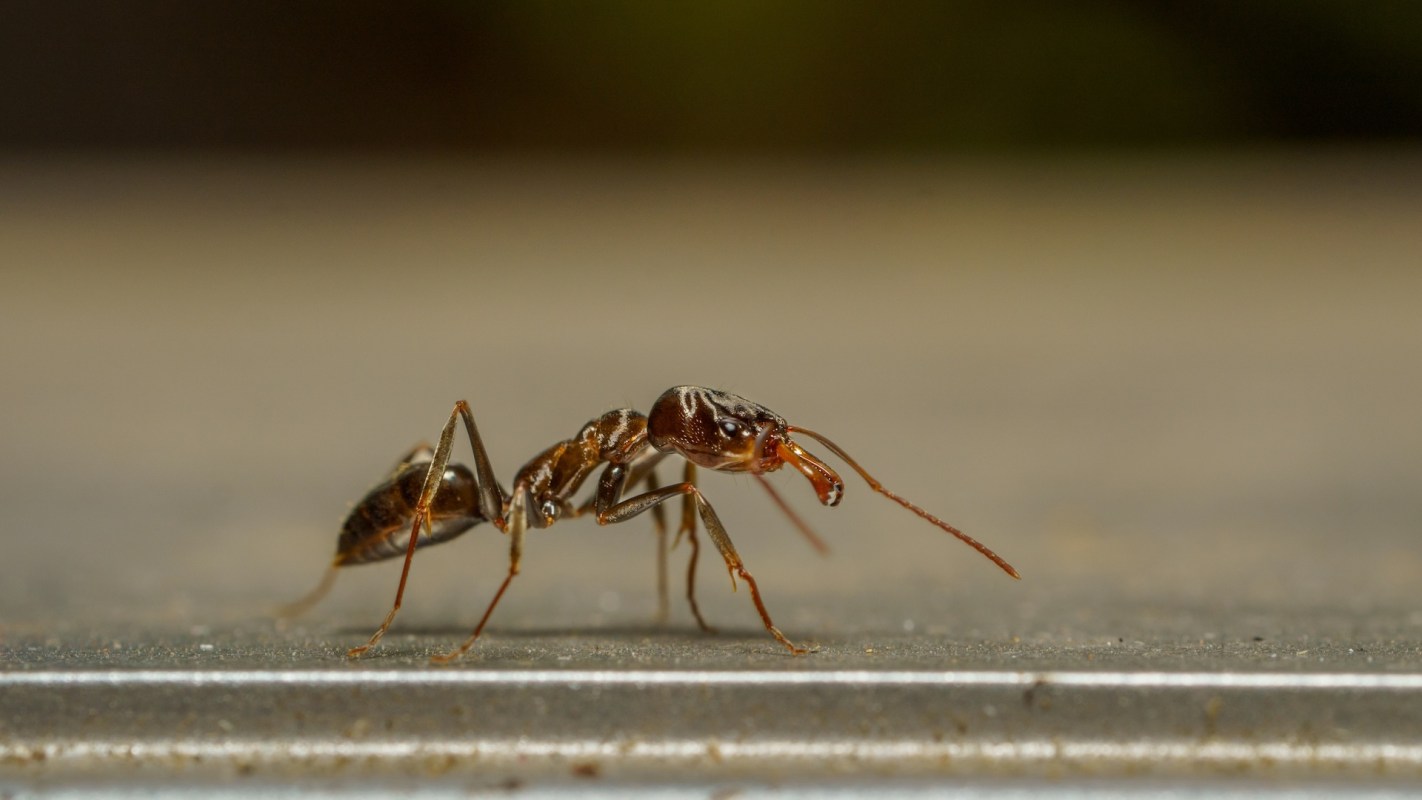
An invasive ant spreading through Central Texas is proving even harder to control than scientists expected — and the reason sounds almost strangely human.
According to KXAN, researchers at the University of Texas said tawny crazy ants may be evading eradication efforts by social distancing when infected, effectively isolating themselves to slow the spread of disease.
Tawny crazy ants have been spreading across Gulf states in recent years and are now pushing farther inland, including into Central Texas. Once established, they can overwhelm local ecosystems, displacing native insects and even driving out species like fire ants from infested properties.
"Tawny crazy ants are super-colonial, which means all the nests within an infestation that might spread for kilometers are members of the same colony," said research scientist Edward Lebrun, per KXAN.
That structure makes traditional pest control far less effective, since there is no single nest to eliminate.
Researchers have been exploring whether a naturally occurring fungus could be used as a biological control method. The idea is to place fungal spores along ant foraging routes so workers can carry the infection back into the colony, gradually reducing worker survival and limiting reproduction.
TCD Picks » Quince Spotlight
💡These best-sellers from Quince deliver affordable, sustainable luxury for all




But the new findings complicate that approach. Infected ants appear to change their behavior by moving toward the colony's outer edges, where they are less likely to spread the fungus to other members.
This self-segregation slows transmission and makes it harder to eliminate the colony entirely.
Invasive species such as tawny crazy ants can dramatically reshape local environments. In areas where they take hold, residents and researchers have observed declines in spiders, scorpions, and other native insects, showing how a single invasive species can disrupt entire food webs.
Infestations can mean repeated treatments, rising costs, and ongoing frustration as colonies rebound or spread to new areas.
It also reflects a broader challenge in managing invasive species.
Once established, they can spread rapidly, outcompeting native organisms and making ecosystems less resilient to other stressors such as drought, habitat loss, and extreme weather.
Researchers are not abandoning the fungal strategy. Instead, they say the new behavioral insight could help refine it.
One possibility is targeting colonies during migration phases, when ants are reorganizing and may be less able to isolate infected individuals. That timing could prove critical, since ants in transition may not be able to maintain the same level of internal separation that helps them evade infection.
There is also a small silver lining. Because the fungus exists in the environment, scientists believe tawny crazy ant populations may not persist indefinitely, even if they are extremely difficult to eliminate quickly.
Still, that does not make current infestations any less disruptive for people living with them today.
Experts emphasize early detection and professional treatment, since small infestations are far easier to manage before they expand into large interconnected networks.
Faster reporting can help prevent ants from establishing sprawling supercolonies that make them difficult to control.
As TJ Greaney, founder of Kids Outdoor Zone, told KXAN, "There's a reason they call them crazy ants, because they drive you crazy."

Get TCD's free newsletters for easy tips, smart advice, and a chance to earn $5,000 toward home upgrades. To see more stories like this one, change your Google preferences here.







