


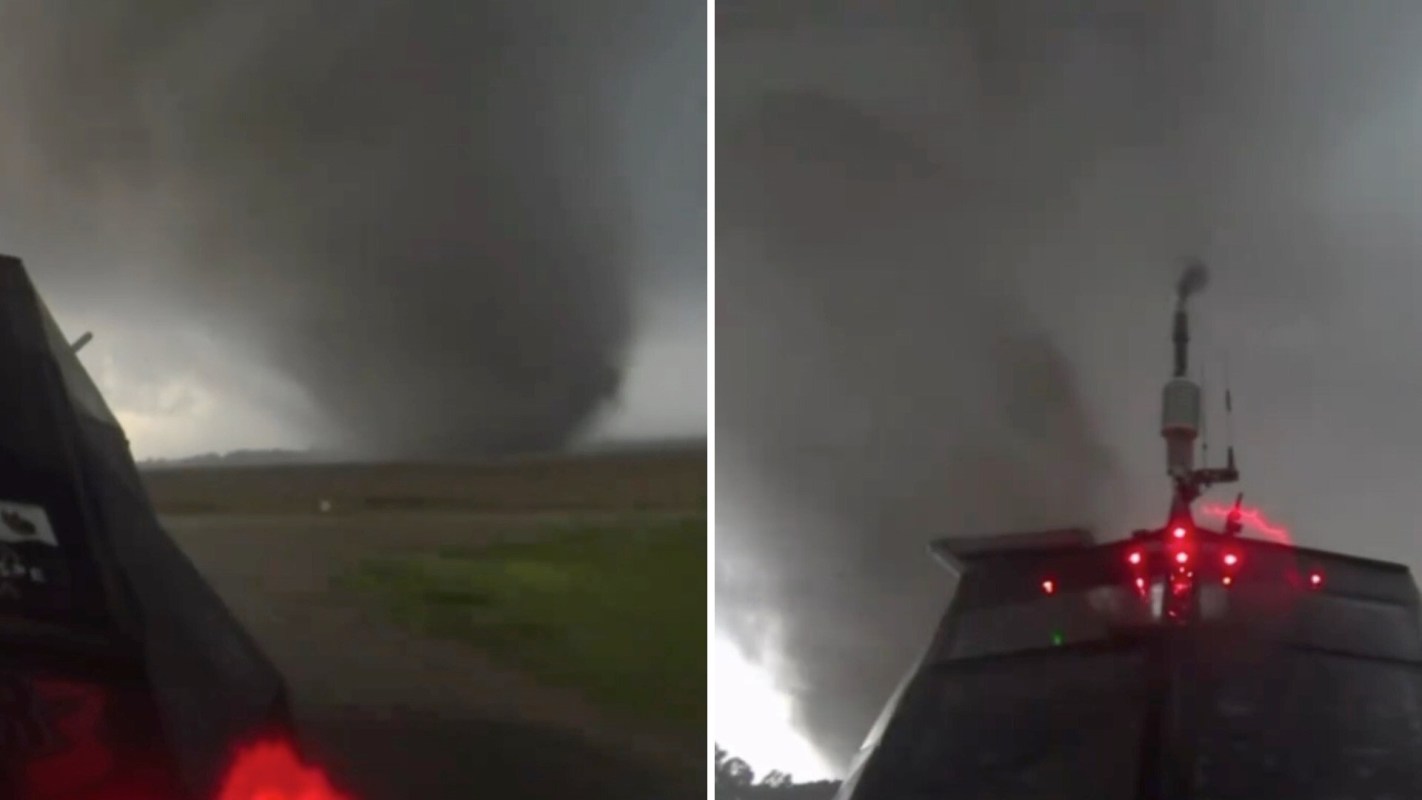
A storm-chasing video from Reed Timmer is drawing widespread attention online after showing his Team Dominator racing alongside a violent tornado and launching a scientific sensor directly into its path.
What's happening?
Timmer (@reedtimmerwx), who posted the footage on TikTok, shared a clip filmed from inside the Dominator during an active tornado intercept in northern Kansas.
In the caption, he wrote: "WATCH Team #Dominator launch a sensor into this violent #tornado with noodle donut vortices from our stinger camera! We are targeting another threat of violent tornadoes in northern Kansas today."
@reedtimmerwx WATCH Team #Dominator launch a sensor into this violent #tornado with noodle donut vortices from our stinger camera! We are targeting another threat of violent tornadoes in northern Kansas today #stormchasing ♬ original sound - Reed Timmer, PhD
The post quickly gained thousands of likes, comments, and shares as viewers watched the team line up the deployment in real time.
Inside the vehicle, the audio captures the intensity of the moment. Team members can be heard shouting, "That thing's ripping," and "We're not gonna beat it," before a countdown begins: "Three. Shoot it. Two, one."
Moments later, someone confirms, "Sensors in it. Sensors in it."
TCD Picks » Quince Spotlight
💡These best-sellers from Quince deliver affordable, sustainable luxury for all




The video stands out not only for the high-risk maneuver, but also for Timmer's description of the storms' structure.
He said the team's stinger camera captured an unusual multi-vortex formation inside the tornado, referring to tightly rotating sub-vortices as "noodle donut" vortices within the larger funnel.
Why does it matter?
Severe tornadoes remain difficult to predict with precision, especially at ground level, where winds can vary dramatically across short distances.
Researchers rely on rare data from inside or near tornadoes to better understand how they form, intensify, and behave.
Sensor deployments like this can help improve forecasting models, warning systems, and emergency response planning.
Even small gains in prediction time or accuracy can make a significant difference when communities are trying to take shelter.
Stronger extreme weather events also carry broader consequences beyond the storm itself, including damaged homes, disrupted infrastructure, strained hospitals and schools, and costly long-term recovery efforts for local governments and families.
Because of that, scientists and emergency planners continue to look for new ways to gather real-time data during high-risk events, even when it involves dangerous fieldwork.
Footage like Timmer's also gives the public a rare close-up look at tornado structure and behavior.
While the video has the intensity of an action sequence, the purpose behind it is scientific: collecting information that could eventually improve safety outcomes for people in tornado-prone regions.
What are people saying?
The reaction online was a mix of awe and concern, with some commenters expressing disbelief at the risk involved.
One wrote, "Did we not learn from Twisters," referencing the tornado-focused film and the dangers of driving toward active funnels.
Others focused on the visual impact and data-gathering effect.
"Can we talk about what great footage this is!?!" one user said. "Stay safe y'all."
Even in the moment itself, the team's reaction reflected the scale of what they were witnessing: "Absolutely amazing. Yeah, amazing. Tornado."

Get TCD's free newsletters for easy tips, smart advice, and a chance to earn $5,000 toward home upgrades. To see more stories like this one, change your Google preferences here.







