


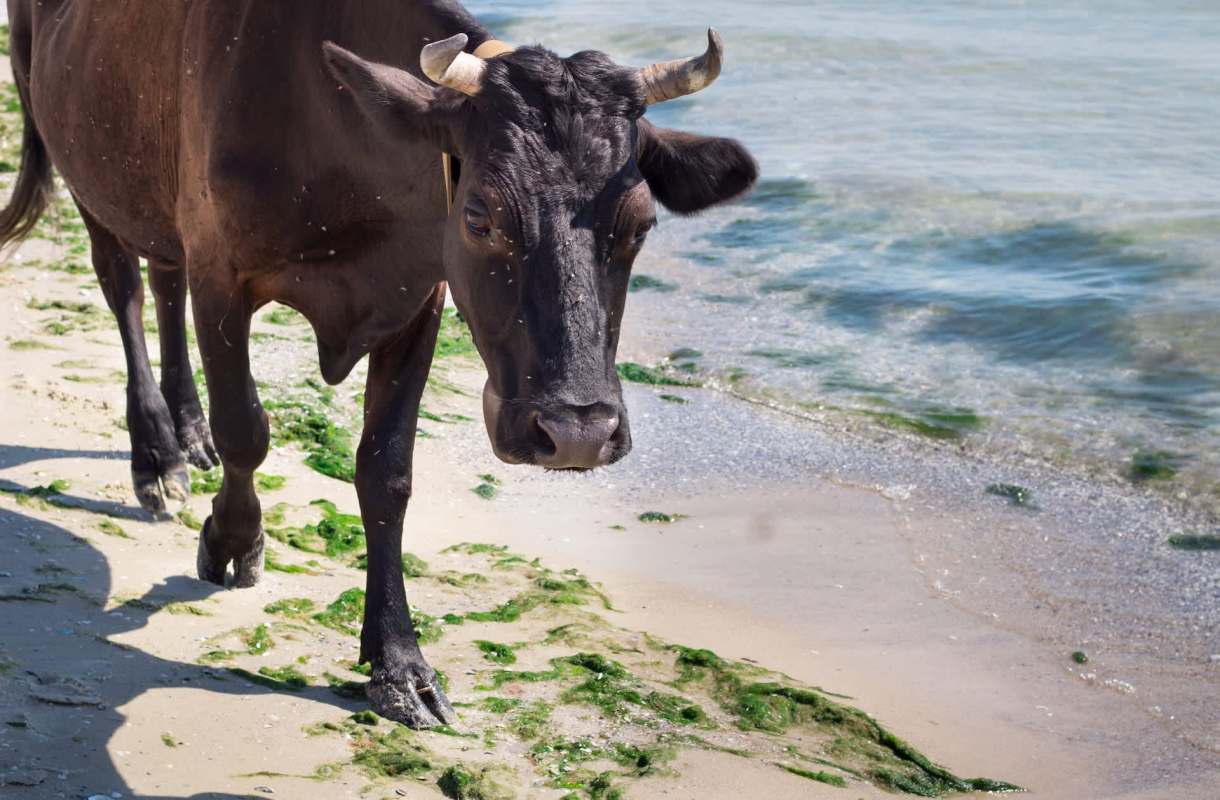
As rising global temperatures squeeze pastures and drive up crop costs, researchers are testing a surprising backup plan for cattle feed: seaweed.
A new study suggested cows may be able to digest the marine plant more effectively than previously thought — a finding that could give farmers an additional tool as traditional forage becomes less reliable.
Researchers from Agriculture and Agri-Food Canada and the Canadian Light Source at the University of Saskatchewan studied how cattle gut systems responded when seaweed was introduced as a diet staple, according to a news release.
Wade Abbott, a research scientist with Agriculture and Agri-Food Canada, wanted to understand whether cattle could break down seaweed at all and, if so, which biological process made it possible.
That question matters because seaweed is fundamentally different from grass and hay. Its structure contains complex sugars that cattle did not evolve to digest, meaning it would normally require specialized enzymes not typically present in land-plant digestion systems.
The research team found that cows fed seaweed experienced a notable shift in their gut microbiomes, with certain bacteria increasing in abundance and appearing to play a key role in breaking down the marine plant.
TCD Picks » Quince Spotlight
💡These best-sellers from Quince deliver affordable, sustainable luxury for all




"We could finally see exactly how the bacteria crack the code of seaweed digestion," Abbott said.
For farmers, feed flexibility can make a significant difference. Drought, heat, and other climate pressures are reducing pasture quality and increasing the cost of conventional feed crops in many regions.
In that context, alternative feed sources could help livestock operations stay stable.
If seaweed can be safely incorporated into cattle diets at scale, it could offer producers another way to manage costs and reduce dependence on a narrow set of land-based feed crops.
That kind of diversification could also ripple through food supply chains, influencing grocery prices if feed costs become more stable over time.
If livestock nutrition can be partly sourced from marine ecosystems instead of entirely from farmland, it could reduce pressure on already stressed agricultural land in some regions.
For consumers, a more flexible food system can help improve resilience against climate-driven price swings and supply disruptions, even if changes at the farm level take years to reach store shelves.
Right now, the most important work is biological understanding. The study clarifies how cattle might process seaweed by showing that their gut microbes can adapt to an unfamiliar food source and unlock new metabolic pathways.
"We're only beginning to understand the genetic mechanisms that allow gut microbes to process these marine sugars," Abbott said. "If we can map those pathways fully, the applications go well beyond cattle. We're talking about a new framework for sustainable agriculture, one that embraces unconventional feed sources and works with the biology that's already there, waiting to be activated."

Get TCD's free newsletters for easy tips, smart advice, and a chance to earn $5,000 toward home upgrades. To see more stories like this one, change your Google preferences here.






