


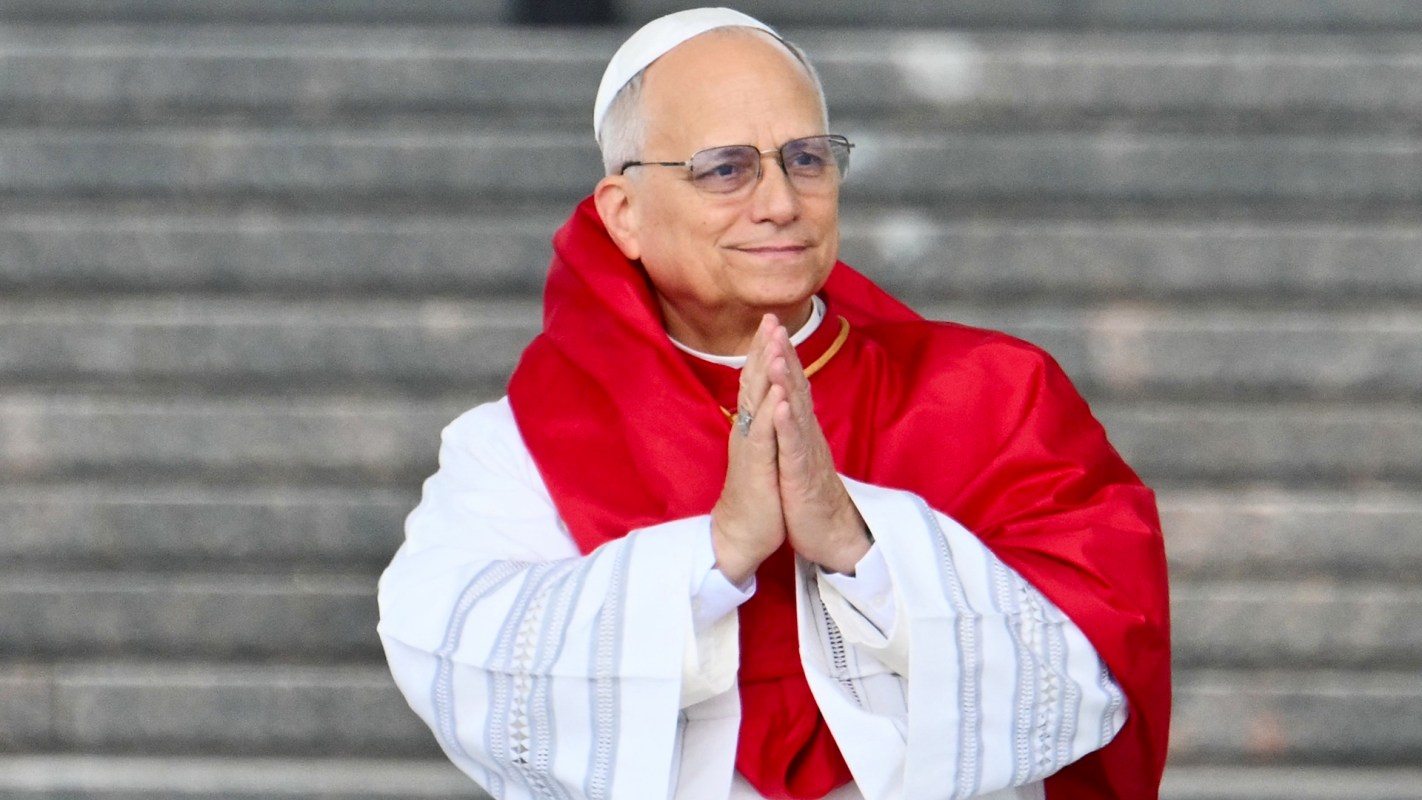
Pope Leo XIV is moving to make artificial intelligence a priority for the Vatican.
What's happening?
According to the Associated Press, the pontiff has set up an internal AI study group while readying his first encyclical, which is expected to urge an ethics-first, human-focused approach to the rapidly expanding technology.
The Vatican announced in mid-May that Pope Leo formed the study group because AI is advancing rapidly and could have major effects on "human beings and on humanity as a whole," while also raising concerns about "the dignity of every human being."
The move came just after the Pope signed his first encyclical, scheduled to coincide with the 135th anniversary of Pope Leo XIII's landmark "Rerum Novarum," a text on workers' rights amid the Industrial Revolution.
The new document is expected to frame AI in a similar way: as a transformational force that demands moral guardrails around labor, justice, and peace.
Pope Leo has already signaled that he sees AI as one of the defining issues of the era. According to the AP, soon after his 2025 election, he told cardinals that the church should draw on its "social teaching" to respond to AI's impact on "human dignity, justice, and labor."
TCD Picks » Quince Spotlight
💡These best-sellers from Quince deliver affordable, sustainable luxury for all




Experts say the Vatican could have an influential role in the AI debate, which has often been dominated by governments and tech companies.
Why does it matter?
AI is already shaping daily life, from hiring systems and education tools to health care and online information. It could accelerate scientific discovery and improve services, but it also raises risks around bias, misinformation, and public safety.
And there is a growing energy and environmental dimension. AI systems rely on data centers and computing power that can consume enormous amounts of electricity and water.
These complex considerations are a part of why Pope Leo's intervention matters now. According to the AP, the Vatican has said AI should serve alongside human intelligence rather than substitute it.
What's being done?
The Vatican is not starting from scratch. In 2020, it supported the Rome Call for AI Ethics, a pledge joined by Microsoft, IBM, and Cisco that highlighted principles including accountability, inclusiveness, privacy, and impartiality, the AP reported.
Pope Francis also pressed for tighter oversight in his final years, including an international AI treaty and a prohibition on autonomous weapons that might be driven by the technology. Pope Leo appears poised to build on that foundation.

Get TCD's free newsletters for easy tips, smart advice, and a chance to earn $5,000 toward home upgrades. To see more stories like this one, change your Google preferences here.






