


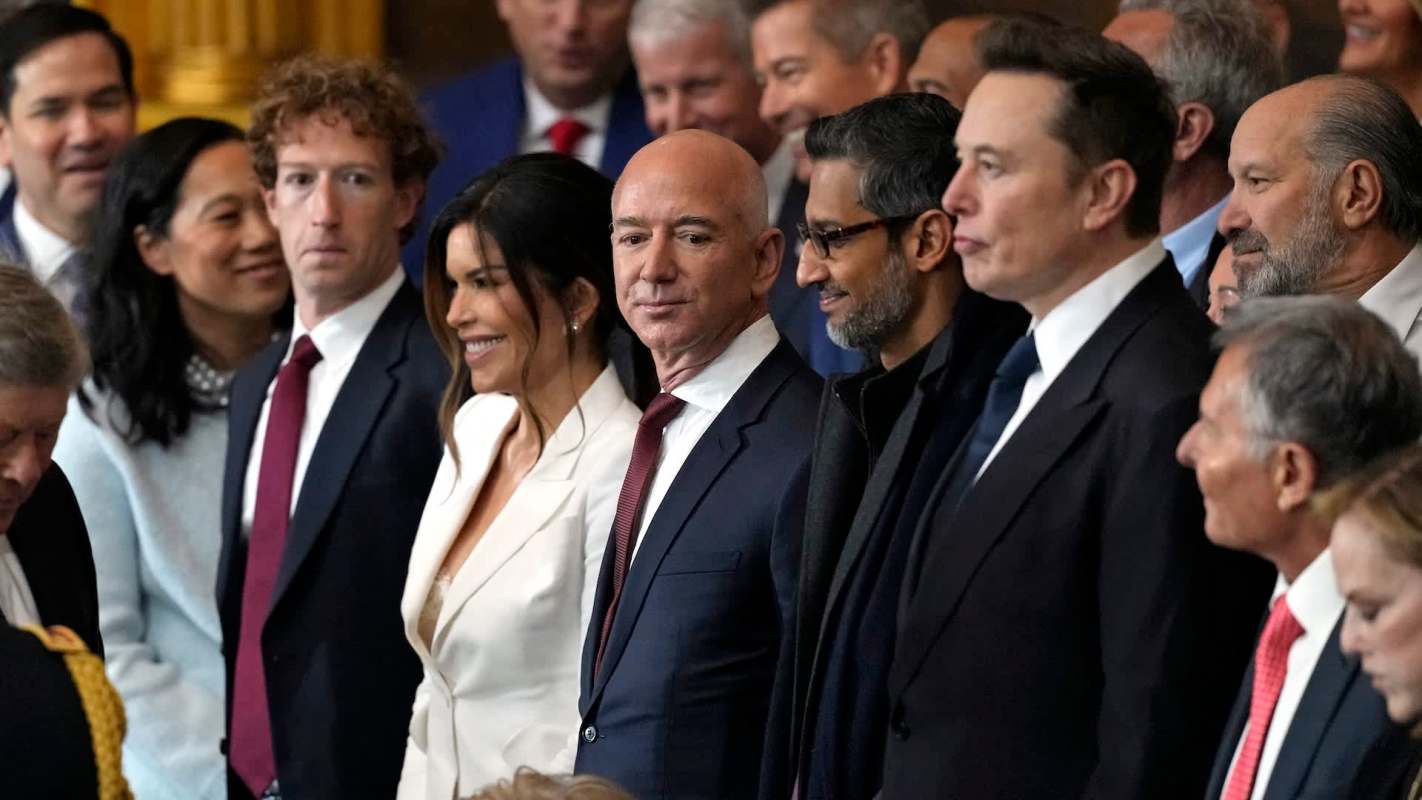
A Stanford economist has warned that as artificial intelligence spreads through the economy, the concentration of power to Big Tech billionaires could further erode democracy.
In his book, "Private Power and Democracy's Decline," economist Mordecai Kurz argued that in the United States, a small number of technology leaders are accumulating extraordinary control over the tools people use to work, communicate, and access information.
That means those leaders are exerting so much economic and cultural influence that workers, voters, and even governments are losing leverage.
What's happening?
According to The Guardian, Kurz, whose research has long connected monopoly power with political and economic inequality, said today's tech elite are doing more than building successful companies. They are also shaping markets and public life in ways that make democratic oversight harder to enforce.
Speaking about the book ahead of its May 19 publication, Kurz said the pattern is a familiar one: New technologies generate enormous fortunes, wealth becomes concentrated in the hands of a few owners, and those owners begin to view themselves as uniquely equipped to direct society.
He compared the present moment to the first Gilded Age, when industrial tycoons such as Carnegie and Rockefeller used ideas like social Darwinism to justify extreme inequality and expand their political influence.
TCD Picks » Quince Spotlight
💡These best-sellers from Quince deliver affordable, sustainable luxury for all




In Kurz's view, today's tech firms are repeating that dynamic through digital platforms, AI development, acquisitions, and lobbying. As The Guardian described, Kurz argued that instead of trying to outcompete dominant firms, many startups are now created with the expectation that they will later be bought by those firms. That dependence can suppress competition before it has a real chance to emerge.
He also warned that major platforms profit from engagement-driven systems that can reward misinformation and intensify polarization.
"When you use strategies designed to manipulate knowledge to create market power, you go way beyond what we should be willing to accept," Kurz said.
AI is central to that concern. Kurz said the technology could displace not only blue-collar workers, but also doctors, lawyers, and engineers if companies deploy it primarily to cut labor costs rather than support human workers.
Why is this important?
Kurz's core argument is that monopoly power does not just reshape the economy; it can also destabilize democracy.
When wages stagnate, living costs climb, and workers feel abandoned by public institutions, people can lose faith that democracy is serving them. Kurz pointed to the decades after New Deal reforms as evidence that stronger limits on concentrated corporate power can support broader prosperity.
He argued that the rollback of many of those protections during the Reagan era helped usher in a "second Gilded Age," in which technology firms became richer and more powerful while many workers fell behind.
That kind of economic frustration, he said, can create fertile ground for authoritarian politics. As The Guardian summarized, he sees the rise of the MAGA movement as rooted not just in culture but in long-term economic disenfranchisement, especially among workers without college degrees.
The concern is not simply that a few companies will become even larger. Control over jobs, information, and public debate will become more centralized if current trends continue, leaving voters with fewer meaningful ways to push back.
What's being done about Big Tech monopoly power?
Kurz said reform is still possible, even if it may take a major political or economic shock to bring it about.
According to The Guardian, he called for governments to tax and redistribute monopoly-generated wealth more aggressively. The book also said workers displaced by AI should get publicly supported education and retraining, and that businesses should be encouraged to hire those workers into new roles.
Just as importantly, he said policymakers should create rules that steer AI toward helping people rather than replacing them outright. That could mean clearer accountability for online platforms when misinformation spreads at scale.
Kurz's outlook is sobering, but not hopeless. His central point is that earlier periods of extreme concentration eventually produced reform — and this one could too. The question, he suggested, is whether those guardrails will arrive before the damage becomes even harder to reverse.

Get TCD's free newsletters for easy tips, smart advice, and a chance to earn $5,000 toward home upgrades. To see more stories like this one, change your Google preferences here.






