


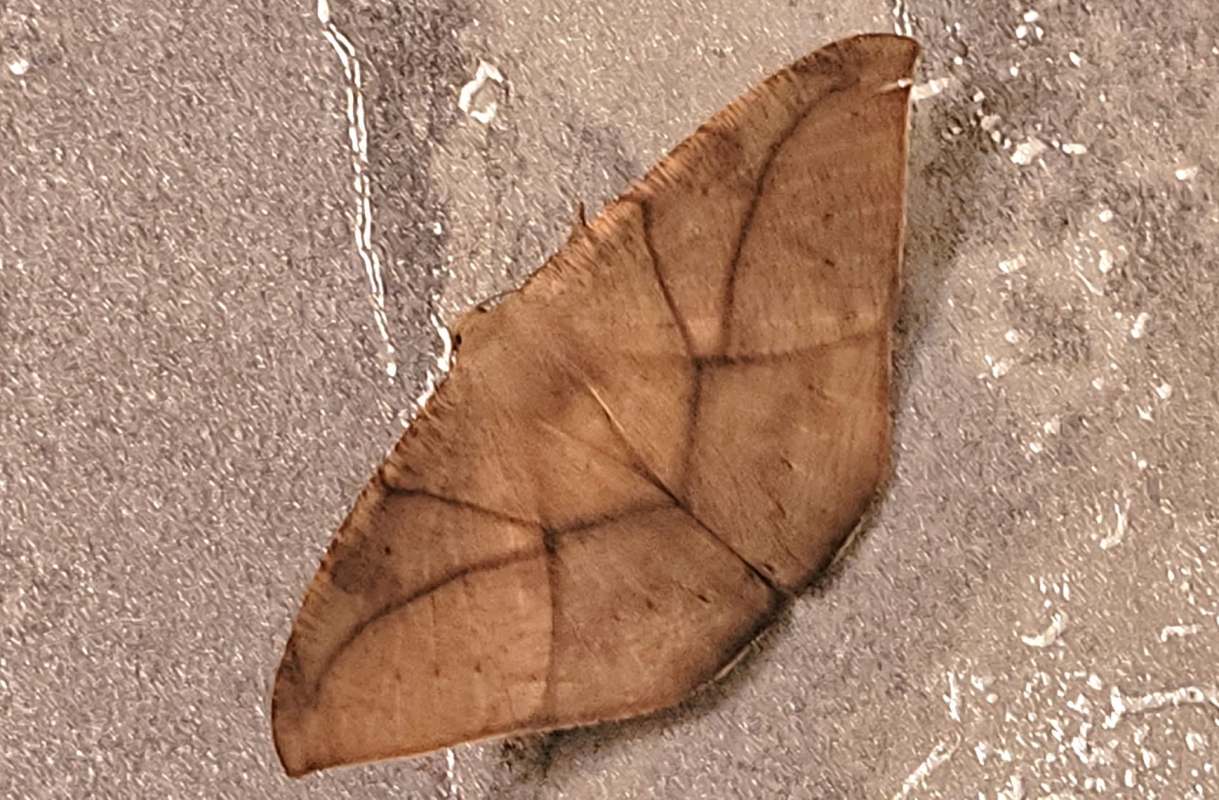
A mysterious moth found nowhere else on Earth has reappeared in Florida after seemingly vanishing decades ago, one researcher wrote for The Conversation.
But its return comes with a troubling reminder that the habitat it depends on has been dramatically reduced.
What happened?
In March 2026, researchers published a paper describing the moth species.
A small sample of sack-bearer moths collected in Florida appeared different from the common beige-colored Melsheimer's sack-bearer. This sample had a chunky body and pink-hued wings spanning about 1.25 to 1.5 inches.
With DNA samples from a 1960 specimen found in the Smithsonian collection, the researchers confirmed that this Florida sack-bearer was genetically distinct from its relatives.
This paper was the first time the scientific community learned of the moth's existence.
TCD Picks » Quince Spotlight
💡These best-sellers from Quince deliver affordable, sustainable luxury for all




The insect, now formally described as Cicinnus albarenicolus and nicknamed the Florida sack-bearer, is now showing up in a habitat that has shrunk to roughly 10% of what existed before European settlement.
Because so few recent specimens were known, the researcher feared the moth might already be extinct.
In April 2026, the scientist traveled to Florida scrub habitat and found three females at a light trap. Eggs were collected, giving researchers their first chance to study the moth's life cycle.
Only 19 specimens were documented when the species was formally described, with only a few collected after 1964.
Why is the Florida sack-bearer important?
The rediscovery matters because it shows how much unique life can remain hidden in threatened landscapes — and how close that life may be to disappearing before people even realize it is there.
Florida scrub may appear sparse, but it supports highly specialized plants and animals, including the threatened Florida scrub-jay, Florida's only bird species found nowhere else.
The Florida sack-bearer now joins the list of species tied to a habitat that exists nowhere else in quite the same way.
That loss of the Florida scrub is not just a concern for scientists. When rare ecosystems shrink, communities lose part of their natural heritage, and land managers lose valuable clues about how to care for those places.
The moth could prove to be an indicator species, helping experts gauge whether scrub habitat is healthy and how management practices such as prescribed burns are affecting it.
Better-managed scrublands can support biodiversity, reduce the risk of larger uncontrolled fires, and preserve natural spaces that matter to nearby residents, researchers, and people who enjoy the outdoors. If species disappear before they are studied, protecting the systems people rely on for a safer, healthier future becomes even harder.
What's being done about the Florida sack-bearer?
For now, the biggest step is straightforward but significant: The moth has finally been named and described. That gives conservationists, land managers, and lawmakers something specific to monitor and protect.
Researchers are also working to understand the basics of the species' biology, including its life cycle, diet, and habitat needs. That information could help show how best to manage the remaining Florida scrub, especially if the species responds well to recent and frequent prescribed burns.
Protecting what remains of white-sand scrub habitat will likely be essential. That could include habitat restoration, stronger protections for remaining scrub sites, more species surveys, and science-based fire management.
The moth's rediscovery is encouraging. But it is also a reminder that some species may be surviving by only the narrowest margin.
Finding this one again may have happened just in time.

Get TCD's free newsletters for easy tips, smart advice, and a chance to earn $5,000 toward home upgrades. To see more stories like this one, change your Google preferences here.







