


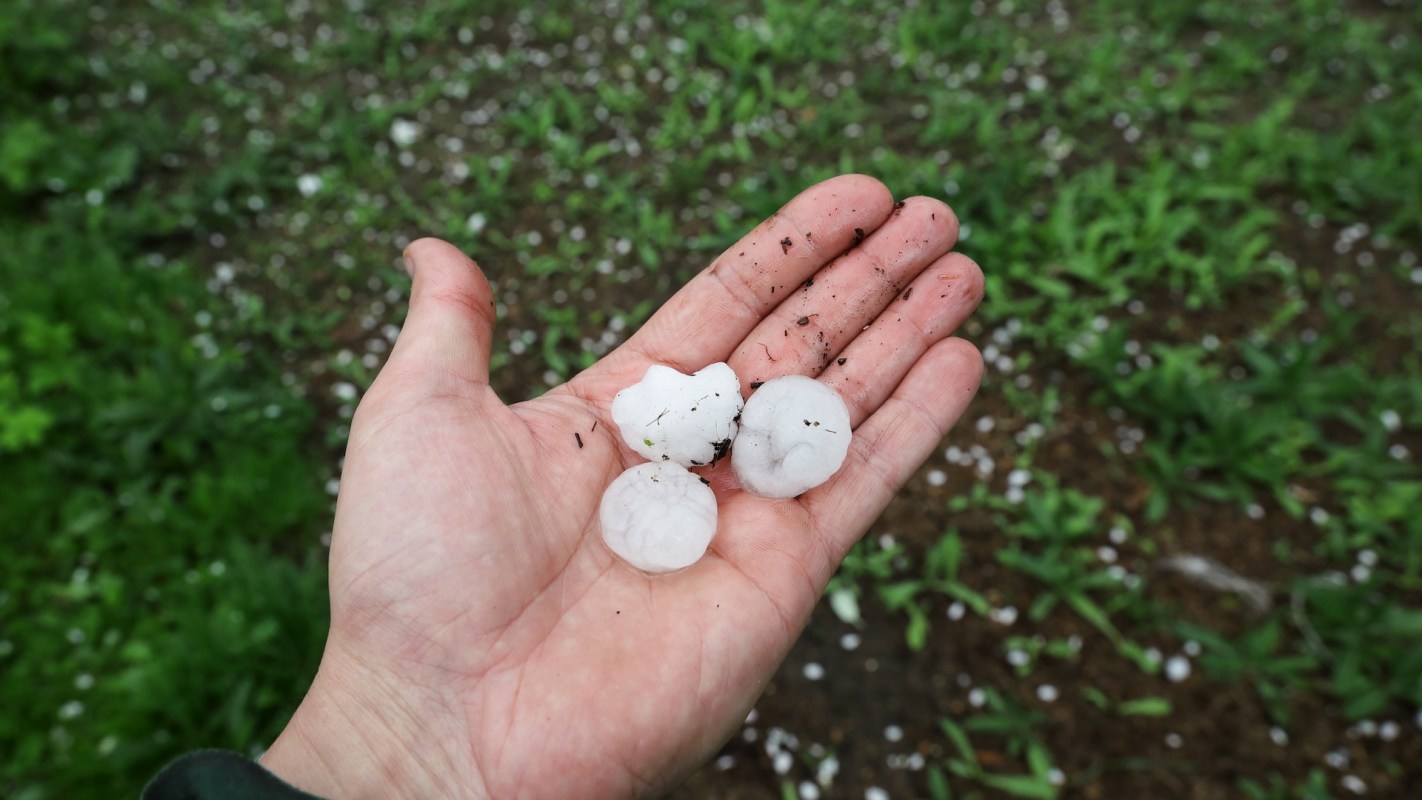
Rising global temperatures could make golf ball-sized hail much more common, according to researchers studying how warmer air influences severe thunderstorms.
As The Colorado Sun reported, a 2024 study from Northern Illinois University found that warmer atmospheric conditions may intensify the kinds of storms capable of producing large, destructive hail, including storms like those that swept through Wisconsin on April 14, 2026.
Golf ball-sized hail forms inside severe thunderstorms with strong updrafts. These powerful rising columns of air carry water droplets high into colder parts of the atmosphere, where they freeze into ice pellets.
As those frozen pellets continue cycling through the storm, they collect additional layers of ice and grow larger until they become too heavy for the updraft to support and eventually fall to the ground.
Researchers have said rising global temperatures can make that process more favorable because warmer air is able to hold more moisture. That additional water vapor can provide extra energy for thunderstorms, increasing the likelihood that hailstones grow large enough to cause significant damage.
Golf ball-sized hailstones can crack windshields, dent vehicles, damage roofs, and destroy crops within minutes. They also tend to generate costly insurance claims and expensive repairs for homeowners and drivers.
TCD Picks » Quince Spotlight
💡These best-sellers from Quince deliver affordable, sustainable luxury for all




The NIU study, published in the journal npj Climate and Atmospheric Science, projected that hailstones at least that large could become 15% to 75% more common over the coming decades.
At the same time, researchers found that smaller hail may become less frequent because warmer temperatures can melt smaller ice stones before they reach the ground.
In other words, the total number of hailstorms may not necessarily increase dramatically, but the storms that do could be more likely to produce larger and more dangerous hail. State Farm reported it paid over $5 billion in hail-related losses in the United States in 2025.
"In our study, the largest hailstones are found to increase by 15% to 75%, dependent on greenhouse gas emissions," NIU Atmospheric Science Professor Victor Gensini said in a university press release.
More frequent large-hail storms could translate into higher insurance premiums, rising repair costs, and increased risks to homes and vehicles.
Agriculture may also face growing challenges. Larger hailstorms can shred crops, damage orchards, and destroy plants in a single storm, creating financial losses for farmers and disruptions to local food production.
Hail has long been considered a routine spring and summer hazard across many parts of the United States, but emerging research suggests its risk profile may be shifting as the climate warms.
Rather than producing more relatively harmless pea-size ice, some storms may increasingly generate fewer but much larger ice stones capable of causing widespread damage.

Get TCD's free newsletters for easy tips, smart advice, and a chance to earn $5,000 toward home upgrades. To see more stories like this one, change your Google preferences here.






