


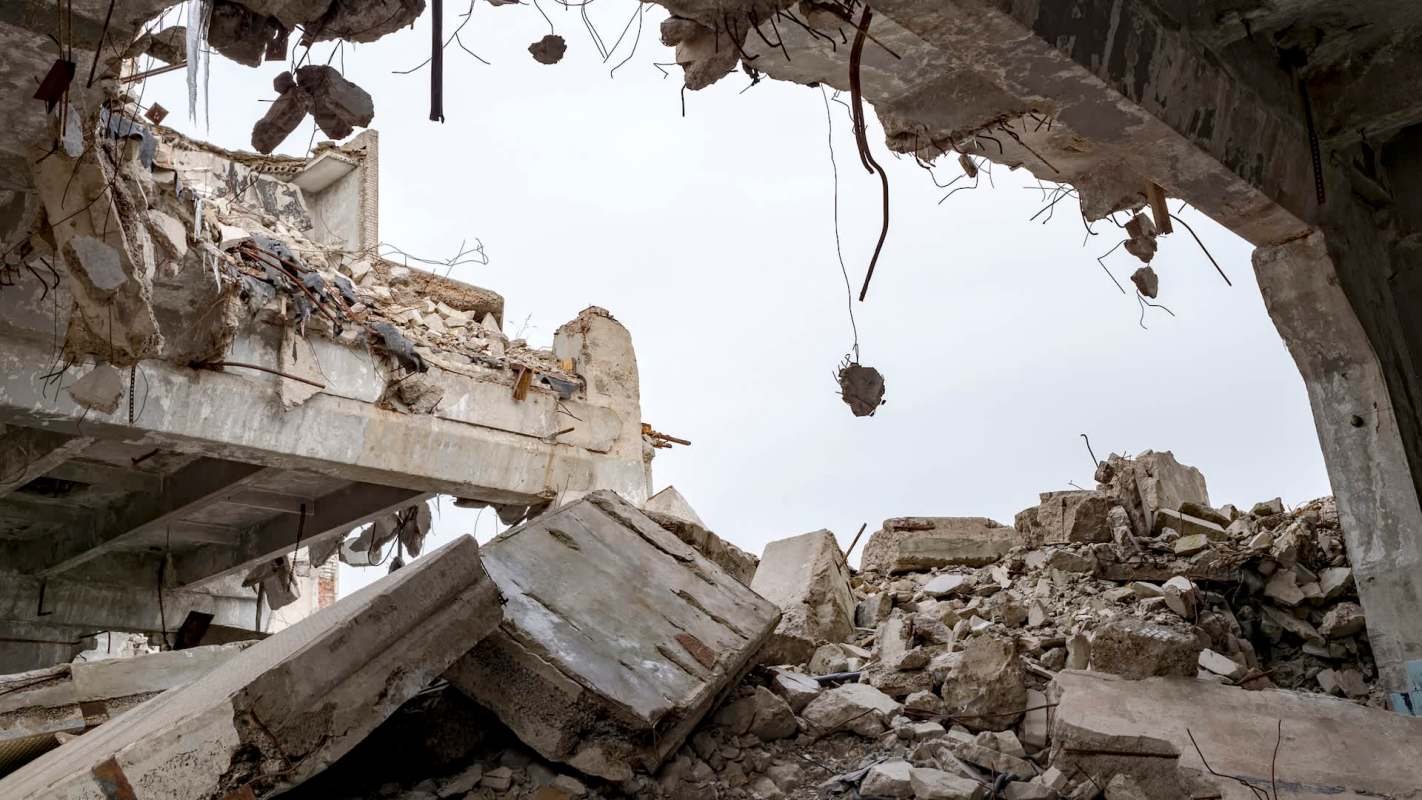
Images emerging from Gaza are drawing widespread attention for showing an unexpected form of rebuilding: broken concrete from destroyed buildings being crushed, mixed, and pressed into Lego-like bricks.
In a place where cement and steel have become extraordinarily difficult to access, the project is resonating as a stark yet hopeful example of using what remains to create shelter and rebuilding materials.
The initiative, called Green Rock, is led by Suleiman Abu Hassanin inside a rebuilt workshop in Gaza.
According to Wired, the team collects rubble from bombed structures, sorts and crushes it, and combines the material with local soil and alternative binding agents to produce interlocking bricks that can be assembled without traditional mortar.
That detail is significant because conventional cement has become increasingly scarce after years of restrictions on construction materials and nearly two years of intensified destruction across Gaza.
The scale of debris is enormous. Gaza is estimated to contain more than 60 million tons of rubble, according to the UN, while many displaced residents continue living in tents or temporary shelters.
TCD Picks » Quince Spotlight
💡These best-sellers from Quince deliver affordable, sustainable luxury for all




Abu Hassanin told Wired the project emerged out of necessity.
"We were facing a simple equation: destruction without solutions," he said. "So we tried to turn it into a resource."
The approach could provide a local source of building material at a time when imported supplies remain severely limited.
The team also says the interlocking bricks may offer better heat and sound insulation than tents, potentially creating safer and more stable shelter for families enduring extreme temperatures and ongoing conflict-related noise.
There may also be financial benefits. According to the project team, using recycled rubble can reduce construction costs by roughly 50% to 60%.
In the middle of a humanitarian crisis, those savings could help limited aid funds stretch further while also creating jobs for residents involved in collecting, sorting, and processing debris.
At the same time, experts caution that rebuilding with rubble comes with serious challenges. Debris from destroyed buildings can contain hazardous materials like asbestos, heavy metals, and unexploded ordnance, making careful screening and safety procedures essential.
The Green Rock project also remains experimental and far from a complete reconstruction solution. Large-scale rebuilding would still require infrastructure, machinery, engineering support, and access to significant quantities of construction material.
Even so, the project has drawn attention because it reflects a broader principle of circular design: reusing waste materials in ways that reduce costs, conserve resources, and support communities facing extreme hardship.
The story of Green Rock is ultimately a testament to the power of collective action and the refusal to be defined by destruction.
Abu Hassanin described the project in those terms when speaking about residents helping reconstruct damaged homes.
"In that moment," he said, "he is no longer just a recipient of aid, but part of the solution."

Get TCD's free newsletters for easy tips, smart advice, and a chance to earn $5,000 toward home upgrades. To see more stories like this one, change your Google preferences here.






