


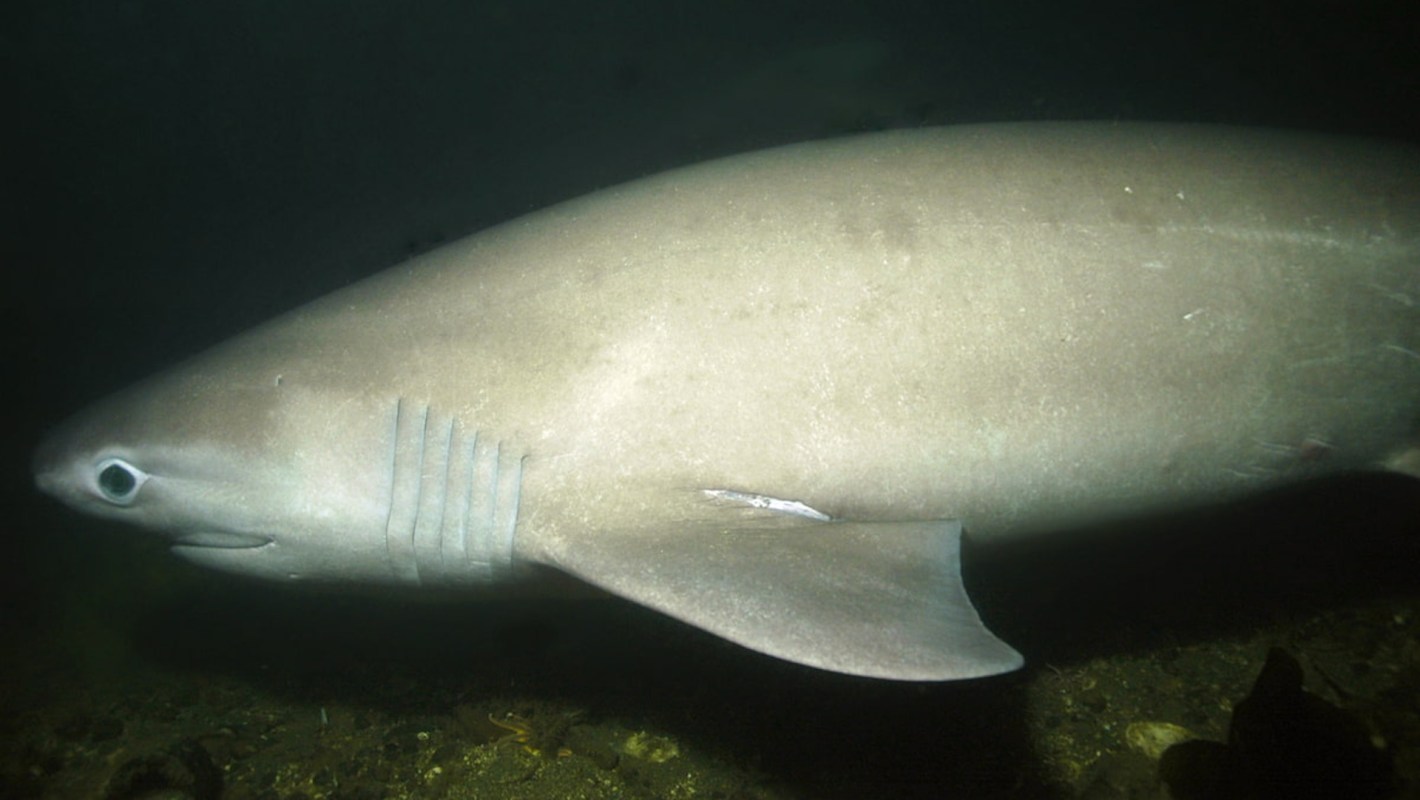
According to Popular Science, researchers with the Seattle Aquarium believe bluntnose sixgill sharks may be returning to the Salish Sea to give birth.
Even more remarkably, new findings suggest the sharks may exhibit birthing site fidelity, meaning females could repeatedly return to the same waters to have their pups.
Sixgill sharks have historically been extremely difficult to study.
Unlike most sharks, which have five gill slits on each side, sixgills have six. They also spend much of their lives in deep, low-light environments around the world, sometimes nearly 10,000 feet below the ocean surface.
Because of that, scientists still know relatively little about their growth, migration, and reproduction. But researchers say Puget Sound may offer a rare chance to change that.
In Washington waters, sixgill sharks have been observed year-round at depths as shallow as 20 feet, allowing researchers to study them far closer to the surface than in most other parts of the world.
TCD Picks » Quince Spotlight
💡These best-sellers from Quince deliver affordable, sustainable luxury for all




According to the aquarium's research, juvenile sharks appear to use the region as a nursery habitat after birth. Young sixgill sharks spend summer and fall in the southern portions of the Salish Sea before gradually moving north during winter and spring.
The sharks also display relatively predictable movement patterns. Researchers say they typically travel less than two miles per day and often move into shallower water at dusk before returning to deeper areas by morning, likely while hunting for food.
That consistency could help scientists answer long-standing questions about the species' life cycle and ecological role.
From May through September, researchers and veterinarians from the Seattle Aquarium plan monthly visits to three sites in Puget Sound to study the sharks more closely.
During the expeditions, the team will record measurements, collect tissue samples, photograph the animals, and attach tracking tags before releasing the sharks back into the water.
Scientists say a better understanding of how sixgill sharks use the Salish Sea could strengthen conservation efforts across the broader marine ecosystem.
As top predators, sharks play an important role in maintaining balanced ocean food webs. Identifying critical nursery habitat could help guide stronger protections for marine life throughout the Pacific Northwest.
"Through our research, we hope to answer questions about the life history and ecology of sixgill sharks — including migration, growth rates, and prey preferences," the Seattle Aquarium said in a statement.

Get TCD's free newsletters for easy tips, smart advice, and a chance to earn $5,000 toward home upgrades. To see more stories like this one, change your Google preferences here.






