


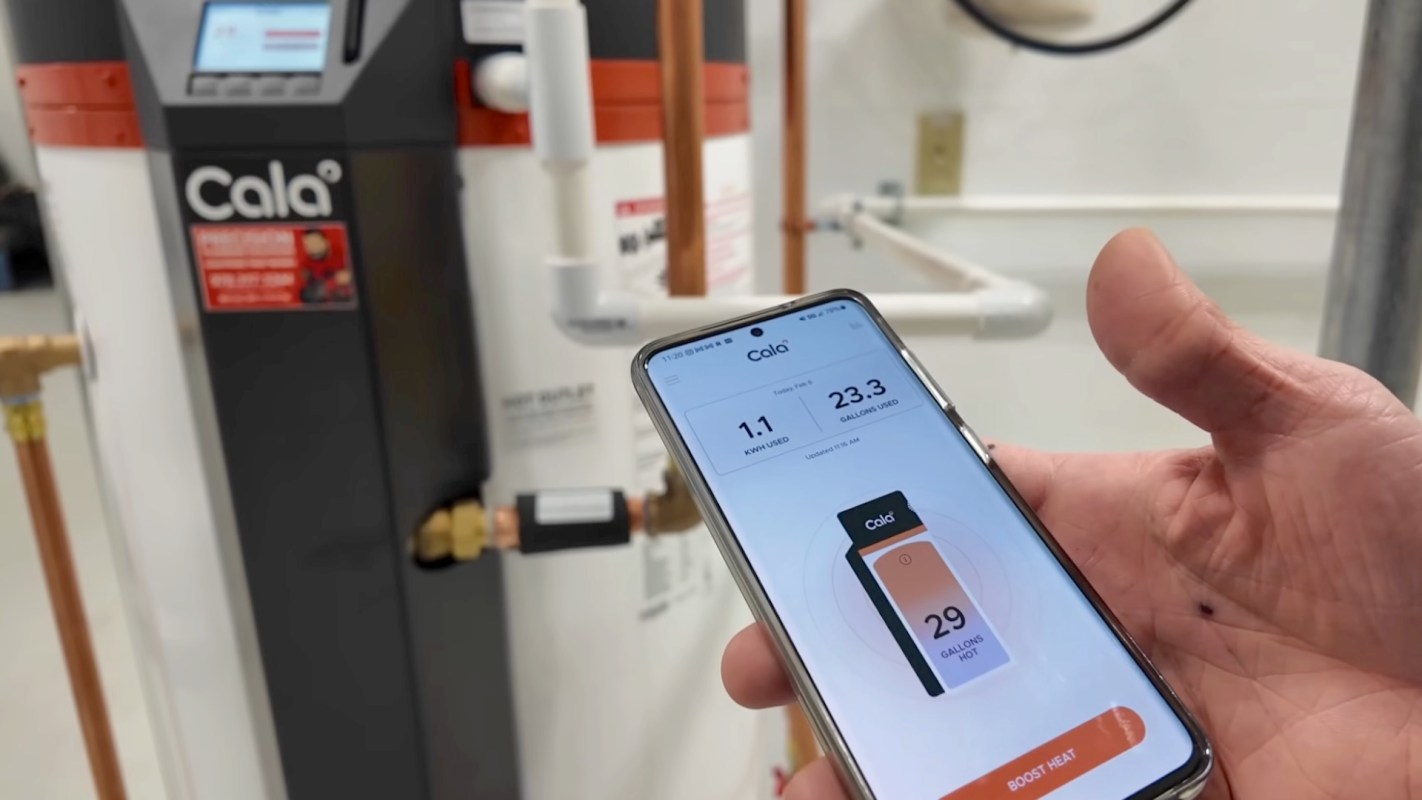
A new generation of smart water heaters is beginning to blur the line between a standard home appliance and energy-saving technology.
Massachusetts startup Cala Systems is betting that its smart heat pump water heaters could help homeowners lower utility bills while also easing strain on the power grid.
According to Forbes, the Cala heat pump water heating system was designed to learn a household's hot water habits and heat water when electricity is cheapest.
Heat pump technology is not new, but it has improved dramatically over the last two decades.
Heat pumps use refrigerants and compression technology to move heat from one place to another, rather than generating it directly, as traditional gas furnaces or electric-resistance water heaters do. This makes heat pump water heaters significantly more efficient by relying on heat transfer instead of heat creation.
What sets Cala apart from other heat pump water heaters is its software, which allows the system to coordinate with the grid, learn household hot water usage patterns, and optimize when water is heated for maximum efficiency and lower energy costs.
That could be important because water heating is a major energy expense in many homes. In fact, Cala estimates homeowners who ditch electric-resistance water heaters for one of its smart heat pump units could save up to $9,800 over 10 years on energy bills.
Forbes noted that electric-resistance water heaters convert 1 kilowatt of electricity into about 1 kilowatt of heat. By contrast, a heat pump water heater can generate roughly 2 to 4 kilowatts of heat from that same amount of electricity by pulling warmth from the surrounding air and transferring it into the tank.
Save $10,000 on solar panels without even sharing your phone number Want to go solar but not sure who to trust? EnergySage has your back with free and transparent quotes from fully vetted providers in your area. To get started, just answer a few questions about your home — no phone number required. Within a day or two, EnergySage will email you the best options for your needs, and their expert advisers can help you compare quotes and pick a winner. Solar panels can save you more than $50k over their 25-year lifespan, and EnergySage can help you save as much as $10k on installation. Which begs the question — isn't that worth an email or two? |

Cala's system superheats water when power prices are low, then stores that heat for later use. A mixing valve cools the water back down to the right temperature for showers, dishwashing, and laundry. The system can also work with other home energy devices, such as solar panels and batteries, to make water heating even more efficient.
This matters for both household budgets and the broader energy system.
Heating water requires a significant amount of electricity. In homes, improving water heating efficiency can lead to lower monthly bills without requiring homeowners to change their routines.
There is also a grid benefit. Utilities often face costly grid congestion at times of high demand, which Forbes said helps explain why some offer rebates for homeowners who install heat pump water heaters. If more households can shift water heating to off-peak hours, that could reduce pressure on electrical infrastructure.
On the environmental side, using less electricity for the same amount of hot water can reduce air pollution, especially when replacing older, less efficient electric-resistance heaters.
If you are looking to lower your own energy costs, one practical step is checking whether your water heater is nearing the end of its life. Replacing an older electric-resistance model with a heat pump water heater can dramatically improve efficiency.
Homeowners may also want to look for local utility rebates that can reduce upfront costs.
Cala's approach points to a broader trend of turning everyday household equipment into smarter energy tools that save money automatically.
If you're curious about how a water heater upgrade could transform your energy costs, connect with the experts at Cala.

Get TCD's free newsletters for easy tips, smart advice, and a chance to earn $5,000 toward home upgrades. To see more stories like this one, change your Google preferences here.






