


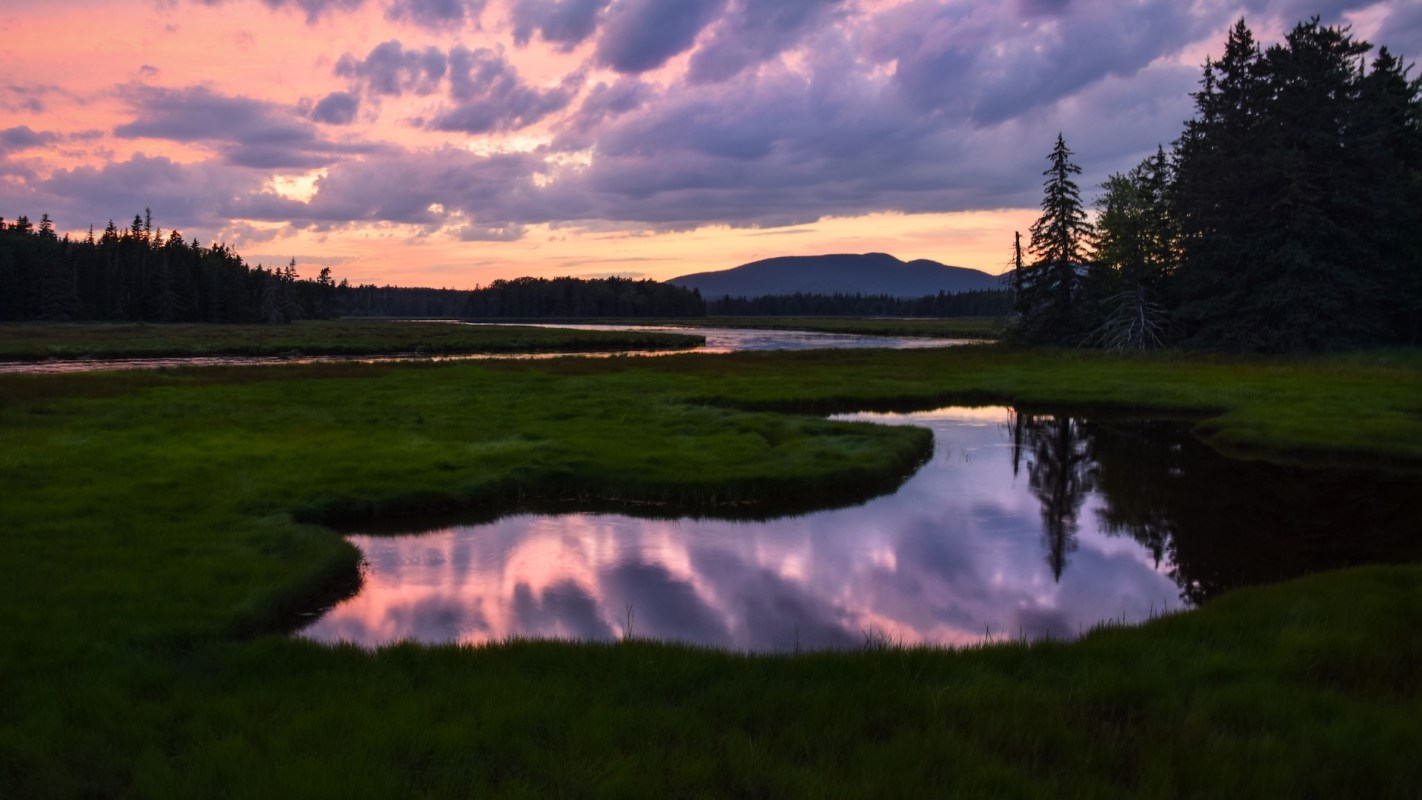
Acadia National Park's famous bird chorus is growing quieter, and researchers say rapidly rising temperatures are likely a major reason why.
New fieldwork comparing bird sounds recorded in 2025 with surveys from 1959 suggests some of the park's most recognizable forest songbirds are calling less often, appearing less frequently, or vanishing from longtime listening spots altogether, the Portland Press Herald reported.
Schoodic Institute research fellow Gillian Audier spent the summer of 2025 retracing the same off-trail survey routes that graduate student Ron Davis used in 1959, stopping at historic monitoring sites across Acadia's coastal forests to listen for birds.
What she found was troubling — the woods sounded noticeably less active than they did more than 60 years ago.
Audier said she heard fewer forest birds overall than Davis did, and some species that were once common are now far harder to find.
The black-throated green warbler, still among the park's most common birds, was heard at roughly one-third its earlier rate. Audier's five most frequently heard birds in 2025 no longer included the yellow-rumped warbler, Swainson's thrush, or magnolia warbler, all of which had been among Davis' top five in 1959.
TCD Picks » Quince Spotlight
💡These best-sellers from Quince deliver affordable, sustainable luxury for all




"It's still so beautiful," Audier said. "But it's also less alive."
The work took more than 45 hours in the woods, often before sunrise, after months of learning the songs of about 50 bird species.
The findings also match a much broader pattern. A landmark 2019 Cornell University study estimated that North America had lost about one-quarter of its adult birds since 1970.
This is about more than a quieter morning on the trail.
When birdsong fades, it can signal deeper ecological stress. In Acadia, that stress appears linked to a rapidly warming environment.
The Gulf of Maine, which helps keep the park's coastal forests cool enough for red spruce and balsam fir, is warming at nearly triple the global average, according to the Gulf of Maine Research Institute.
These forests support birds adapted to cooler conditions. Even when higher temperatures do not directly harm a species, they can disrupt the timing of insect emergence and plant growth.
Migratory birds may arrive after peak food sources have already passed, and chicks may hatch when there is less to eat. Over time, those mismatches can drive population declines.
The National Park Service has also warned that Acadia could see average annual temperatures rise by as much as 8 degrees Fahrenheit by 2050, according to the Portland Press Herald.
A quieter Acadia can point to changes rippling through forests, food webs, and human communities.
The bright side of this situation is that researchers are documenting the changes.
Historical records like these can help park managers and conservation groups track vulnerable species, identify shifts in habitat, and make more informed decisions about forest stewardship.
For the public, the most meaningful actions are the ones that address the root causes of rising global temperatures and habitat disruption. Supporting clean energy, backing conservation funding for parks and wildlife monitoring, and protecting intact forests can all reduce pressure on species already struggling to adapt.
People can also help by supporting bird-friendly habitat restoration in their own communities, advocating for science-based land management, and reducing threats such as window collisions and outdoor cats.
Those actions may seem far removed from one quiet trail in Maine, but they are closely connected. Protecting birds also means protecting the natural systems that make forests healthier, communities more resilient, and outdoor spaces richer for future generations.

Get TCD's free newsletters for easy tips, smart advice, and a chance to earn $5,000 toward home upgrades. To see more stories like this one, change your Google preferences here.







