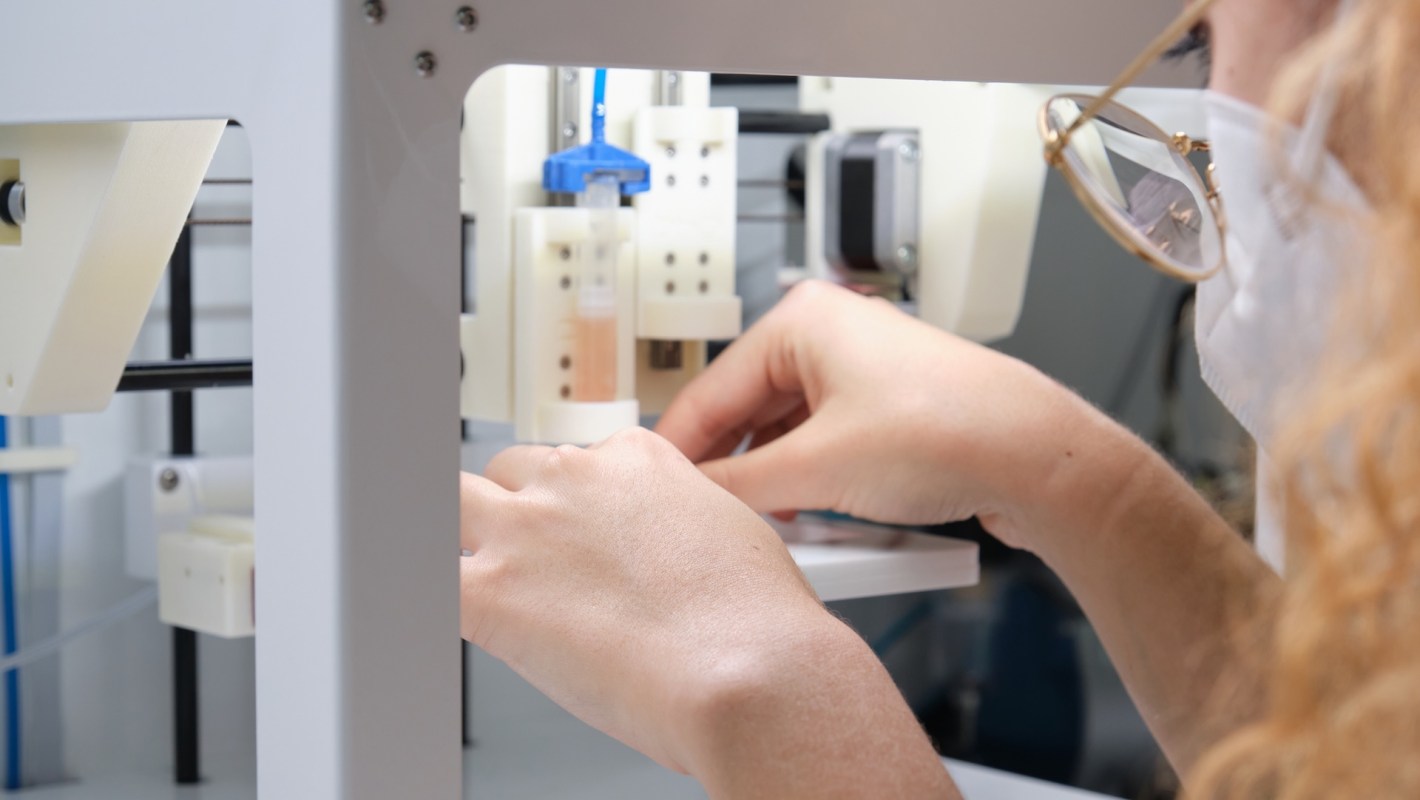
A team of South Korean researchers has crossed an important threshold in regenerative medicine: 3D printing a living human cornea that could one day help restore vision for millions of people with corneal blindness.
In a study published in the peer-reviewed journal Biofabrication, scientists from Pohang University of Science and Technology and Kyungpook National University said they successfully created transparent, flexible corneal tissue using living cells and donor-derived biological materials.
The researchers noted the weight of the breakthrough, adding that it "represents significant advances in corneal tissue engineering."
As Science Aim detailed, the researchers used 3D cell bioprinting to develop a specialized bioink made from decellularized corneal stroma — donor corneal tissue that had its cells removed — along with stem cells.
As the material passed through the printer nozzle, the team controlled the shear stress in a way that guided collagen fibrils into the same tightly organized lattice found in a healthy human cornea.
That alignment appears to be the key advance. Earlier synthetic corneas sometimes restored partial vision, but they often struggled to match the transparency, flexibility, and biological accuracy of natural tissue. In this case, the printed cornea remained clear, remained flexible, and integrated with surrounding tissue within a month in animal testing.
TCD Picks » Quince Spotlight
💡These best-sellers from Quince deliver affordable, sustainable luxury for all




In pre-clinical testing, the lab-grown cornea had more than 90% of its cells become viable, meaning that the 3D-printed cells not only survived, but they remained active, per Science Aim. Critically, the scientists also saw early nerve-regrowth signals, a promising indicator that the tissue could function inside a living eye.
That is no small feat. The cornea is one of the hardest tissues to replicate because it has to remain crystal clear while also preserving an extremely precise internal structure that allows light to pass through correctly. Even slight disruptions in that microscopic collagen arrangement can lead to blurred vision or blindness.
The implications of this research could be significant. Corneal blindness affects an estimated 12 million people worldwide, per Science Aim, and many of those cases are theoretically treatable with transplantation.

Get TCD's free newsletters for easy tips, smart advice, and a chance to earn $5,000 toward home upgrades. To see more stories like this one, change your Google preferences here.