


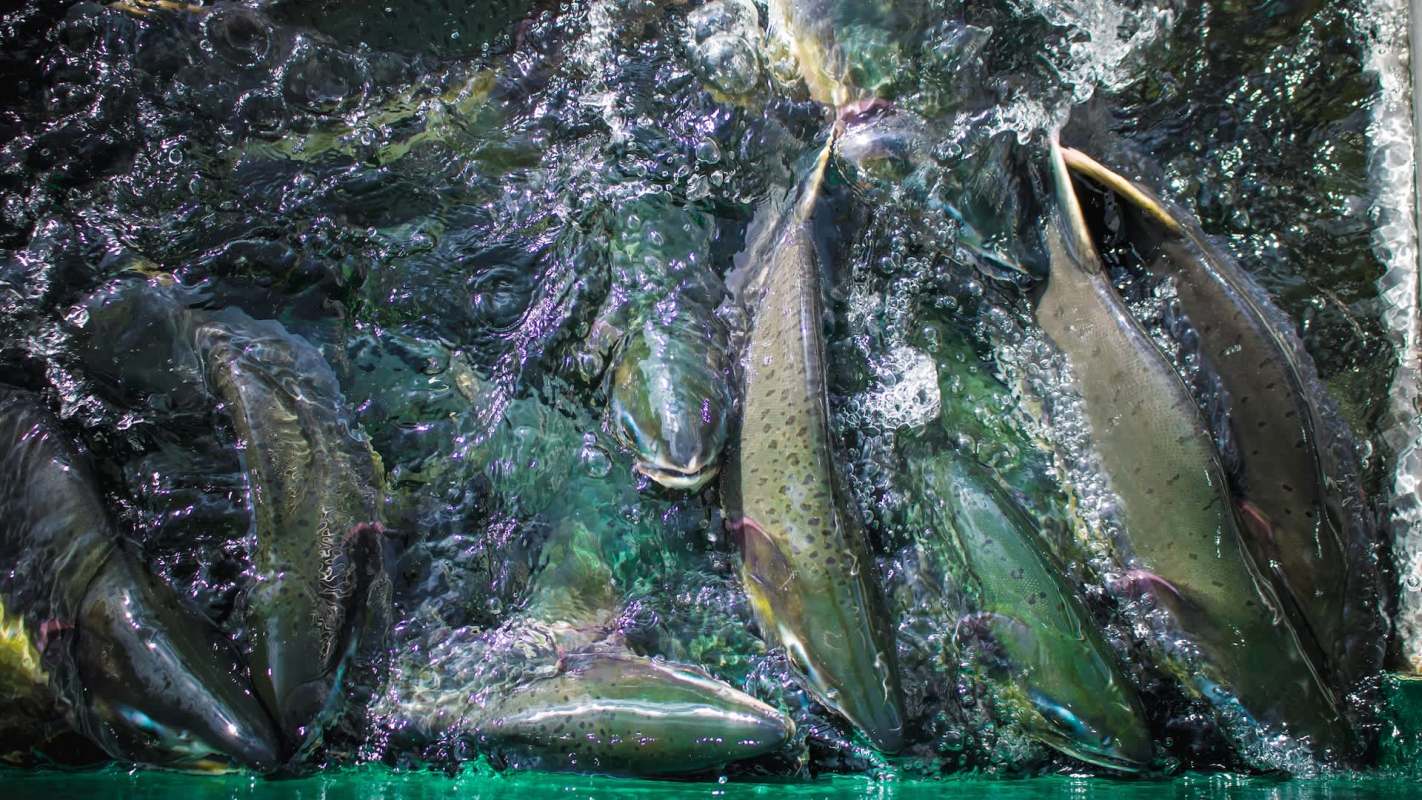
A disturbing undercover video from a salmon hatchery in Maine is drawing new scrutiny to the costs of industrial seafood production as the U.S. moves to expand aquaculture.
What happened?
Animal Outlook, an advocacy group, released footage it says was recorded between September and December at Cooke Aquaculture's salmon hatchery in Bingham, Maine. According to the group, cited by the Guardian, the video appears to show workers striking fish with metal poles, kicking them as they flopped on the ground, and cutting into at least one fish that was still alive.
The group also alleged that fish at the facility showed deformities and fungal infections. In a complaint, Animal Outlook said workers described feeding fish food contaminated by rats, accidentally allowing farmed fish to escape into surrounding waters, and killing large numbers of fish because too many had been produced.
According to the Guardian, Jena Questen, who formerly led the World Aquatic Veterinary Medical Association, wrote in an affidavit that the footage showed fish being left to suffocate or being bludgeoned without first being stunned, calling the treatment inhumane.
The allegations have prompted multiple reviews. Maine regulators have opened an investigation. Best Aquaculture Practices, the third-party certification program connected to the salmon sold under Cooke's True North brand, also said it had launched an investigation into the facility.
The hatchery has faced scrutiny before. In 2019, Animal Outlook released another undercover video from the same facility that allegedly showed deformed salmon being discarded in plastic containers and left to suffocate.
TCD Picks » Quince Spotlight
💡These best-sellers from Quince deliver affordable, sustainable luxury for all




The new allegations arrive as the Trump administration pushes to expand domestic fish farming. The U.S. Department of Agriculture recently launched a national office of seafood to accelerate aquaculture growth, arguing that the country imports much of the seafood Americans eat.
Why is this concerning?
The allegations are disturbing on their own, but they also highlight a broader concern: what can happen when fish are treated like units of production in a system built to maximize output.
If more hatcheries and fish farms are built without strong oversight, critics say the result could be more animal suffering and more damage to nearby ecosystems. Fish farming can reduce pressure on some wild fisheries, but large-scale aquaculture can also bring serious risks, including disease outbreaks, parasite spread, pollution from waste and chemicals, and farmed fish escaping and mixing with wild populations.
Coastal communities and fishing families depend on healthy waterways and resilient ecosystems. Pollution and escapes can affect local fisheries, recreation, and water quality, while weak oversight can erode public trust in food systems marketed as responsibly managed.
Animal advocates have also argued that confining large numbers of fish in intensive conditions is inherently harmful, especially for carnivorous species such as salmon that depend on resource-intensive feed. As the industry grows, those concerns could become harder to ignore if protections fail to keep pace.
What's being done about salmon farming?
For now, regulators in Maine are investigating the allegations, and Animal Outlook has asked authorities to pursue animal cruelty charges. The certification body tied to the hatchery's products is also reviewing the case, which could add pressure for changes if violations are confirmed.
There are already signs that some governments are taking a tougher stance on aquaculture. Washington state, for example, banned commercial net-pen aquaculture. Moves like that show policymakers can intervene when industrial fish farming puts public resources at risk.
Over the longer term, experts say stronger oversight will be critical if fish farming continues to expand. That could mean stricter animal welfare standards, better monitoring of pollution and fish escapes, and tougher enforcement when facilities violate the rules.
Consumers can play a role, too, by asking more questions about where seafood comes from, how it was raised, and whether sustainability certifications are backed by meaningful oversight. Choosing more plant-forward meals can also reduce pressure to rapidly expand intensive animal agriculture, including seafood production.
If the investigation in Maine leads to stronger protections, it could mark a turning point — not only for the fish at one hatchery, but also for the communities and ecosystems that stand to bear the cost of unchecked industrial growth.

Get TCD's free newsletters for easy tips, smart advice, and a chance to earn $5,000 toward home upgrades. To see more stories like this one, change your Google preferences here.







