


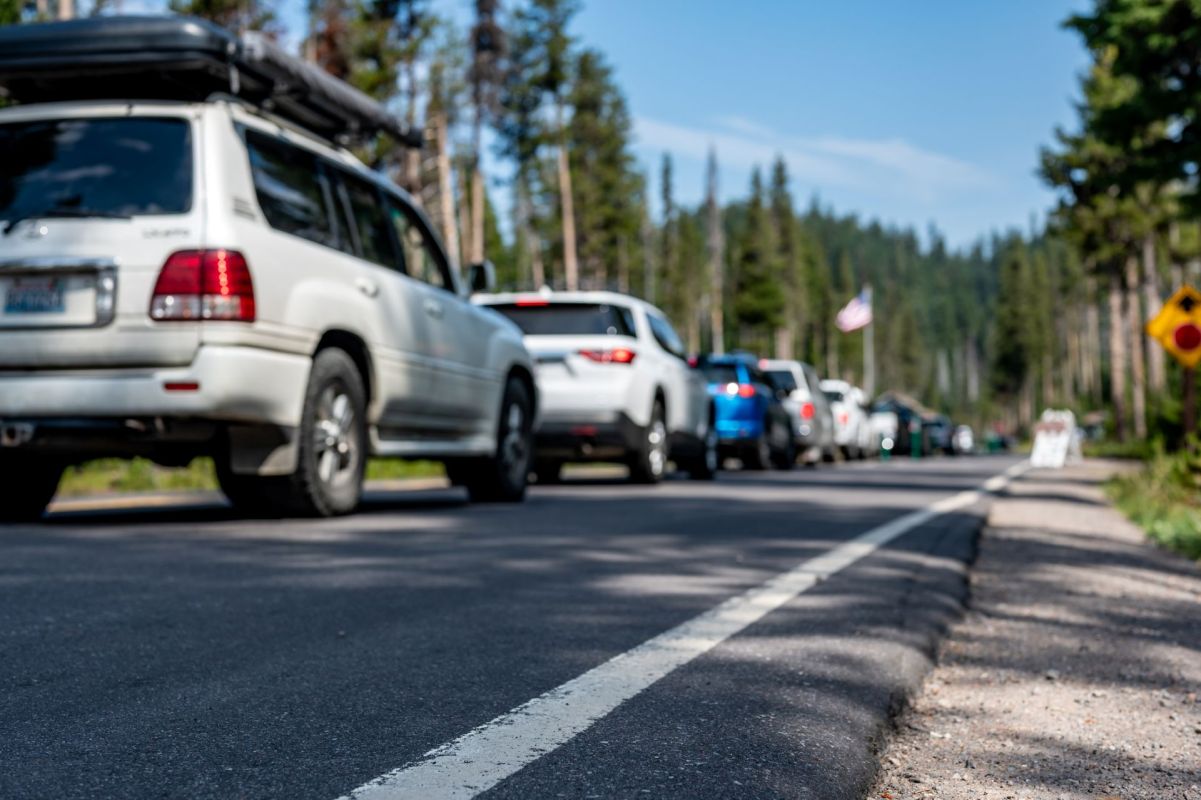
Parks Canada documents on Banff's most famous grizzly bear are drawing widespread attention after revealing how quickly wildlife tourism can spiral out of control: One roadside "bear jam," involving a bear named The Boss, backed up 1,422 vehicles in a single day.
While "bear jam," headlined by The Boss, sounds like an awesome music festival, it was actually a massive headache for park visitors and staff.
The incident took place July 24, 2025, along the Bow Valley Parkway in Banff National Park, according to Parks Canada documents obtained by Rocky Mountain Outlook through an Access to Information request. The figures are prompting concern well beyond Alberta, offering a stark snapshot of a growing problem in protected areas: Visitors seeking a close-up wildlife encounter can endanger park staff, other people, and the animals themselves.
Officials said the traffic jam also involved 66 cyclists and 84 people outside their vehicles while The Boss was near the roadside. Parks Canada wildlife resource management officer Nadia Bohonos said staff eventually had to evacuate people from the Muleshoe day-use area after the bear moved through it.
The problem continued in the days that followed. On July 25, another well-known grizzly known as Split Lip attracted more than 300 vehicles in just one hour on the same parkway. On July 26, The Boss returned to the roadside, prompting another response involving 965 vehicles, 16 cyclists, and 82 people outside their vehicles.
What stands out in the documents is not only the sheer number of vehicles, but what officers described facing on the ground. Bohonos wrote that she managed one of the traffic jams for more than four hours and dealt with "some very persistent and difficult people," adding that "the noncompliance from visitors was at an all-time high."
TCD Picks » Quince Spotlight
💡These best-sellers from Quince deliver affordable, sustainable luxury for all




The consequences go far beyond traffic congestion. Crowding around roadside wildlife can stress bears, disrupt feeding, and raise the likelihood of a dangerous encounter.
Bow Valley WildSmart local program director Nick de Ruyter told the Outlook that roadside vegetation is drawing more bears and said visitors should slow down and follow speed limits rather than stop to watch. He also warned that many people appear to be chasing "the perfect photo or the extra followers or likes" on social media.
That pressure can carry serious consequences for wildlife. When people get too close, bears may become agitated, bluff charge, or move toward humans. And when bears and people interact, the animal can end up being relocated or euthanized. In that sense, irresponsible wildlife viewing can become a death sentence for the very animal people say they want to admire.
There is also the risk of food conditioning. Officials and wildlife advocates have documented instances of people feeding bears in Banff and neighboring Kananaskis Country. Once a bear begins associating people with food, it can become bolder and more aggressive, greatly increasing the likelihood that it will eventually be killed.
The issue also affects visitors. A park road clogged with stopped vehicles, cyclists, and people wandering outside their cars creates clear safety hazards and delays for others using the roadway responsibly. It also places added pressure on wildlife officers and conservation staff at a time when Banff is experiencing record visitation — 4.5 million visitors in 2025.
Some parks have responded with tougher rules. In Jasper National Park, visitors are legally required to remain inside their vehicles when viewing roadside wildlife. Yellowstone and Grand Teton require people to stay at least 100 yards away from bears and wolves.
Banff, by contrast, relies mostly on recommendations, including, according to the Outlook, advice that visitors keep at least 100 meters (328 feet) away from bears and other roadside carnivores, though no-stopping zones are in place in some locations.
Former Parks Canada warden Brian Spreadbury told the Outlook that Banff needs more wardens and better enforcement tools to manage bear jams, particularly when visitors refuse to comply. That frustration helps explain why the documents are resonating online: It shows how quickly a wildlife sighting can become a threat to both park communities and the environment when basic rules are ignored.

Get TCD's free newsletters for easy tips, smart advice, and a chance to earn $5,000 toward home upgrades. To see more stories like this one, change your Google preferences here.







