


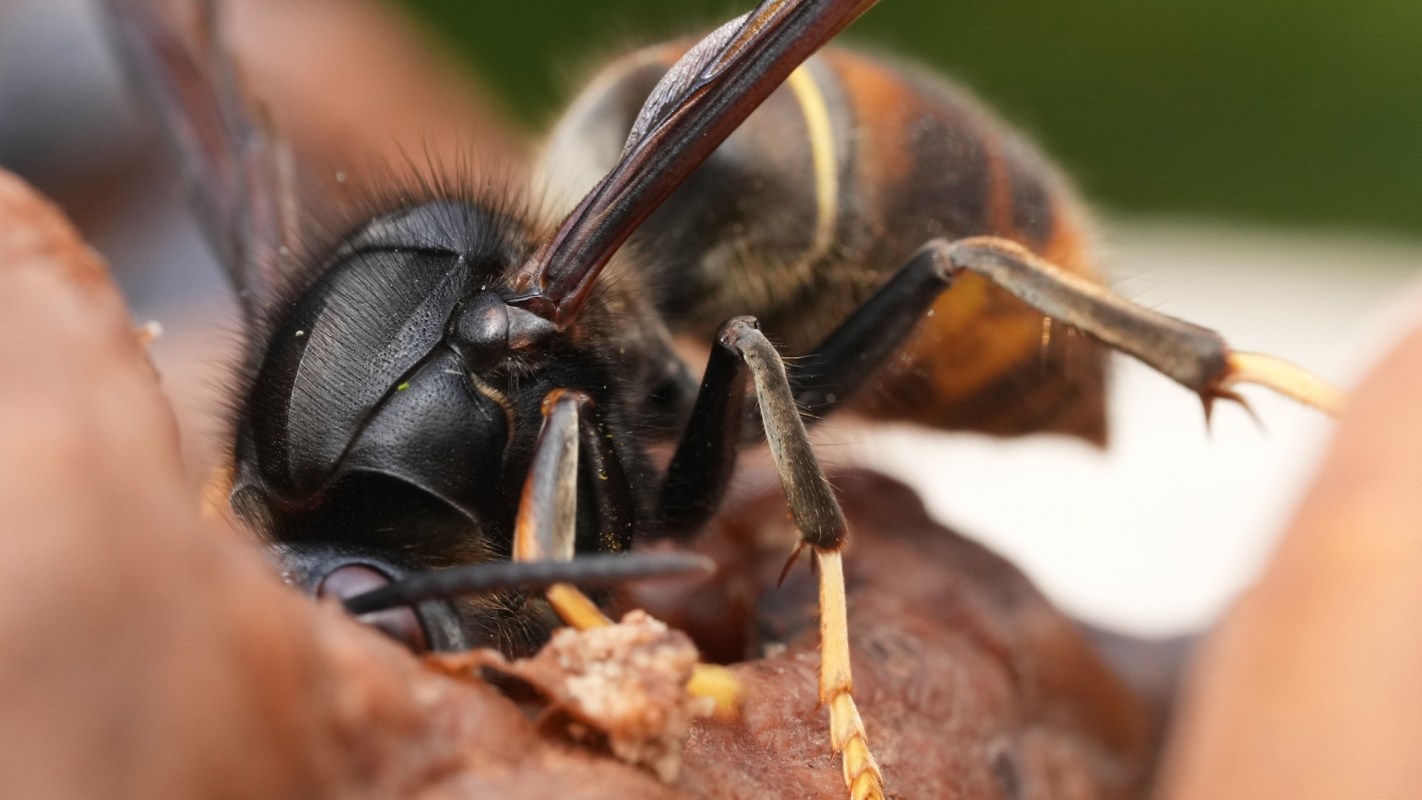
Yellow-legged hornets — an invasive species known for attacking bees and stinging aggressively — have now appeared in Washington state after one was found aboard a cargo ship at the Port of Vancouver.
The discovery is raising concern because the species has already spread through parts of Asia, Europe, and the southeastern United States, and experts say it could threaten pollinators, beekeepers, and local food systems if it becomes established in the Pacific Northwest.
What happened?
According to a report from KUOW, an NPR affiliate station, an agriculture inspector discovered a live yellow-legged hornet during an April 30 inspection of a cargo ship at the Port of Vancouver. The insect was documented and then killed.
The ship had arrived from South Korea, though officials said they do not yet know whether the insect crossed the Pacific on the vessel or flew aboard while the cargo hold was open in port.
Still, the sighting was enough to trigger a public alert in the Vancouver area. State agriculture officials are asking residents to report possible yellow-legged hornet sightings as they try to determine whether more are present.
The concern is especially acute because the species is considered even more aggressive than the northern giant hornet — the insect widely nicknamed the "murder hornet" — which Washington officials spent five years eradicating. Unlike northern giant hornets, yellow-legged hornets are known to sting without provocation.
TCD Picks » Quince Spotlight
💡These best-sellers from Quince deliver affordable, sustainable luxury for all




According to the KUOW, this is the first such sighting in the United States beyond Georgia and South Carolina, where eradication efforts are already underway.
Why is the yellow-legged hornet concerning?
The biggest threat is to honey bees and other pollinators, which are essential to farms, gardens, and the broader food supply. Yellow-legged hornets hunt in flight, making them especially dangerous to bees as they forage.
That can create serious consequences for communities that depend on healthy pollinator populations. In parts of Europe where the species has spread, officials have linked it to bee colony losses and an estimated 30% drop in honey production. For beekeepers, growers, and others who rely on stable crop yields, that kind of damage can quickly ripple through local economies.
Experts are also worried because the insect is highly adaptable. Yellow-legged hornets can survive in a range of habitats and climates, and their colonies can grow into the thousands. Researchers have warned that a hibernating, pregnant hornet may survive weeks aboard a cargo ship and start a colony once it arrives.
What's being done about yellow-legged hornets?
Washington agriculture officials are relying on one of the tools that helped them eliminate northern giant hornets: public reporting. State entomologists say community vigilance was critical during that campaign, and they are once again asking people in the Vancouver area to stay alert.
Georgia and South Carolina are also already working to eliminate yellow-legged hornets before they spread further, giving officials an early opportunity to better understand how to respond.
For residents, the most important step is to report suspected sightings.
Washington has already shown that an organized response can work. The state's earlier victory over northern giant hornets took years of public cooperation. Officials hope the same kind of early action can keep this latest threat from becoming a much bigger problem.

Get TCD's free newsletters for easy tips, smart advice, and a chance to earn $5,000 toward home upgrades. To see more stories like this one, change your Google preferences here.







