


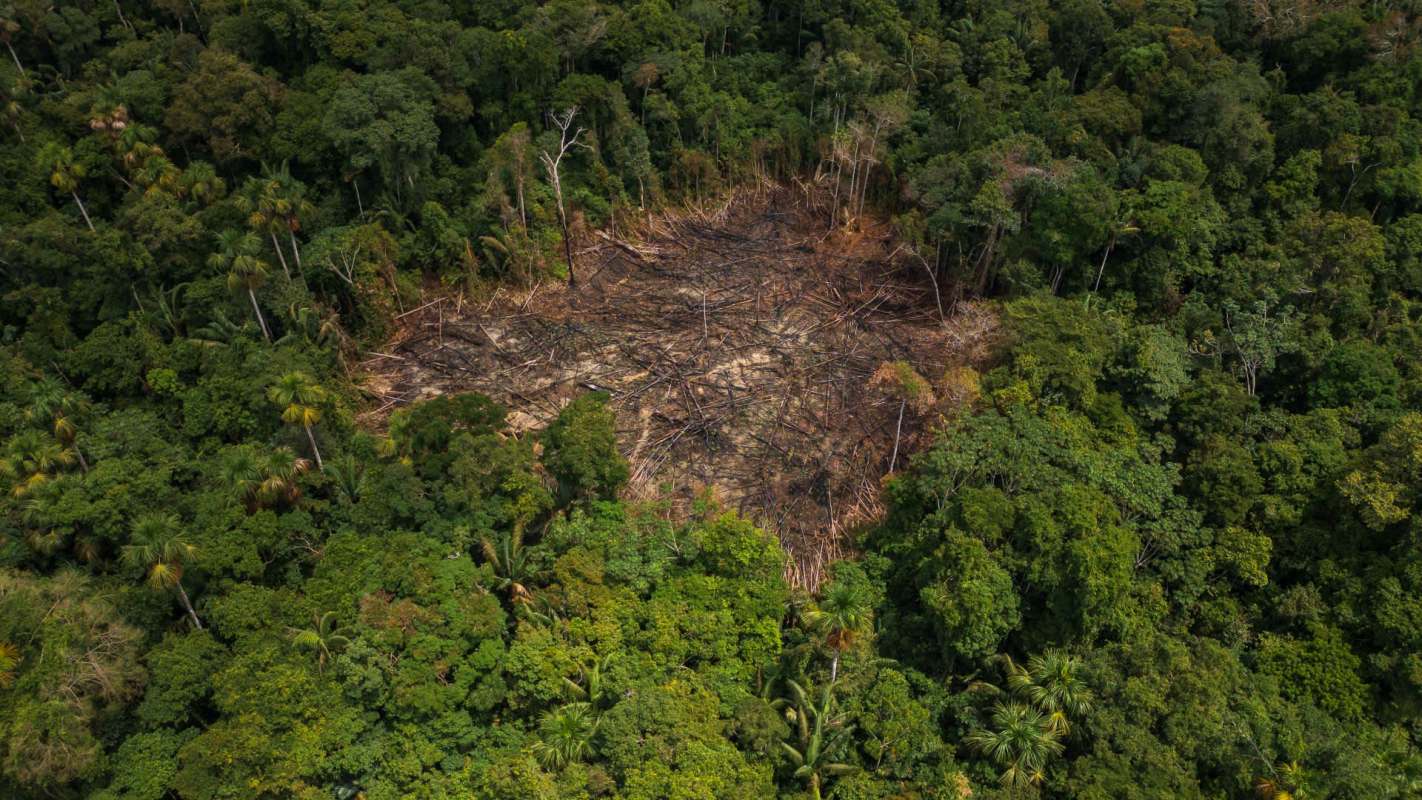
The Amazon rainforest is moving closer to a dangerous tipping point, according to new research. The combination of forest loss and rising global temperatures could push vast areas of the region out of rainforest conditions and into degraded forest or savanna.
What's happening?
A study published in the journal Nature and cited by Mongabay found that if 22% to 28% of the Amazon is deforested while average global temperatures rise 2.7-3.4 degrees Fahrenheit, the rainforest could begin a widespread and difficult-to-reverse transformation as early as the 2040s.
That would mark a dramatic shift. Researchers said more than two-thirds of the Amazon Basin could eventually be affected within decades, as healthy rainforest gives way to drier, damaged ecosystems such as savannas that typically store less carbon and support less life.
The warning is especially concerning because the world is already approaching those thresholds. Roughly 17% to 18% of the Amazon has already been cleared, largely for cattle and crop expansion, and scientists expect the 2.7-degree mark to be reached on an annual basis as soon as 2030, Mongabay reported.
"I think we can confidently say that the more deforestation happens, the lower this global warming threshold becomes," said study co-author Arie Staal.
Why is this important?
The Amazon is one of the world's most important natural systems, and its health reaches far beyond the trees within it.
TCD Picks » Quince Spotlight
💡These best-sellers from Quince deliver affordable, sustainable luxury for all




The rainforest generates much of its own rainfall by recycling moisture through its vegetation. When too many trees are removed, the water cycle begins to weaken. Less moisture in the air means less rain, longer dry seasons, and more stress on forests hundreds of miles away. Researchers warned that this chain reaction could be especially severe in the eastern Amazon, where forest loss can send drier air westward and reduce rainfall across the basin.
That has major consequences for people as well as wildlife.
A degraded Amazon could disrupt regional water supplies, agriculture, and communities that depend on consistent rainfall. Indigenous peoples and local residents who rely on the forest for food, livelihoods, and cultural survival would likely face some of the earliest and harshest effects. Over time, the damage could also release enormous amounts of carbon stored in trees and soils, making it even more difficult to slow planetary overheating.
The biodiversity losses could be staggering, too. The Amazon is home to countless plant and animal species found nowhere else, and many could decline sharply or disappear as the wet forest is replaced by drier, grassland-like systems.
What's being done?
Researchers said the most important steps are also the clearest: stop deforestation, restore damaged forests, and rapidly reduce heat-trapping pollution.
The study also offered one hopeful finding. If additional Amazon deforestation is avoided, the rainforest appears far more resilient, with a broad rainforest shift not becoming likely until substantially higher warming of about 6.7-7.2 degrees F, Mongabay reported. That is still dangerous, but it suggests that protecting the forest that remains could buy valuable time.
Reforestation could help as well. The authors said restoring forests in key areas may strengthen the Amazon's moisture cycle and offset some of the damage already done. Brazil's pledge to restore 24 million hectares of rainforest was highlighted as one positive step.
For readers, the biggest actions are the ones that support large-scale forest protection and lower global emissions: backing stronger conservation policies, supporting Indigenous land rights, choosing products that do not drive forest destruction, and voting for leaders who prioritize clean energy and ecosystem protection.
The window to avoid the worst outcomes is narrowing, but scientists say it has not closed. That makes the next several years especially important — not just for the Amazon, but for communities across South America and for a more stable future for everyone.

Get TCD's free newsletters for easy tips, smart advice, and a chance to earn $5,000 toward home upgrades. To see more stories like this one, change your Google preferences here.







