


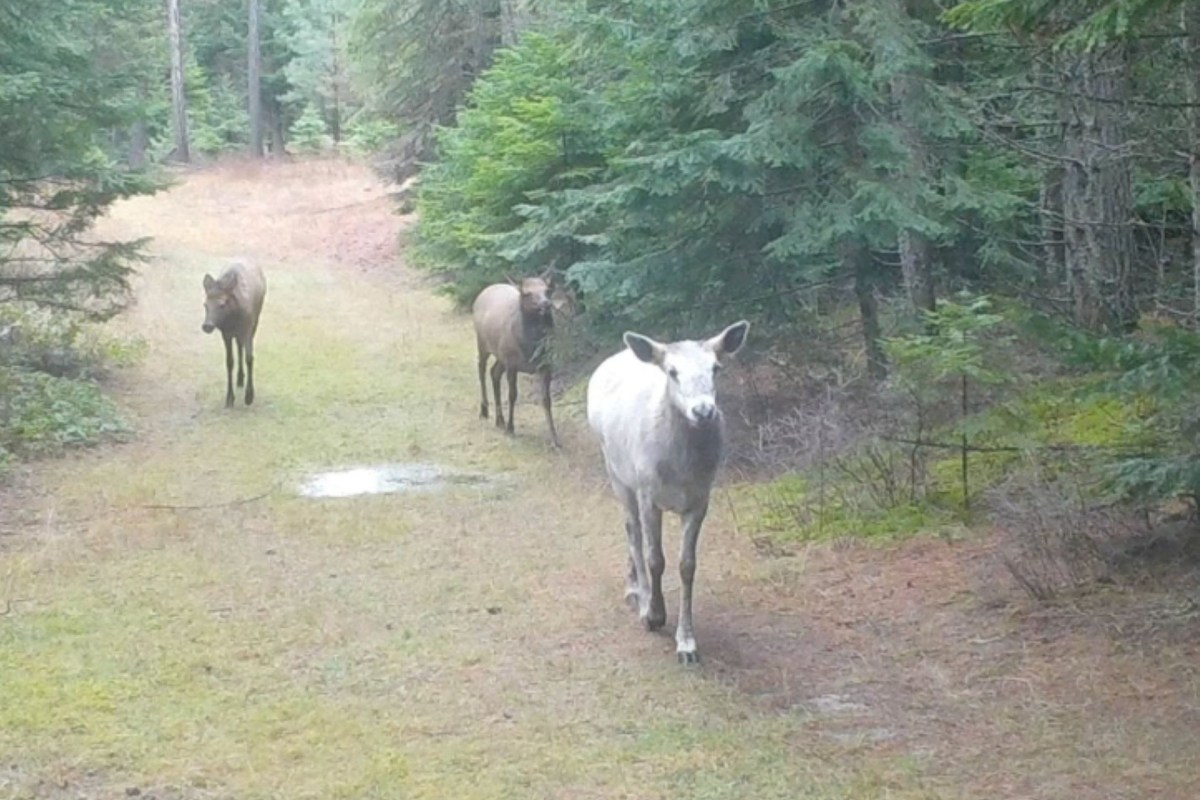
A series of trail camera photos captured an extraordinarily rare white elk in Montana, providing another reminder that nature nearly always has more up its sleeve.
Montana Fish, Wildlife & Parks posted some snapshots of the unusual animal on social media.
The trail camera spotted the animal ahead of two more conventionally colorful elk in a clearing somewhere in Montana. While you'd be forgiven if you thought it was an albino elk, the FWP's caption indicates it is actually leucistic.
That means the elk has reduced pigmentation but retains normal-colored eyes. Unlike an albino elk, a leucistic one can still have patterns, colors, and markings, according to Whiskey Riff.
In addition to albino and leucistic, another rare type of pigmentation is called piebald. Piebald animals, including elk, can have their own hodgepodge of white and brown coloring, demonstrating the incredible mix of diversity in the natural world.
In this case, without the telltale sign from the eyes, it would certainly be hard to determine that this elk wasn't albino. The pale animal stands out sharply against the natural landscape, its light coat immediately contrasting with both the terrain and the typical brown coloring of its counterparts.
TCD Picks » Quince Spotlight
💡These best-sellers from Quince deliver affordable, sustainable luxury for all




Whiskey Riff noted that its distinctive appearance comes with its own set of drawbacks. For predators, the ease of spotting leucistic elk can make them an immediate target. With that in mind, they and albino elk tend to survive for fewer years than animals more suited to blend in, according to the outlet.
This only adds to the unlikelihood of seeing them, as the genetic trait that results in these elk is exceedingly rare. Wildlife biologists estimate leucism in elk occurs in roughly 1 in 100,000 animals.
This highly unlikely sighting also demonstrates the value of trail cameras. They not only allow the public to see rare, head-turning animals like a leucistic elk, but they can also aid in monitoring how vulnerable species are faring.
Another possibility is getting an early look at the potential revival of an animal after decades, like cougar kittens in Northern Minnesota.
These rare sightings delight not just conservationists but also more casual observers online. The leucistic elk was a hit with social media commenters.
"Thanks for sharing," one appreciative commenter wrote. "Very cool!"
"Glad you didn't share the location!" another wrote, alluding to potential hunters who might target the elk.

Get TCD's free newsletters for easy tips, smart advice, and a chance to earn $5,000 toward home upgrades. To see more stories like this one, change your Google preferences here.







