


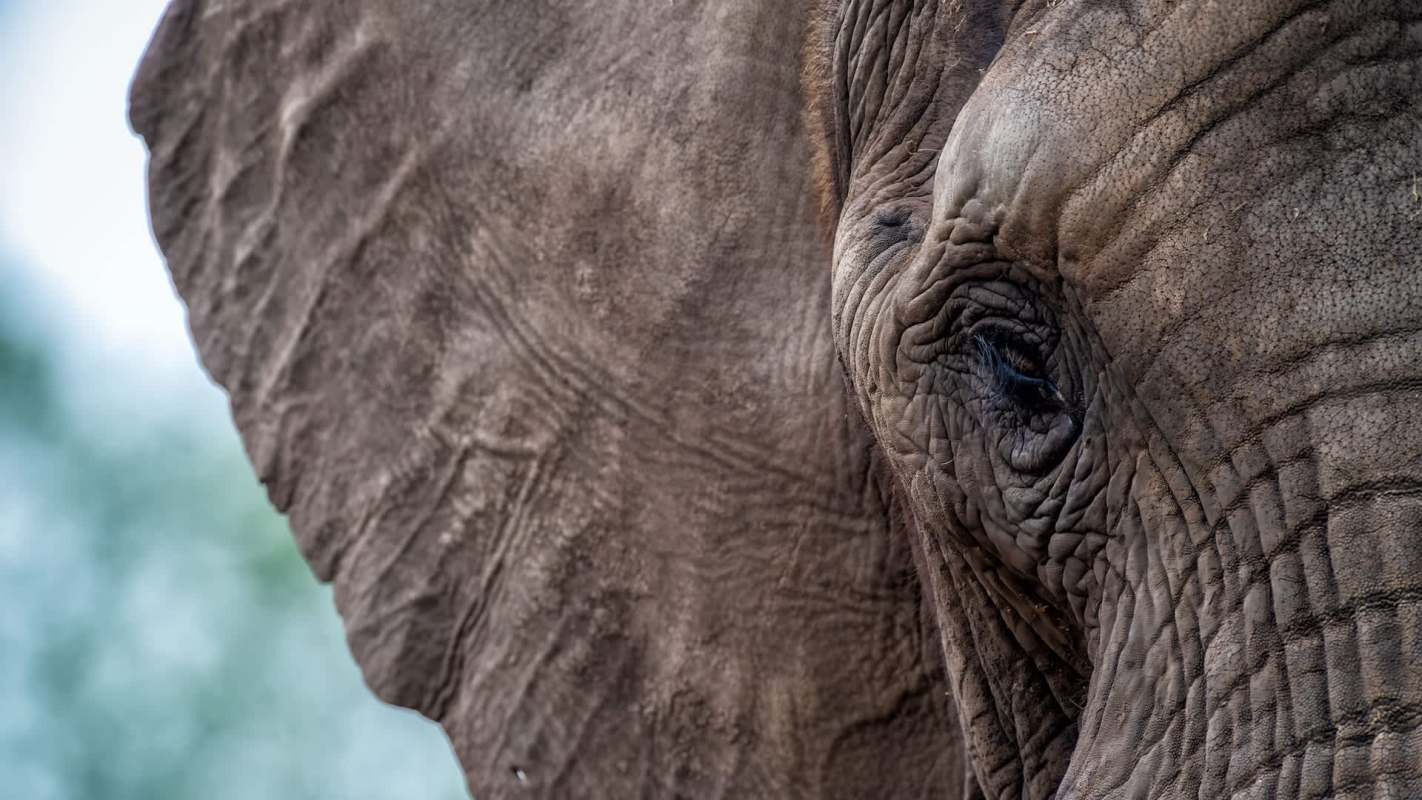
What looks like ordinary crop raiding by elephants may be far more complex.
According to Smithsonian Magazine, a new study suggests that some African forest elephants in Gabon may target banana and papaya plants not for their fruit, but for potential medicinal relief.
That insight could help explain a long-standing source of conflict between farmers and elephants in the region.
Researchers found that elephants carrying gut parasites were more likely to eat parts of banana and papaya plants, raising the possibility that the animals are self-medicating when they raid farms.
The study focused on villages within Crystal Mountains National Park on Gabon's Atlantic coast, where farmers have long reported nighttime raids that leave crops crushed and fruit uneaten.
To investigate, scientists tracked elephants after raids in 2016 and 2017, collecting dung samples along their routes. They also gathered samples from plants the elephants had eaten — including bamboo, ferns, ficus, cassava, palm, banana, and papaya — and screened the dung for signs of parasitic infection.
TCD Picks » Quince Spotlight
💡These best-sellers from Quince deliver affordable, sustainable luxury for all




After analyzing about 90 samples, researchers found a notable pattern. Elephants with gut parasites had 16% higher odds of feeding on banana stems and leaves and 25% higher odds of nibbling on papaya plants.
The findings, published in October in Ecological Solutions and Evidence, suggest a possible link between illness and crop choice.
"They are really intelligent animals, and we have a lot to learn from them," said conservation scientist Steeve Ngama, per Smithsonian Magazine.
The researchers were careful not to overstate their results. The study does not prove that elephants are intentionally self-medicating. It's also possible that elephants spending more time near people and livestock are simply more likely to pick up parasites.
Still, the plants in question are known to contain compounds with antiparasitic properties.
"I have no doubt elephants possess complex medicinal repertoires, and studies like this are an important step toward uncovering them," Ngama said.
If the pattern holds, the implications extend well beyond an intriguing animal behavior.
Understanding why elephants raid farms could help reduce deadly conflict, as some farmers respond by calling park managers, or even poachers, to kill the animals.
Ngama and his co-authors suggested that providing alternative antiparasitic treatments, such as mineral salts, could ease pressure on crops while helping elephants and local communities coexist.
There is a broader lesson here, too. Protecting biodiversity may also mean preserving vast stores of natural knowledge that humans are only beginning to understand.
Studying how animals respond to disease could help researchers identify compounds useful for human medicine, while strengthening the case for conserving threatened species and the ecosystems they depend on.
"Maybe we can find out how elephants deal with Ebola and other outbreaks [that] humans, at the moment, are not able to deal with," said Ngama, per Smithsonian Magazine.

Get TCD's free newsletters for easy tips, smart advice, and a chance to earn $5,000 toward home upgrades. To see more stories like this one, change your Google preferences here.







